Century & Heritage Homes
Plaster · Attics · Wire fishing
Knob and Tube
Rewiring
Toronto
Careful knob-and-tube replacement for Toronto's older, century and heritage homes. We plan routes around existing finishes and use minimally invasive wire-fishing techniques to reduce plaster and drywall disruption wherever the structure allows.
Text Photos for a Quote — 647-835-7757- ECRA Licence #7018049
- ESA Permit & Inspection Handled
- Fully Insured
- Owner-Operated
- 15+ Years of Experience
- Older Toronto Home Specialist
Portman Electric replaces active knob-and-tube wiring in older Toronto homes with modern grounded copper circuits. Each project begins with tracing and planning so new wiring can be fished through accessible wall, ceiling, basement and attic spaces wherever possible. We handle the ESA notification, coordinate inspections and provide the resulting inspection documentation.
Every house is different. The amount of wall or ceiling access required depends on the home's framing, previous renovations, insulation and accessibility.
Toronto Specialists in Older-Home Rewiring
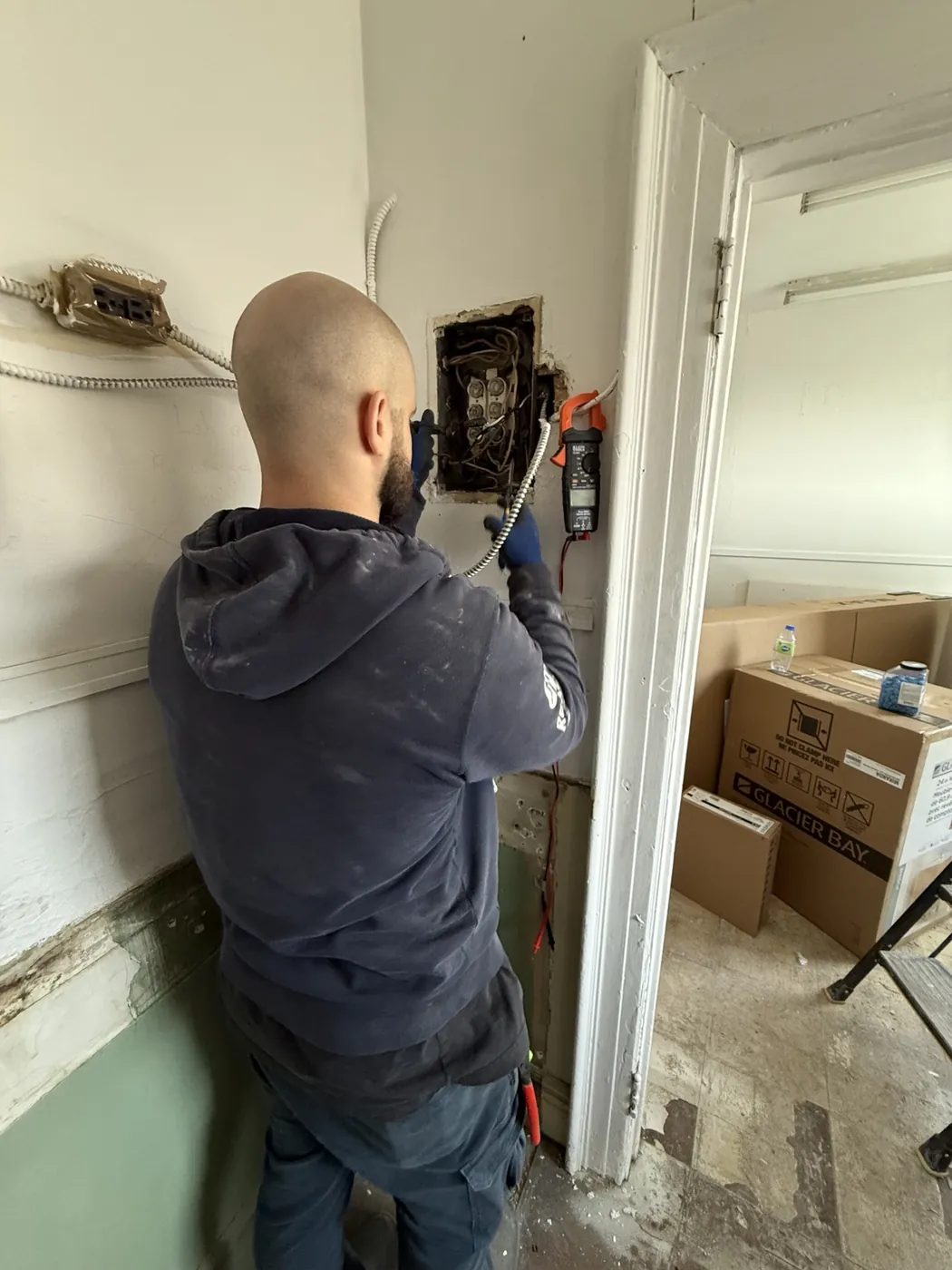
Older Toronto homes usually contain several generations of electrical work: original knob-and-tube circuits, later extensions, a fuse panel or early breaker panel, ungrounded outlets, and modern cable added during renovations. Sorting that out — without tearing the house apart — is planning work as much as electrical work.
We plan every route around the finishes that make these houses worth owning, protect the work areas, and leave the home clean and organized. Where a house also has aluminum branch wiring from a later era, our residential electrical services cover the approved repair methods for that too.
We work carefully around
What Knob-and-Tube Wiring Is
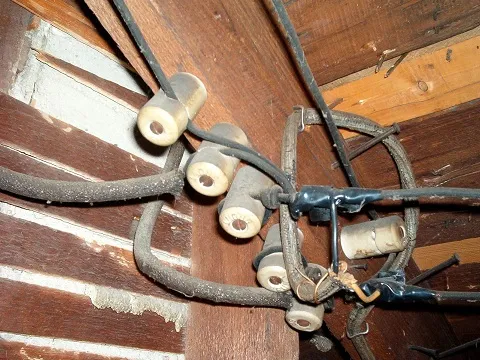
Knob-and-tube gets its name from its hardware: separate hot and neutral conductors held away from the framing on ceramic knobs, and protected by ceramic tubes where they pass through joists and studs. It was the standard wiring method when much of Toronto's older housing was built, which is why it still turns up in basements, attics and lighting circuits across the city.
Original systems generally do not provide a modern equipment-grounding conductor — the reason older homes have two-prong outlets. Age alone doesn't determine whether a particular visible section is dangerous; what matters is deterioration, improper alterations, overloading and the condition of the connections, which is why professional evaluation comes before any recommendation.
For official Ontario electrical-safety information on this wiring type, see the Electrical Safety Authority's knob-and-tube guidance (opens the ESA's official site).
Original ceramic knobs supporting separate conductors — photographed during a Portman Electric assessment.
Signs Your Toronto Home May Contain Knob-and-Tube
These clues don't replace testing and circuit tracing by a Licensed Electrical Contractor — but if a few sound familiar, an assessment is worth booking.
When Replacement May Be Recommended
Existing knob-and-tube should be evaluated on its condition, protection, alterations and loading — not condemned on sight. Replacement is commonly considered when we find:
Knob and Tube Rewiring With Minimal Wall Damage
Our objective is not to open every wall. Our objective is to install a safe, inspectable modern wiring system while preserving as much of the home's original finish as the construction allows.
Minimal disruption does not mean no disruption. Some plaster or drywall access may be required to route and secure wiring properly.
- 01Trace and identify the active knob-and-tube circuits.
- 02Review the basement, attic, crawlspace and accessible mechanical areas.
- 03Map device locations and likely framing paths.
- 04Plan new circuit routes before opening any finished surface.
- 05Use existing device openings wherever practical.
- 06Fish modern cable through accessible cavities.
- 07Make small, controlled access openings only where required.
- 08Protect floors, furniture and finished surfaces.
- 09Keep the work area organized and clean.
- 10Explain required openings before proceeding whenever their location can be predicted.
Our Rewiring Process
Initial Assessment
We review the panel, visible wiring, outlets, switches, lighting and the accessible areas of the home.
Circuit Tracing & Project Scope
We determine which knob-and-tube circuits remain active and whether the home needs full or partial replacement.
Detailed Written Estimate
A clear project scope identifying included devices, circuits, permit work and known access requirements.
ESA Notification & Planning
Portman Electric files the required ESA notification for the electrical work and coordinates the inspection stages.
Home Protection
Floors, furniture and work areas are protected before rewiring begins.
New Grounded Circuits
Modern copper branch-circuit wiring, electrical boxes, receptacles, switches and required protection are installed.
Panel & Service Work When Required
We upgrade or reorganize the panel when the existing equipment can't properly support the new circuits.
Testing & Identification
Circuits are tested, polarity and protection verified, and the panel directory updated.
ESA Inspection
We coordinate the appropriate ESA inspection for the completed work.
Final Cleanup & Documentation
Work areas are cleaned and the applicable project and inspection documentation is provided.
Painting and complete plaster restoration are not part of the electrical scope unless your written estimate specifically includes them — the estimate states who handles surface repairs.
Full Versus Partial Knob-and-Tube Replacement
Full-House Rewiring
Appropriate when active knob-and-tube serves large portions of the home, or when renovation plans or insurance requirements call for comprehensive replacement. Everything is brought onto modern grounded circuits with a panel that properly supports them.
Partial Rewiring
May be appropriate when knob-and-tube remains active in a limited, traceable part of the house — often lighting circuits or a single floor. The most important areas are corrected first, and the rest can be planned in stages.
The right recommendation depends on circuit tracing, accessibility, panel condition, your goals and any insurer requirements. Partial replacement will not automatically satisfy every insurance company — if coverage is the driver, we scope the work to your insurer's written request.
What a Rewiring Project May Include
Every estimate is based on the actual home and the agreed project scope — this is the range of work a knob-and-tube project can cover:
How Much Does Knob and Tube Rewiring Cost in Toronto?
There's no honest universal price for rewiring an older home — and we won't invent one. These are the factors that actually drive your project's cost:
What to send us for an accurate estimate
- Panel photos — door open and closed
- Visible basement or attic wiring photos
- Home-inspection report or insurer's written request
- Approximate size, number of floors, finished basement or not
Rewiring Older Homes Across Toronto
Most of our rewiring work happens in the neighbourhoods where Toronto's century housing is concentrated — the semis of East York and Riverdale, Victorian rows in Cabbagetown and Parkdale, Edwardian homes in The Annex and Seaton Village, and the larger older houses of Rosedale, Forest Hill and Lawrence Park. The construction differs street by street, and that changes how a rewire is planned.
An older or character home is not automatically a designated heritage property. Homeowners can confirm a property's status through the City of Toronto Heritage Register.
In both designated and non-designated older homes, our goal is the same: preserve finishes and architectural details wherever practical while bringing the wiring up to modern, grounded standards.
Older & Heritage Neighbourhoods We Serve
- East York
- Riverdale
- Leslieville
- The Beaches
- Cabbagetown
- The Annex
- Seaton Village
- Rosedale
- Moore Park
- Wychwood
- Forest Hill
- Lawrence Park
- Leaside
- Roncesvalles
- Parkdale
- High Park
- Bloor West Village
- The Junction
- The Danforth
Plus downtown and west-end century-home communities across Toronto and the GTA. Don't see your area? Reach out — we'll let you know.
Why Homeowners Choose Portman Electric
Technical content reviewed by Portman Electric, ECRA Licence #7018049.
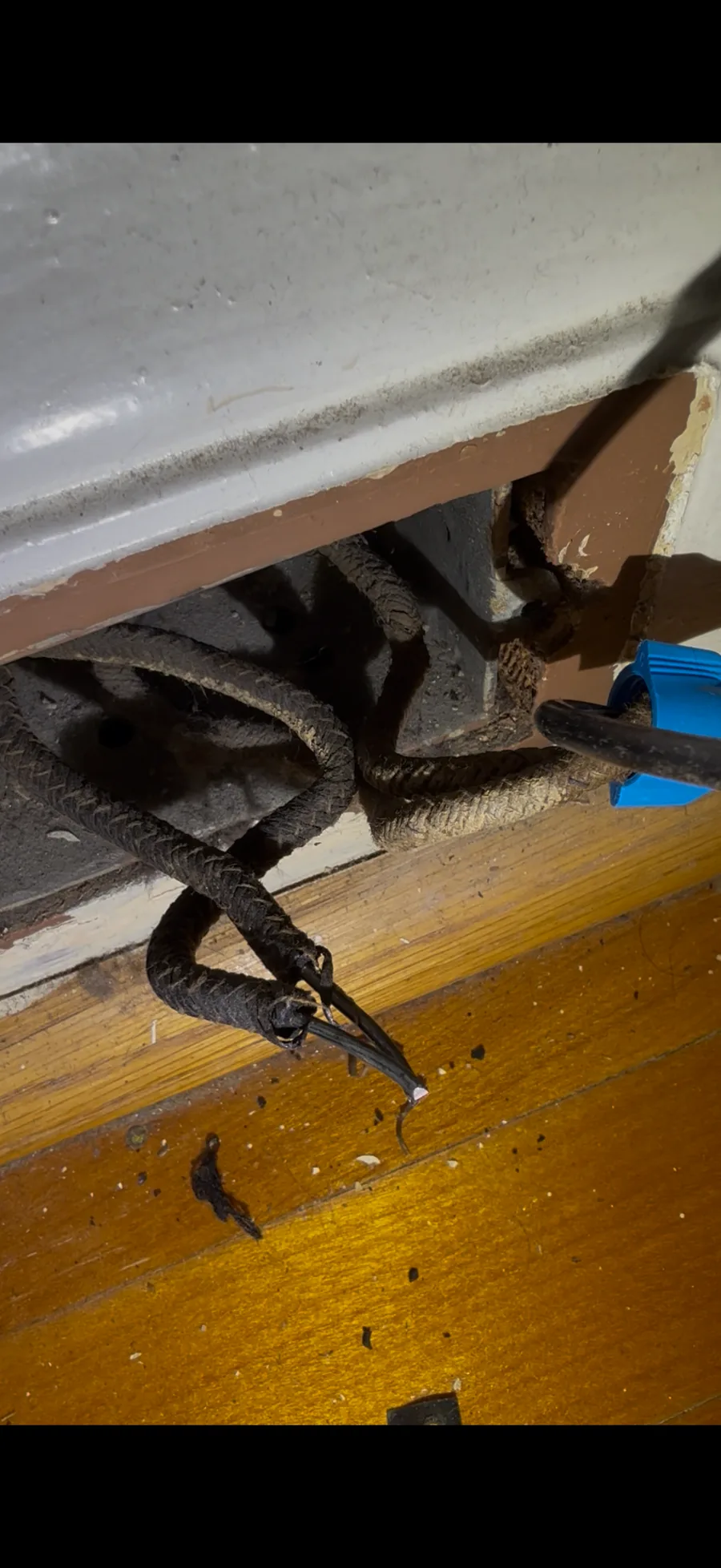
Old Wiring Replaced With Clean, Modern Work
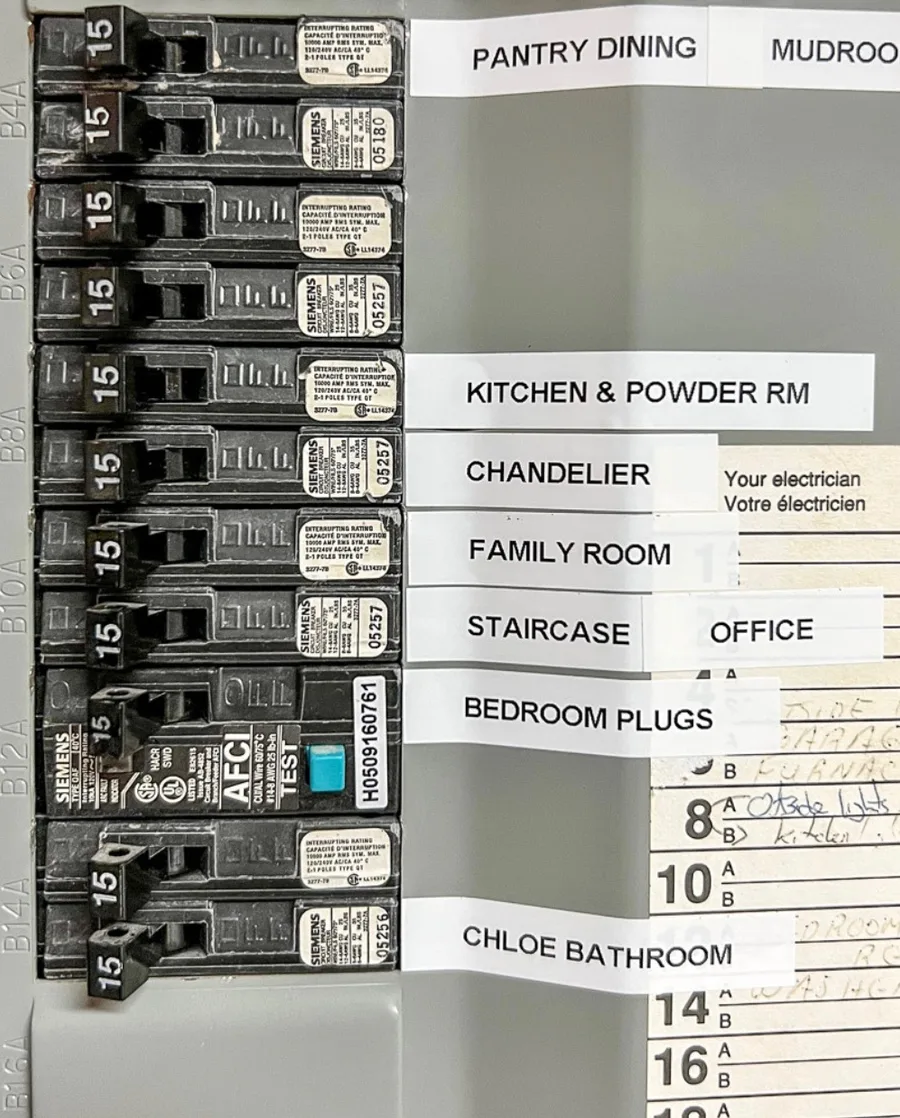
Real conditions from Portman Electric assessments and rewiring projects in Toronto homes — and the finished work that replaces them.
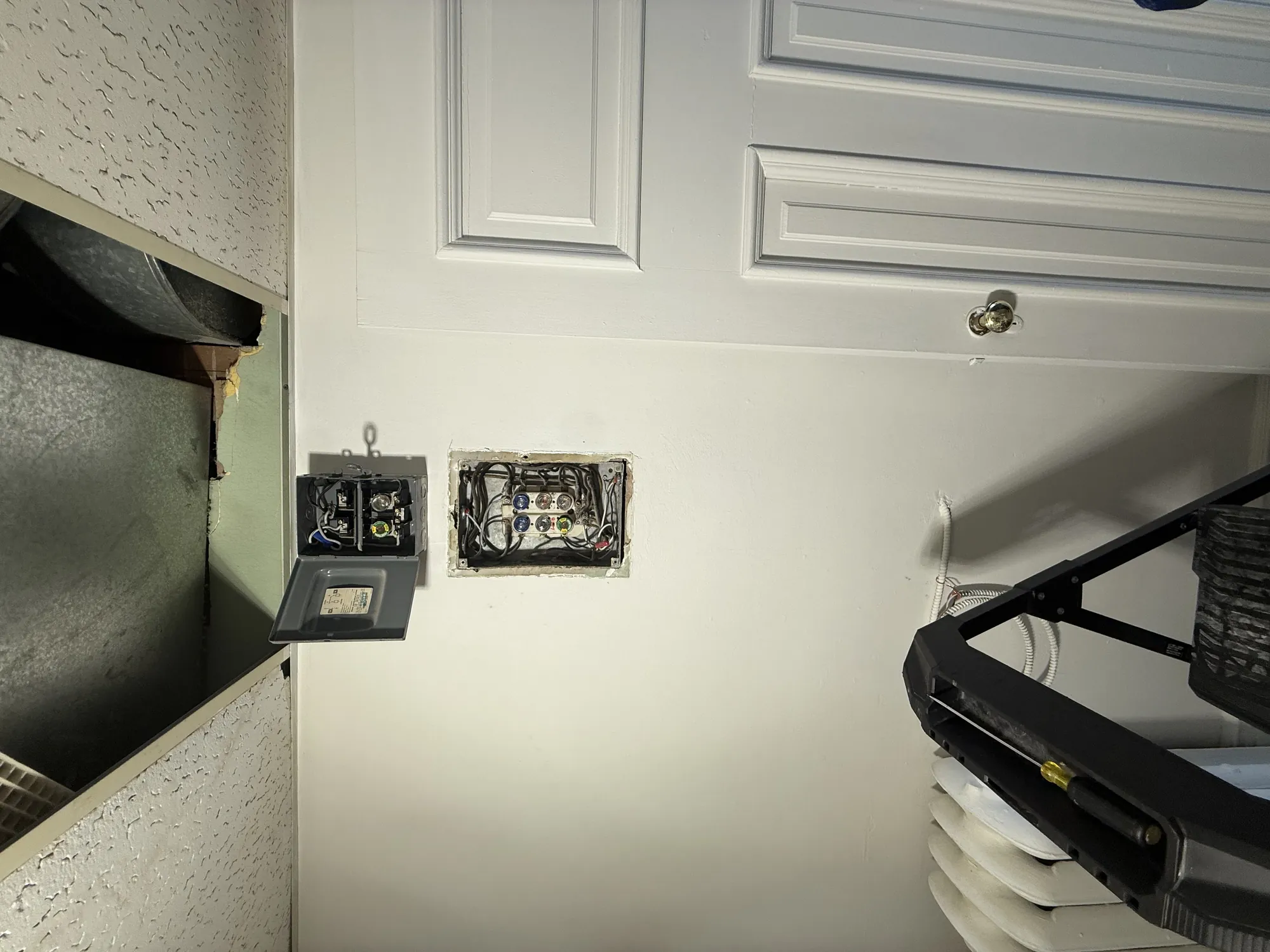
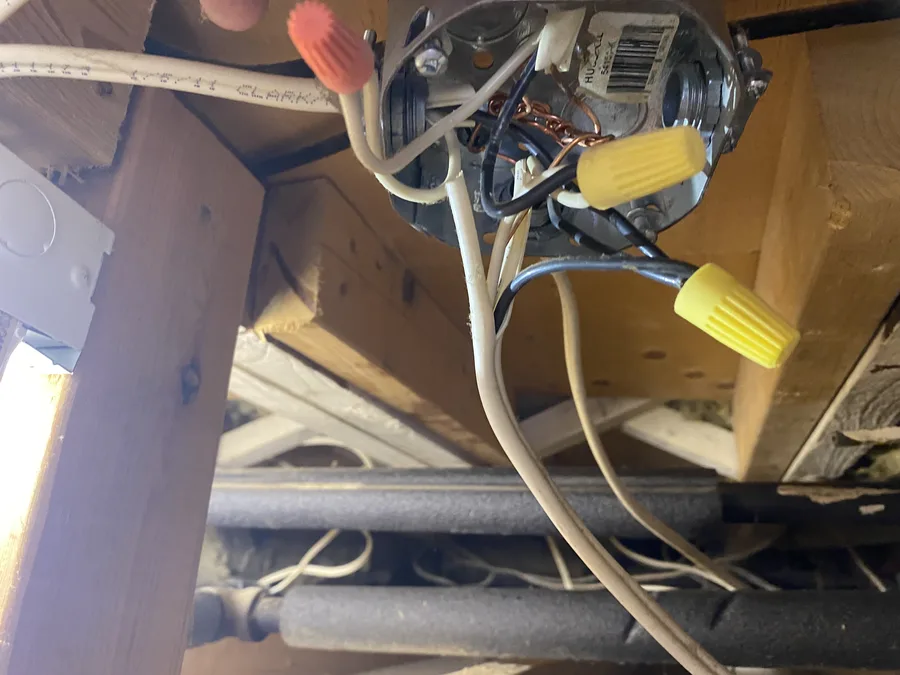
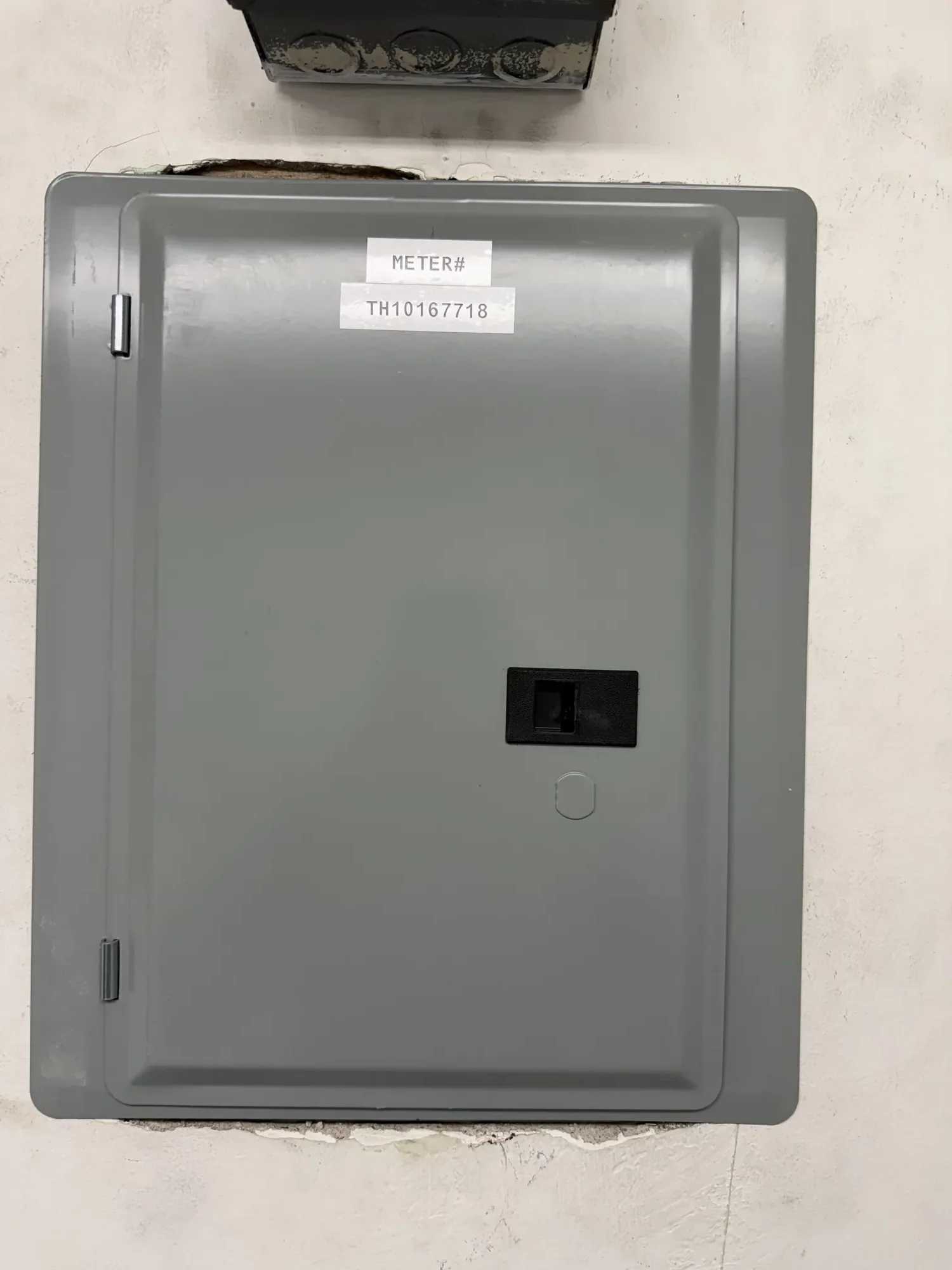
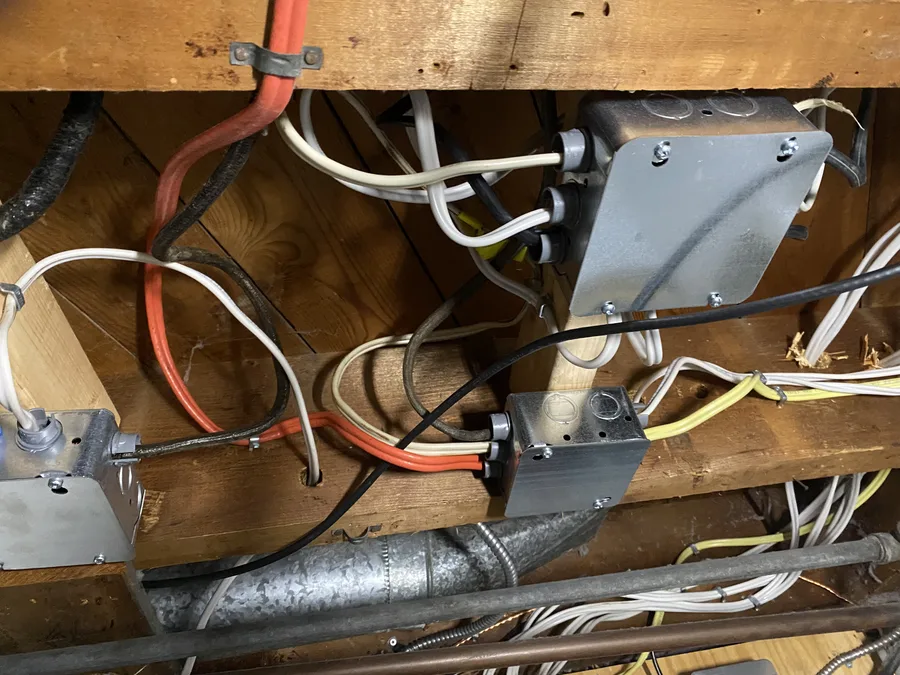
Planning a rewire or answering
an insurer's request?
Send a few photos — we'll explain the realistic scope before anyone visits.
Knob-and-Tube Rewiring FAQs
What is knob-and-tube wiring?
Knob-and-tube is the early residential wiring method used in North American homes from roughly the 1900s into the middle of the twentieth century. It runs a separate hot conductor and neutral conductor through the building, supported by ceramic knobs where a wire travels along framing and ceramic tubes where it passes through it. The two conductors stay physically apart instead of being bundled together in one cable, and the system includes no equipment grounding conductor — that missing ground is the main practical difference from modern wiring.
How do I know if my Toronto house has knob-and-tube wiring?
The clearest sign is in unfinished space: ceramic knobs holding single conductors along joists, and ceramic tubes where wires pass through framing, usually visible in a basement ceiling or an attic. Ungrounded two-prong receptacles throughout the house, and notes from a home inspection or an insurer, are supporting clues. What you can see does not confirm the whole system — knob-and-tube is very often mixed with wiring added later, and some of what is visible may already be dead. Do not open panels or energized equipment to check; testing and circuit tracing by a licensed electrician is what establishes which circuits are actually live.
Is knob-and-tube wiring dangerous?
Not automatically, and age on its own is not the deciding factor. The concerns are specific: brittle or deteriorated insulation, the absence of an equipment grounding conductor, unsafe alterations and improper extensions added over the decades, contact with thermal insulation where that applies, overloaded circuits, and incompatible modern modifications. Knob-and-tube that has been left undisturbed and lightly loaded can be in reasonable condition, while wiring that has been extended repeatedly by non-electricians may not be. Condition and history are what a licensed electrical contractor assesses before recommending anything.
Is knob-and-tube wiring illegal in Ontario?
No. It is not illegal for an older home to contain existing knob-and-tube wiring, and new installations of it simply aren't done today. What matters is the condition of the wiring, how it has been altered over the years, and how heavily it is loaded. The Electrical Safety Authority recommends having older wiring evaluated by a Licensed Electrical Contractor rather than assuming it is either fine or dangerous.
Does every Toronto home with knob-and-tube need a full rewire?
No. Some homes have only a few active knob-and-tube circuits left — often lighting — while the rest was replaced during past renovations. Circuit tracing tells us what is actually live. From there, the right scope might be a full rewire, a partial replacement, or targeted corrections.
Can knob-and-tube wiring be replaced without opening every wall?
Usually a large share of the new wiring can be fished through basements, attics, existing device openings and accessible cavities. Some access openings are still normal in a finished home — framing, fire blocking and old renovations can block a route — but opening every wall is not how we work.
How much drywall or plaster damage should I expect?
It depends on your home's construction. We plan routes first, fish cable where the structure allows, and make small, controlled openings only where required. Where openings can be predicted, we explain them before proceeding. Your written estimate also states who is responsible for drywall or plaster repairs so there are no surprises.
Can I stay in my home during rewiring?
In many projects, yes. Power is typically interrupted area by area rather than for the whole house at once, and we review the schedule with you in advance. For larger full-home rewires, some homeowners prefer to be out during the noisiest days — we'll help you plan either way.
How long does a knob-and-tube rewire take?
It depends on the size of the home, how much knob-and-tube is still active, access to the attic and basement, and whether panel work is included. A limited partial replacement can be short; a full rewire of a finished older home takes considerably longer. Your written estimate includes the expected duration for your specific project.
Does Portman Electric handle the ESA permit and inspection?
Yes. We file the required ESA notification for the electrical work, coordinate the inspection stages, and provide you with the resulting inspection documentation once the process is complete.
Will replacing knob-and-tube satisfy my insurance company?
Insurance requirements vary by provider and policy. Many insurers ask for confirmation that active knob-and-tube has been replaced, and we can provide ESA inspection documentation for the completed work — but the insurer makes the final coverage decision. If you have a written request from your insurer, send it with your estimate photos so we can scope the work to what they're asking for.
Can you rewire only part of the house?
Yes. Partial replacement can make sense when knob-and-tube remains active in a limited, traceable part of the house. Whether it's the right call depends on circuit tracing, accessibility, panel condition, your goals and any insurer requirements — partial work doesn't automatically satisfy every insurance company.
Do I need to replace my fuse box or electrical panel?
Not always, but old wiring and old panels often go together. If the existing panel can't properly support the new grounded circuits — or it's an obsolete fuse box — we'll recommend replacing it as part of the project and explain why in the estimate.
Can you add grounded three-prong receptacles?
Yes. New circuits are run in modern grounded copper cable, so the receptacles they serve are properly grounded three-prong devices, with AFCI or GFCI protection added where required. What does not work is swapping a two-prong receptacle for a three-prong one on its own — that changes the face of the outlet without creating any equipment grounding path, so anything plugged into it is left ungrounded while appearing grounded. A genuine three-prong receptacle needs an appropriate equipment grounding path or another code-compliant solution, and which one applies is decided during the assessment.
Should knob-and-tube wiring be covered with insulation?
Energized knob-and-tube should not simply be buried in thermal insulation. This comes up constantly during attic insulation and energy-retrofit projects. Before insulating, have the circuits traced and evaluated — in many cases the wiring in that area is replaced first so the insulation work can proceed without concern.
How do I know whether old wiring is still active?
You usually can't tell by looking. Some knob-and-tube was disconnected decades ago and left in place; some looks abandoned but is still live. We confirm what's active through testing and circuit tracing at the panel before recommending any scope of work.
Can you rewire plaster-and-lath walls?
Yes. Plaster homes are a large part of our rewiring work. Plaster and lath behaves differently than drywall — it's more brittle and hides the framing — so routes are planned more conservatively, existing openings are reused where practical, and surfaces are protected throughout.
Can I get home insurance in Toronto if my house has knob-and-tube wiring?
It depends on the insurer and the policy — requirements are not standardized. Depending on the company you may be asked for an electrical inspection, for specific repairs, for active knob-and-tube to be replaced as a condition of coverage, or you may be offered coverage with conditions attached; some insurers decline it and others do not. Portman Electric is an electrical contractor rather than an insurance advisor, so confirm what your own insurer requires in writing first. Once you have that, we can scope the electrical work to what they are actually asking for and provide the ESA inspection documentation for the completed work.
How much does knob-and-tube replacement cost in Toronto?
There is no single price, because the scope varies enormously between houses. The cost is driven by the size of the home, how much knob-and-tube is still active rather than already replaced, attic and basement access, plaster versus drywall construction, the number of circuits, how many receptacles and lighting points are involved, whether existing devices and fixtures are reused, the condition of the panel, ESA requirements, any deficiencies found once the work is underway, and whether other renovations are happening at the same time. We do not quote this kind of work from a formula — send photos for a remote estimate or book an assessment.
Is knob-and-tube common in older Toronto homes?
It turns up fairly often in houses built before modern wiring became standard, which in Toronto means a good deal of the pre-war housing stock — areas such as East York, Riverdale and Leslieville, Cabbagetown, The Annex and parts of Leaside. That does not mean most houses in those neighbourhoods still have it. A great many were rewired decades ago, and the most common situation we find is a house where only one or two original circuits are still live, usually lighting. Tracing the circuits is the only way to know what is in a specific house.
Does Portman Electric replace knob-and-tube wiring in East York, Leaside and Riverdale?
Yes, and those are among the areas where the work comes up most often because of the age of the housing. The method is the same in each: trace which knob-and-tube circuits are still live, review the panel and service, plan cable routes that use attic and basement access wherever the structure allows, and file the ESA notification for the work. What differs between them is construction — plaster and lath, balloon framing, finished attics and converted third floors all change how much cable can be fished and how much needs an opening.
Electrician in East York →Electrician in Leaside →Electrician in Riverdale & Leslieville →
Should knob-and-tube wiring be replaced during a renovation?
A renovation is often the most efficient time to do it. Work that already has walls, ceilings or floors open removes most of the access problem that makes rewiring invasive in a finished house, and new circuits can be run while the structure is exposed. That does not mean every renovation calls for a whole-house rewire — the right scope depends on how much knob-and-tube is still active, where it runs relative to the work, the condition of the wiring and panel, and what the finished space will demand electrically. It is worth assessing before the walls close rather than after.
Can a house with knob-and-tube wiring support modern electrical loads?
Sometimes for ordinary household use, but it depends on much more than the branch wiring. Knob-and-tube circuits were designed for lighting and light receptacle loads, not for modern kitchens, EV charging, heat pumps, air conditioning, electric ranges and dryers, hot tubs, heated floors or an addition. The service size, the panel, the circuit design and the condition of the wiring have to be evaluated together — replacing old branch wiring adds no capacity if the service itself is the limit, and upgrading the service does not improve deteriorated branch circuits. Both get looked at before a plan is proposed.
Can I install pot lights or new circuits in a home with knob-and-tube wiring?
Usually yes, and the new work is installed in modern grounded cable rather than by extending the old system. The thing to establish first is what the new work will connect to: a new circuit should not be fed from, spliced into or left depending on knob-and-tube that has not been assessed. In practice, adding pot lights to an older home often prompts a closer look at the lighting circuits in that area, because those are frequently the last knob-and-tube circuits still live.
What should I do if old wiring is hot, sparking or smells burnt?
If there is smoke, fire or immediate danger, get everyone out and call 911. Otherwise stop using the affected circuit, do not touch or try to repair the wiring, and call a licensed electrical contractor for urgent assessment. Heat at a device, sparking and burning smells in an older home commonly trace back to a deteriorated connection, an overloaded circuit or an improper alteration — and in a house with knob-and-tube those conditions are worth investigating even when the symptom stops on its own.
Who replaces knob-and-tube wiring in Toronto?
Portman Electric is an ECRA/ESA Licensed Electrical Contractor, Licence #7018049, carrying out knob-and-tube replacement and older-home rewiring across Toronto. The work covers circuit tracing to establish what is still live, branch-circuit rewiring in modern grounded cable, panel and service assessment where the existing equipment cannot support the new circuits, and the ESA notification and inspection for the finished work. Documented projects include a complete home rewire in Kensington Market and a two-fuse-box replacement in a century building on St. Clair West.
What photographs should I send for an estimate?
Send photos of your electrical panel (door open and closed), any visible basement or attic wiring, a typical outlet or switch, and the electrical pages of your home-inspection report if you have one. Adding your approximate square footage, number of floors, whether the basement is finished, and any written insurer request lets us give you a much more useful estimate.
Get an Estimate for Knob and Tube Rewiring in Toronto
Own an older Toronto home with active knob-and-tube wiring? Send Portman Electric photographs of your panel, visible basement or attic wiring, and any inspection or insurance documents. We'll review the information and explain the next step.
ECRA Licence #7018049 · Licensed Electrical Contractor · Toronto & the GTA
Related Services
Our Older-Home Rewiring Projects
A full gut rewire in Kensington Market and a two-fuse-box replacement in a century building on St. Clair West.