ESA Permitted
Every install · Every time
EV Charger
Installation
Toronto
Portman Electric installs Level 1 outlets, NEMA 14-50 receptacles, and hardwired Level 2 EV chargers for homeowners across Toronto and the GTA. We check your panel capacity, complete the correct installation, and handle the ESA permit from start to finish.
Done Right, From the Panel Up
Licensed EV Charger Installation in Toronto
An EV charger is one of the largest continuous loads you can add to a home. A proper installation starts before any wire is pulled — with a load calculation that confirms what your panel can safely support, and a circuit sized to your vehicle rather than a one-size-fits-all breaker.
Portman Electric is an ECRA/ESA-licensed electrical contractor installing Level 1 outlets, NEMA 14-50 receptacles, and hardwired Level 2 chargers across Toronto and the GTA — with the ESA permit filed on every job.
Panel capacity & breaker space
Service size & load calculation
Your vehicle's on-board charger
Charger type: plug-in or hardwired
Load management (EVEMS) options
Wire run, mounting & location
Not Sure If Your Panel Can Handle an EV Charger?
Send us a photo of your electrical panel, your charger location, and your parking area. We'll let you know whether a Level 1 outlet, NEMA 14-50, hardwired charger, load management system, or panel upgrade makes the most sense — usually without a site visit.
Your electrical panel
Door open, so we can see the breakers and main.
Your charger location
Where you want it — wall, garage, or driveway.
Your vehicle
Make, model & trim so we size the circuit correctly.
What We Install
Complete EV Charging Services
From a simple overnight outlet to a full panel upgrade — every option installed to the Ontario Electrical Safety Code, on a dedicated circuit, with the ESA permit handled.
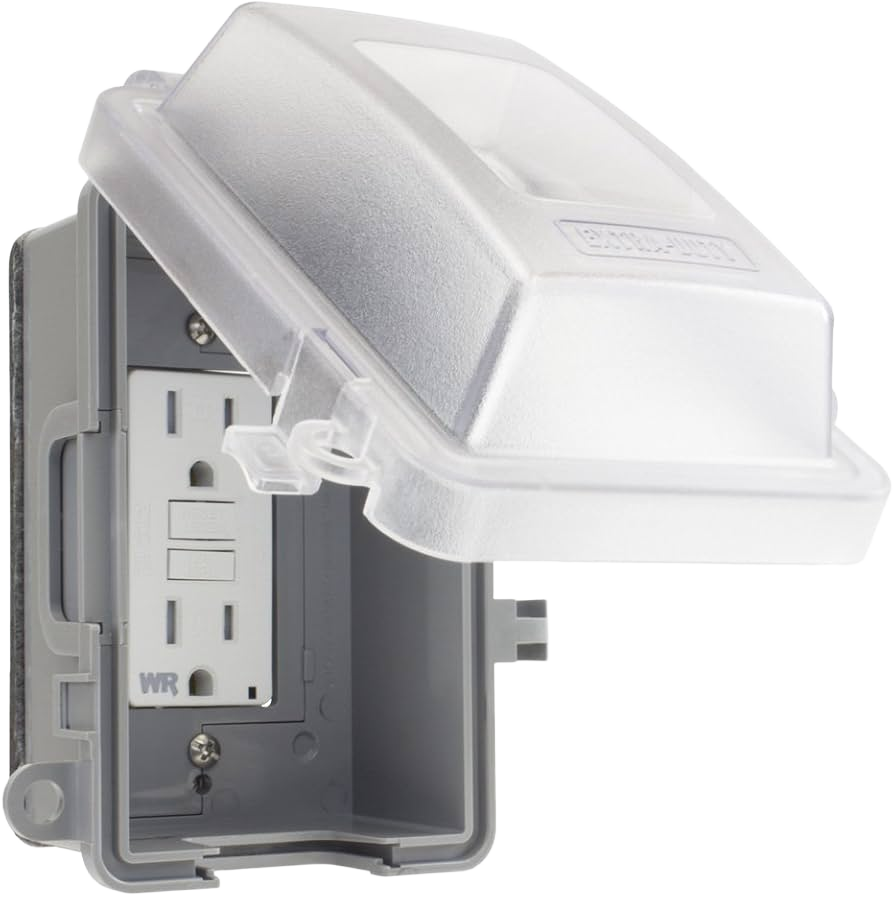
Level 1 EV Outlet
A dedicated 120V outlet for slow overnight charging — the simplest, lowest-cost setup for plug-in hybrids and low-mileage drivers.
- Lowest-cost way to charge at home
- Ideal for PHEVs and short commutes
- Dedicated circuit, installed to code
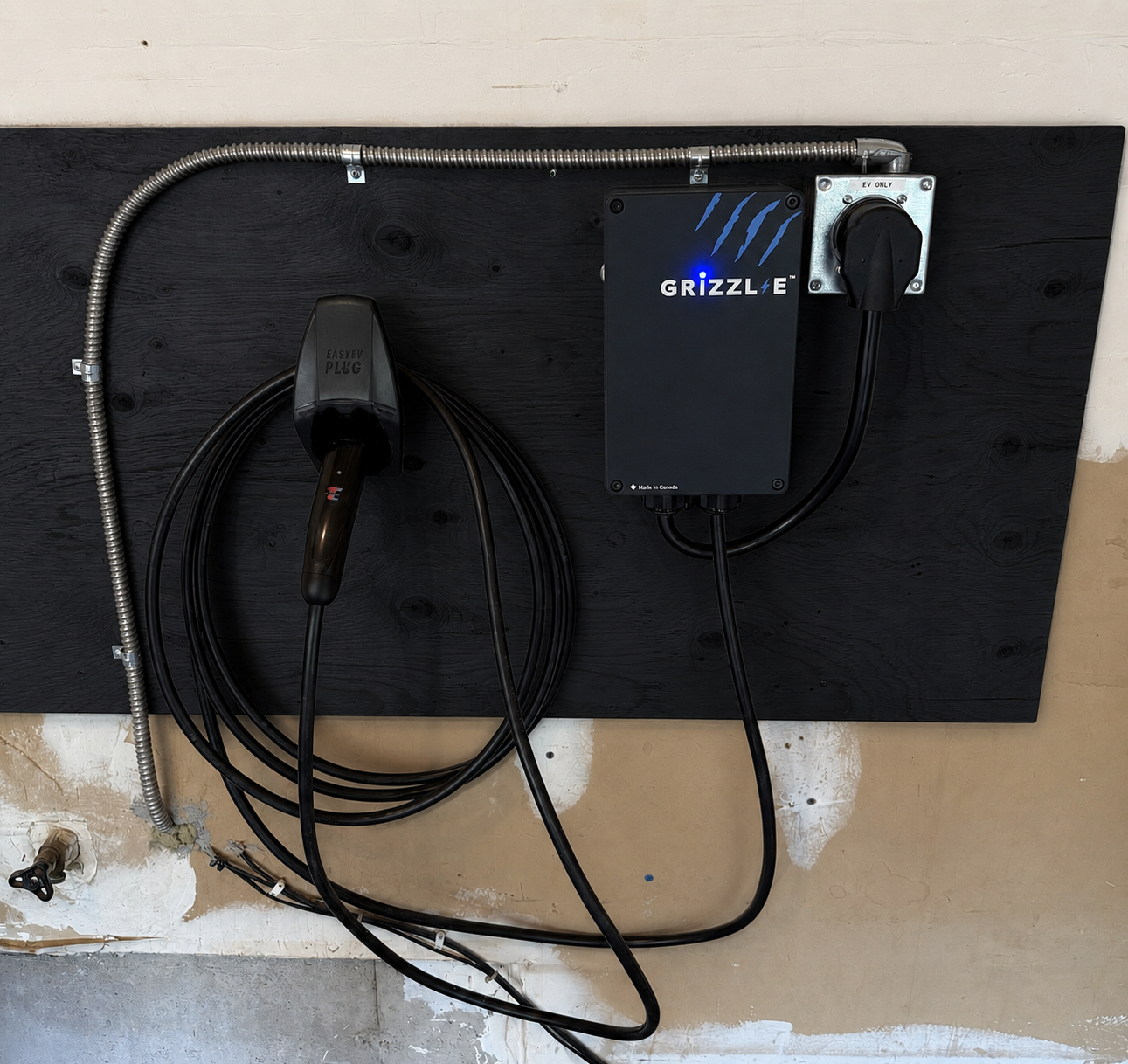
NEMA 14-50 Outlet
A 240V, 50A receptacle — the universal Level 2 standard. Plug in any portable EVSE and take it with you if you ever move.
- Works with every major EV brand
- Flexible, portable charging
- Up to 40A continuous charge rate
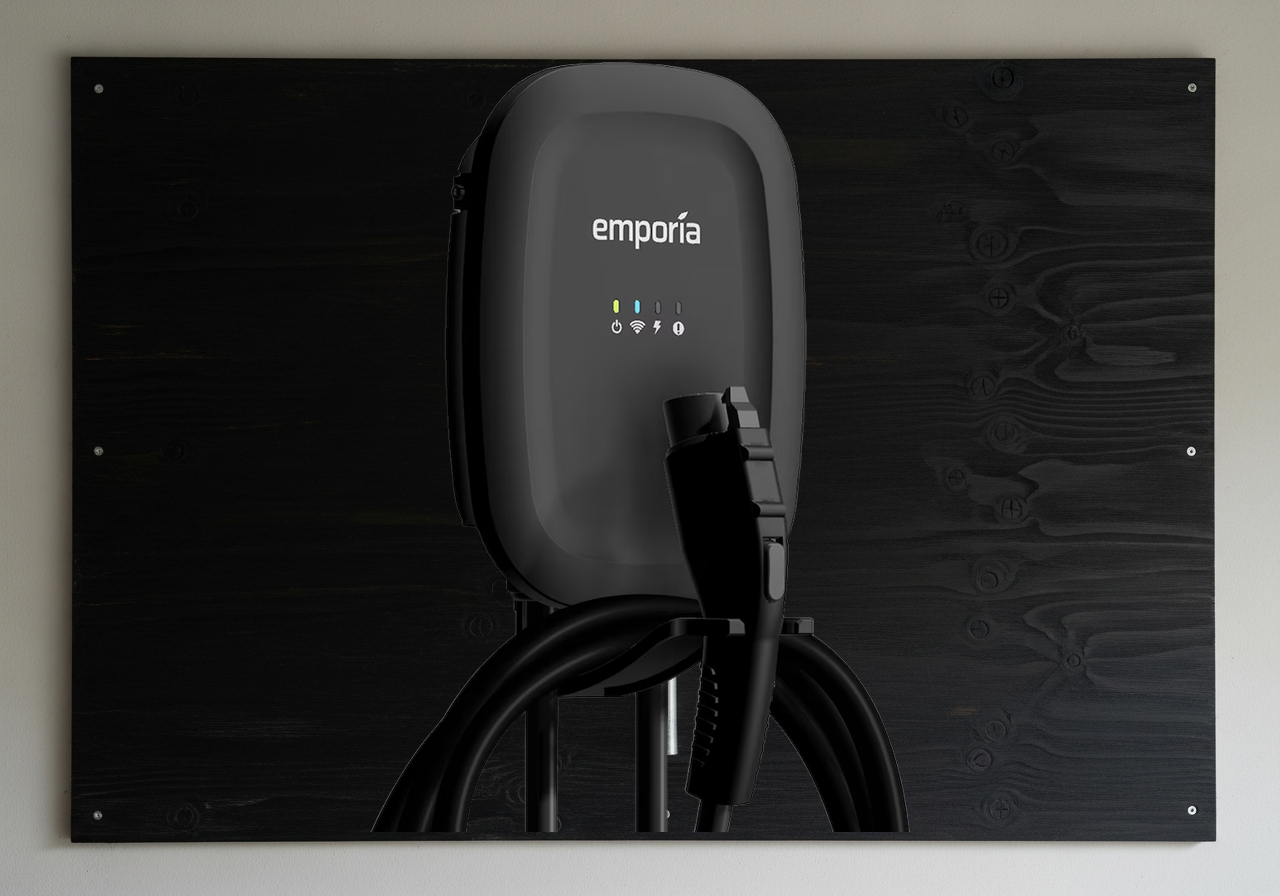
Hardwired Level 2 Charger
A permanently wired charger for the fastest, cleanest home charging — the right choice for high-amperage EVs and electric trucks.
- Fastest home charging speeds
- Cleaner, permanent installation
- ChargePoint, Wallbox, Emporia & more
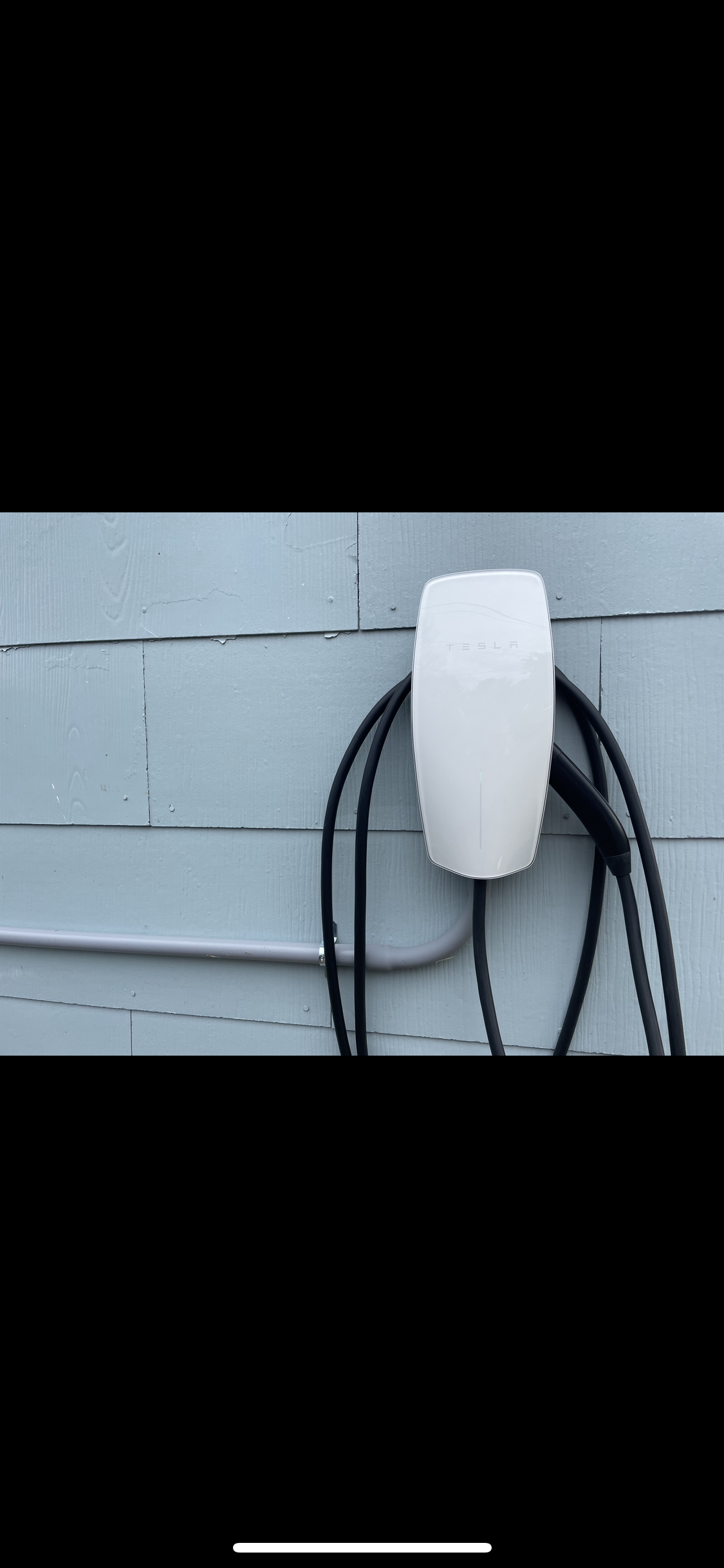
Tesla Wall Connector
Tesla's hardwired home charger, installed and ESA-permitted. Up to 48A with built-in power sharing and load management.
- Up to 48A for Model 3, Y, S & X
- Built-in power sharing & load management
- Clean wall-mount with proper conduit
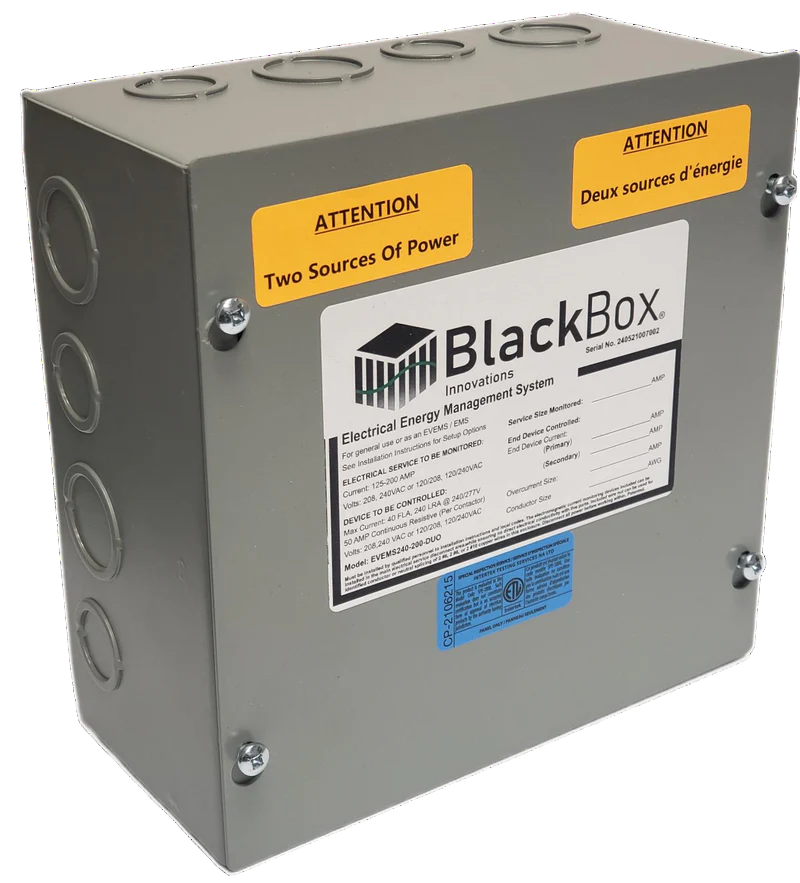
EV Load Management / EVEMS
A smart charger that monitors your panel in real time and throttles charging to stay within capacity — often avoiding a panel upgrade entirely.
- Add EV charging to a 100A panel
- Often avoids a costly service upgrade
- Automatic, real-time load balancing
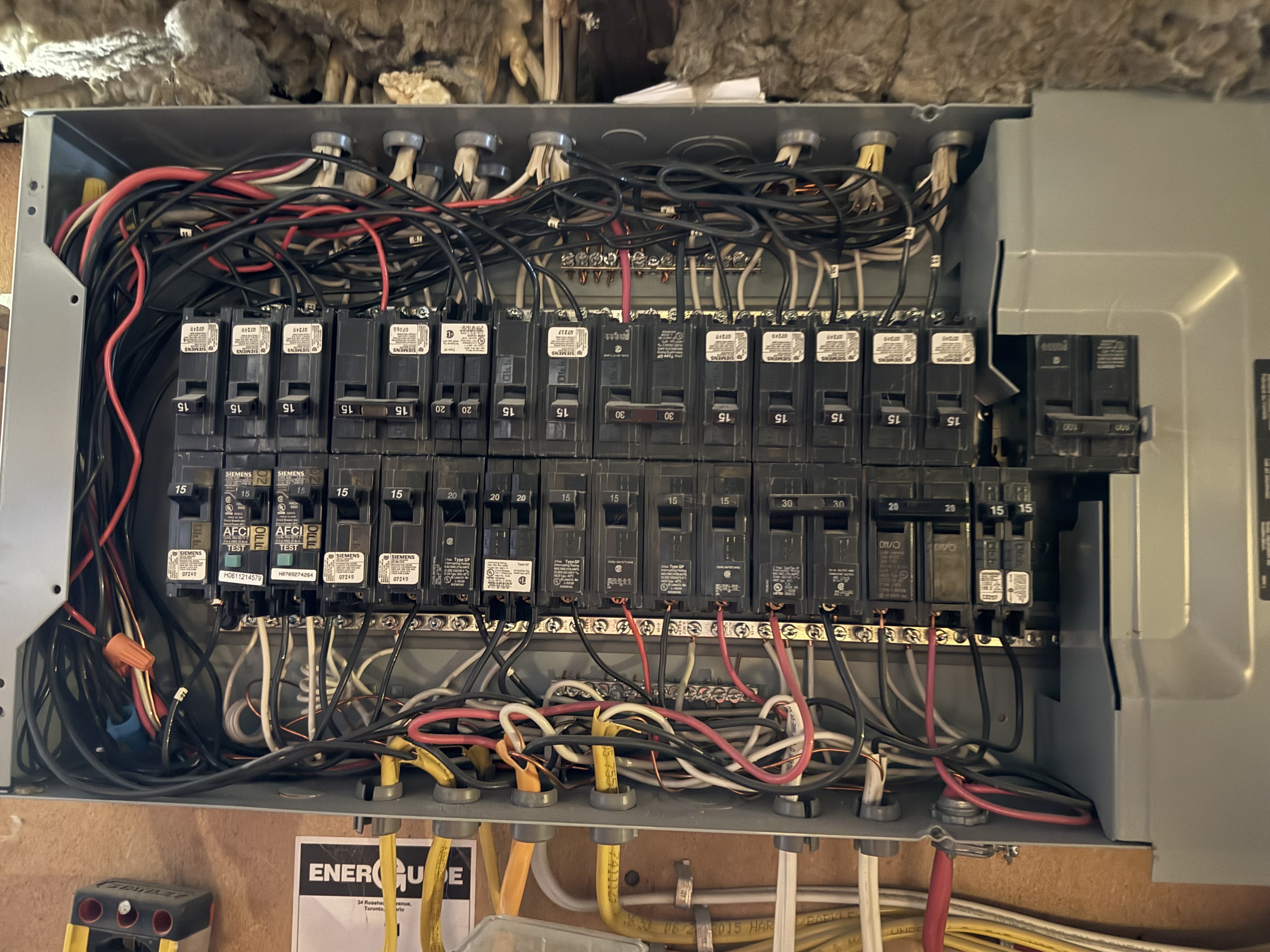
Panel Upgrades for EV
When a panel is genuinely out of capacity, we upgrade to 200A service — coordinated with Toronto Hydro and fully ESA-permitted.
- 200A service for whole-home headroom
- Toronto Hydro coordination handled
- Future-proofs your home's electrical
Charging Levels Explained
Level 1 vs Level 2 vs DC Fast
Level 1
120V · 12–15A
Standard household outlet. About 8–12 km of range per hour. May be adequate for plug-in hybrids with small batteries or commuters under 40 km/day — but not practical for full EVs.
Level 2
240V · 16–80A
The right home charging solution. A full charge every night for virtually every EV. What every Toronto homeowner with an EV should have.
DC Fast
480V DC · 100–500A
Not installed in homes. Requires utility-scale infrastructure. Use public fast chargers for road-trip top-ups.
The 80% Continuous Load Rule — Ontario Electrical Safety Code
EV charging is a continuous load. The Code limits continuous loads to 80% of a circuit's rated capacity. 50A breaker → 40A max charge rate. 60A breaker → 48A max. 100A breaker → 80A max. This is why circuit breakers must be sized 25% larger than the charger's peak draw — and why "setting a 14-50 outlet to 48A" is a code violation and fire risk.
The Big Decision
Hardwired Charger vs NEMA 14-50 Outlet
Both are proper Level 2 installations on a dedicated 240V circuit. The right choice depends on your vehicle, your panel, and how you plan to charge.
NEMA 14-50 Outlet
Plug-in · up to 40A continuous
- Plug in any portable EVSE — and take it with you if you move
- Usually the lower-cost Level 2 installation
- One universal outlet works with every major EV brand
- Installed with the GFCI breaker protection today's code requires
- Charge rate capped at 40A by the 80% continuous-load rule
Hardwired Level 2 Charger
Permanent · 48A–80A capable
- Supports 48A, 64A, and 80A circuits — the fastest home charging
- No plug or receptacle to wear out under daily use
- Cleanest permanent installation, indoors or out
- The right choice for Tesla Wall Connectors and electric trucks
- Required for most load-sharing and higher-amperage setups
There's no universal winner. A vehicle with a 32A on-board charger fills up just as fast from a 14-50 outlet as it would hardwired — while an F-150 Lightning only reaches full speed hardwired on an 80A circuit. We recommend whichever option actually matches your vehicle and your panel's real capacity. Want the deep dive? Read our full 14-50 outlet vs hardwired charger comparison.
Find Your Car
Charging Specs & Circuit Requirements
Every vehicle has an on-board charger (OBC) that caps how fast it accepts AC power. A bigger circuit won't speed up a car whose OBC is maxed out — we right-size every install.
| Vehicle | Max AC Rate |
|---|---|
| Tesla Model 3 (RWD) | 32A / 7.7 kW |
| Tesla Model 3 / Y (Long Range / Perf) | 48A / 11.5 kW |
| Tesla Model Y (RWD) | 32A / 7.7 kW |
| Hyundai IONIQ 5 / Kia EV6 | 48A / 11 kW |
| Hyundai IONIQ 6 | 48A / 11 kW |
| Ford F-150 Lightning | 80A / 19.2 kW |
| Chevrolet Equinox EV | 32A / 7.7 kW |
| Chevy Silverado EV / GMC Hummer EV | 80A / 19.2 kW |
| Volkswagen ID.4 | 32A / 7.2 kW |
| Rivian R1T / R1S | 48A / 11.5 kW |
| Nissan LEAF (40 kWh) | 27A / 6.6 kW |
| BMW iX / i4 | 48A / 11 kW |
Range estimates approximate. Always verify your specific trim's OBC spec with the manufacturer before installation.
Equipment
Charger Brands We Install
Supply your own charger or have us source the right one — we install any certified unit. And the circuit we build works with every EV and PHEV sold in Canada: Tesla, Ford, Chevrolet & GMC, Hyundai, Kia, Toyota, Honda, Nissan, Volkswagen, BMW, Mercedes-Benz, Volvo, Polestar, Rivian and more.
Good to know: charging speed isn't set by the brand on the box. It's set by your vehicle's on-board charger, the charger's amperage, and the circuit behind it — which is why we size all three together.
Transparent Pricing
What Does EV Charger Installation Cost in Toronto?
Level 1 120V / 20A Outlet
Plug-in hybrids & overnight charging
NEMA 14-50 Outlet
Flexible, portable Level 2 charging
Hardwired Level 2 Charger
Tesla Wall Connector, ChargePoint, Wallbox
Load Management / EVEMS
Homes with limited panel capacity
Panel Upgrade for EV
Older or fully-loaded electrical panels
These are starting prices, not a universal flat rate. Your final quote depends on:
We quote with no hidden add-ons — the number you approve is the number you pay.
Want an exact number for your home?
Get a free quote — no obligation.
Panel Capacity
Do I Need a Panel Upgrade for EV Charging?
Not always. Plenty of Toronto homes can add a Level 2 charger without touching the panel — and we always confirm with a real load calculation before ever recommending an upgrade. Here's a quick way to tell which camp you're likely in:
You likely don't need an upgrade if…
- You have 100A+ service with gas heat, range, and dryer
- Your panel has free breaker spaces
- You're open to a smart load-management charger
- You mainly need overnight charging for a normal commute
You may need an upgrade if…
- Your panel is full, with no spare breaker slots
- You already run electric heat, central AC, a hot tub, or a pool
- You have 60A service or an older fuse box
- You want maximum 48A+ charging with no compromise
Not sure which applies to you? Send a photo of your panel and we'll check your real available capacity — before you spend a dollar on an upgrade. Need the full picture? See our 200A panel upgrade service.
Beyond the Attached Garage
Detached Garage & Outdoor EV Charger Installations
Toronto's older neighbourhoods run on laneway garages and driveway parking. Both are entirely workable — they just need the right plan.
Detached Garages
If your garage has no power — or not enough — we run a new circuit from the house panel through underground conduit, trenched and buried to code. If the garage already has a sub-panel, we assess whether the EV circuit can land there instead.
- Underground conduit from house to garage
- Sub-panel assessment and upgrades where needed
- Depth, burial, and conduit specs per the Code
See our electrical trenching & underground conduit service for how the digging side works.
Outdoor & Driveway Charging
No garage? No problem. We mount weatherproof chargers and covered receptacles rated for Toronto winters directly on exterior walls — positioned so the cable reaches your parking spot without crossing walkways.
- Weatherproof (NEMA 3R/4-rated) chargers and enclosures
- In-use covers for outdoor receptacles
- Solid exterior mounting with clean conduit runs
Detached-garage quotes are easy to start remotely: send a photo of your panel, your garage, and the path between them.
Text Photos to 647-835-7757Multi-Unit & Business
Condo, Multi-Unit & Commercial EV Charging
EV charging in a condo or commercial property is absolutely doable — but no two buildings are alike, and anyone quoting one sight-unseen is guessing. Installations typically involve building approvals, a review of the available service capacity, and often load-sharing equipment. We handle that process start to finish:
Board & property-management approvals
Documentation and drawings your condo board or manager will ask for.
Load-sharing & EVEMS
Add chargers within the building's existing capacity — often without service upgrades.
Metering options
Tie into your unit's meter or set up separate metering, depending on the building.
Networked chargers
Managed chargers for shared visitor parking, tenants, or employee fleets.
Future expansion planning
Conduit and capacity planned so the next chargers cost less than the first.
Engineering & utility coordination
Brought in where the building's service requires it — arranged for you.
Managing a building? We work with condo corporations and property managers across the city — see our property management electrical services, or commercial electrical services for workplaces and storefronts.
Why Portman Electric
We Do EV Installs the Right Way
Master Electrician, Owner-Operated
Owned and run by Joshua, a licensed Master Electrician. The person on the license is the person overseeing your install.
No Permit Shortcuts
We pull the ESA permit on every job. No exceptions. No 'we can skip it' conversations.
Load Calculation First
We assess your panel before anything else. If you don't need a 200A upgrade, we'll tell you — and save you thousands.
Honest Panel Advice
If a smart load-management charger solves it, we'll say so. We don't upsell panel upgrades you don't actually need.
Commercial-Grade Parts
Industrial receptacles, proper conduit, correct wire gauge for continuous EV loads. Not hardware-store shortcuts.
We Handle Everything
Permit, installation, ESA inspection coordination, walk-through. You get documentation at the end.
The Process
How We Install Your EV Charger
Send Photos or Reach Out
Text or upload photos of your panel, charger location, and vehicle. We reply with a fast quote — usually with no site visit needed.
Panel & Load Assessment
We confirm your available capacity and size the right circuit for your EV's onboard charger and the 80% continuous-load rule.
ESA Permit Filed
We pull the ESA permit before any work begins. It's never optional, and it's never skipped.
Clean, Code-Compliant Install
Dedicated circuit, correct wire gauge, EV-rated breaker, and a tidy charger mount with proper conduit.
Inspection & Walk-Through
We coordinate the ESA inspection, test the charger with your vehicle, and hand you the documentation.
Permits & Paperwork
ESA Permits & Inspections — Handled on Every Install
In Ontario, installing an EV charger circuit requires filing a notification (permit) with the Electrical Safety Authority and passing inspection under the Ontario Electrical Safety Code. That's not red tape — it's the paper trail that protects your insurance coverage and your home's resale. Here's how it works on our jobs:
Permit filed before work begins
We file the ESA notification for your installation up front — it's on us to handle, not you.
Installation inspected
An ESA inspector reviews the completed work. We coordinate the visit and meet the inspector when needed.
Certificate of Acceptance
Once the work passes, you receive the ESA Certificate of Acceptance — keep it for your insurer and future buyers.
Save More
EV Charging Rebates & Ways to Save
Ontario Electricity Rebate
The provincial rebate automatically reduces the electricity portion of eligible residential bills — the current rate is set by the province and shown on your Toronto Hydro bill.
Toronto Hydro Time-of-Use Rates
Charging overnight (7 pm–7 am weekdays, all weekend) costs significantly less per kWh. Smart chargers that auto-schedule off-peak charging pay for themselves.
Manufacturer Incentives
Ford, GM, Hyundai, and others sometimes include a home charger credit on purchase or lease. Ask your dealer before booking an installer.
Canada Greener Homes (check NRCan)
The original grant is closed, but Natural Resources Canada may introduce successor programs. Check nrcan.gc.ca for current status.
Ready to charge at home,
every night?
Toronto · Etobicoke · Scarborough · North York · GTA
EV Charger Installation — Service Areas
Portman Electric installs EV chargers for homeowners across Toronto and the wider GTA — from downtown condos and East End semis to North York and Etobicoke garages. If you don't see your neighbourhood listed, reach out anyway; we very likely cover it.
Common Questions
EV Charger Installation FAQ
Related Services
Ready to Install EV Charging at Home?
Licensed, ESA-permitted EV charger installation across Toronto and the GTA. Send a few photos and we'll get you an honest quote — fast.
ECRA/ESA Licensed #7018049 · Master Electrician · Owner-Operated