Schluter DITRA-Heat Electrical Wiring
DITRA-Heat is a widely used uncoupling membrane system, and the wiring has its own quirks — the cable is pressed into the membrane studs on site, so spacing, sensor placement and the order of work all get decided in the room. We handle the circuit, the thermostat and the testing, and work to your tile setter's schedule. For heated floors in general — cable, mats and other systems — see our electric radiant floor heating page linked below.

Typical Installation Time
The electrical portion is typically completed across two short visits: rough-in for the circuit, thermostat box and sensor sleeve, then final connection and commissioning after the tile is finished. Both are scheduled around the tile contractor.
How DITRA-Heat Differs From Cable and Mat Systems
With a mat system the spacing is fixed by the manufacturer and the roll goes down as supplied. With DITRA-Heat the membrane is bonded to the subfloor first and the heating cable is pressed into its studs by hand, so the spacing is chosen in the room. That flexibility is why tile setters like it around vanities, curbless showers and awkward layouts — and it is also why the electrical has to be confirmed against the actual layout rather than a spec sheet. The membrane doubles as uncoupling, protecting the tile from subfloor movement.
The Dedicated Circuit
DITRA-Heat cable runs on its own dedicated circuit, sized to the specific cable length being installed and protected as the Ontario Electrical Safety Code requires for floor heating. We confirm the cable model and heated area before sizing anything, and check your panel has a free space for it. Sharing an existing bathroom or lighting circuit is not an option with any floor heating system.
DITRA-Heat Thermostat and Floor Sensor
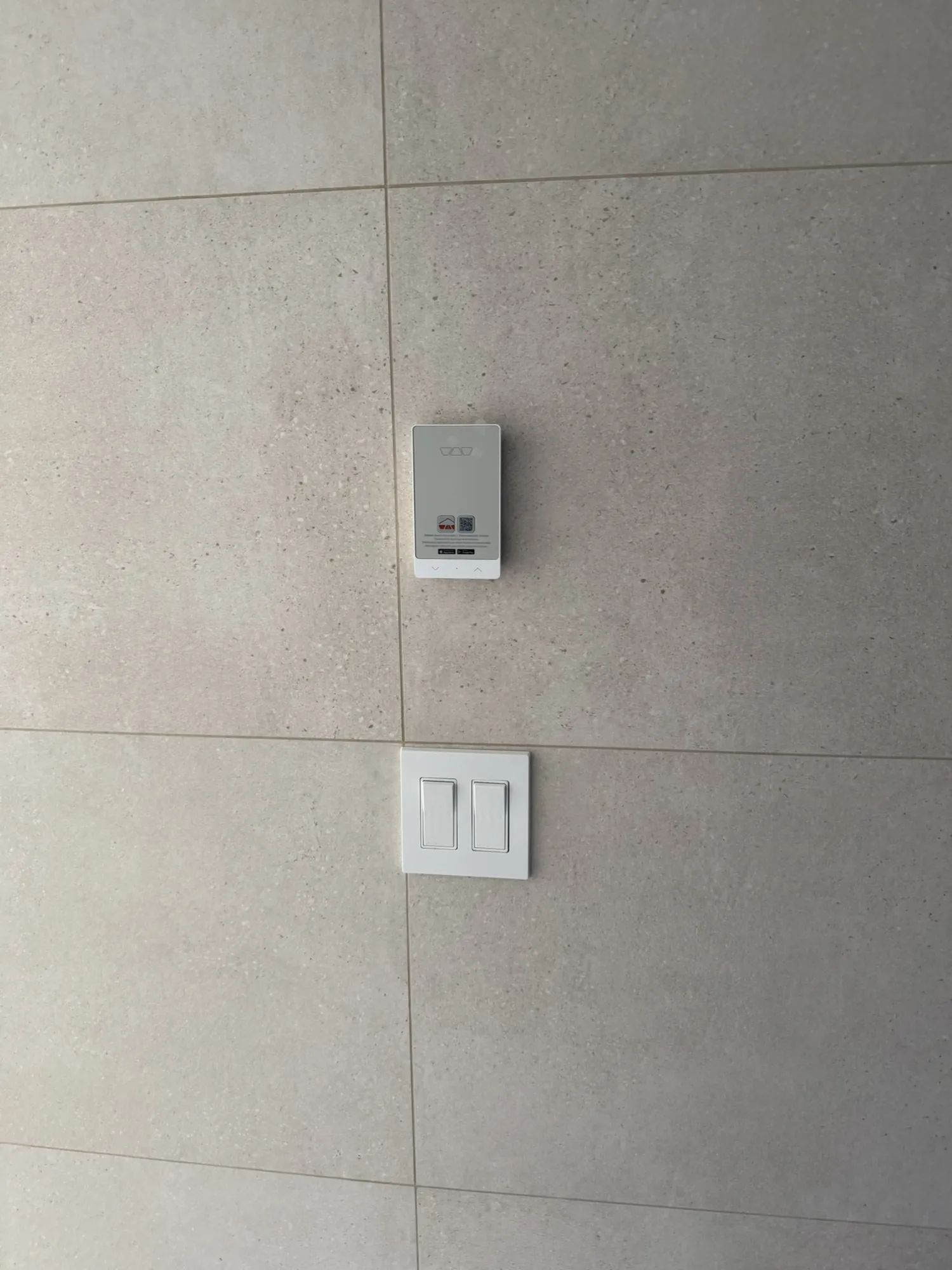
- Thermostat location and height planned with you, typically near the room's existing switch.
- Thermostat rough-in box installed before drywall.
- Floor sensor sleeve set into the membrane before tile, so a failed sensor can be replaced without breaking the floor.
- Sensor positioned between cable runs, never touching the cable.
- After tile: thermostat connected, floor temperature limit programmed for the covering, system commissioned with you.
Testing Before, During and After
We measure resistance and insulation resistance once the cable is set into the membrane, again while the tile is going down, and again before the thermostat is connected. Comparing those readings is what catches a cable nicked by a trowel while the floor is still open. A damaged cable discovered after the tile is grouted is a genuinely expensive problem, and this is the only reliable way to avoid it.
Ground-Fault Protection
Floor heating circuits require ground-fault protection under the Ontario Electrical Safety Code. Depending on the installation this is applied at the breaker or at the thermostat, and it is one of the things confirmed at the ESA inspection. It is not an optional upgrade.
How the Work Is Done
- 1Confirm the DITRA-Heat cable layout and spacing with the tile contractor.
- 2Install the thermostat rough-in box in the wall at the agreed location.
- 3Run a dedicated circuit from the panel — conductor and breaker sized to the cable being installed.
- 4Install the floor sensor sleeve in the membrane before the tile goes down.
- 5Measure and record resistance once the cable is set into the membrane.
- 6After tile is complete: connect the heating cable leads to the DITRA-Heat thermostat.
- 7Insert the floor sensor into its sleeve, positioned between heating runs.
- 8Re-test resistance and confirm ground-fault protection before commissioning.
ESA Permit & Inspection
All electrical work in Ontario requires an ESA permit. We pull the permit and coordinate the inspection — you don't have to manage any of that. Every job is done to Ontario Electrical Safety Code.
Ready to get started?
Call 647-835-7757Frequently Asked Questions
Related Services
Electric Radiant Floor Heating
The full guide to heated floors in Toronto — cable, mats and membrane systems, electrical requirements and costs.
Residential Rough-In
Bathroom and kitchen rough-in that includes heated floor prep.
Heated Driveways & Snow Melting
The same idea outdoors — heating cable under driveways, walkways and front steps.
Burning smell, sparking, power loss or repeated breaker trips? Portman Electric provides 24/7 emergency electrical service throughout Toronto. 24/7 emergency electrician Toronto
Ready to get started?
LET'S GET YOUR PROJECT DONE RIGHT
Call or text us at 647-835-7757 — or fill out our quick quote form for a free remote estimate.