Electric Heating
Systems in Toronto
Three systems, one set of electrical fundamentals. Portman Electric installs the wiring, controls and protection behind heated driveways, heated floors and roof de-icing across Toronto and the GTA — with the load calculation done before you get a price.
- ECRA/ESA Licence #7018049
- ESA Inspection Handled
- Fully Insured
- Owner-Operated
Electric heating covers any system that turns electricity directly into heat where you need it: heating cable embedded in a driveway or walkway so snow melts as it lands, cable under tile so a bathroom floor is warm underfoot, and cable along a roof edge or in a gutter so meltwater cannot refreeze into an ice dam. All three are electrical installations before they are anything else — they need a load calculation, dedicated circuits sized for continuous operation, ground-fault protection, sensible controls, and an ESA inspection at the end.
Three Kinds of Electric Heating
Pick the one you are thinking about — each has a full page covering how it works, what it needs electrically and what drives the cost.
Heated Driveways & Snow Melting
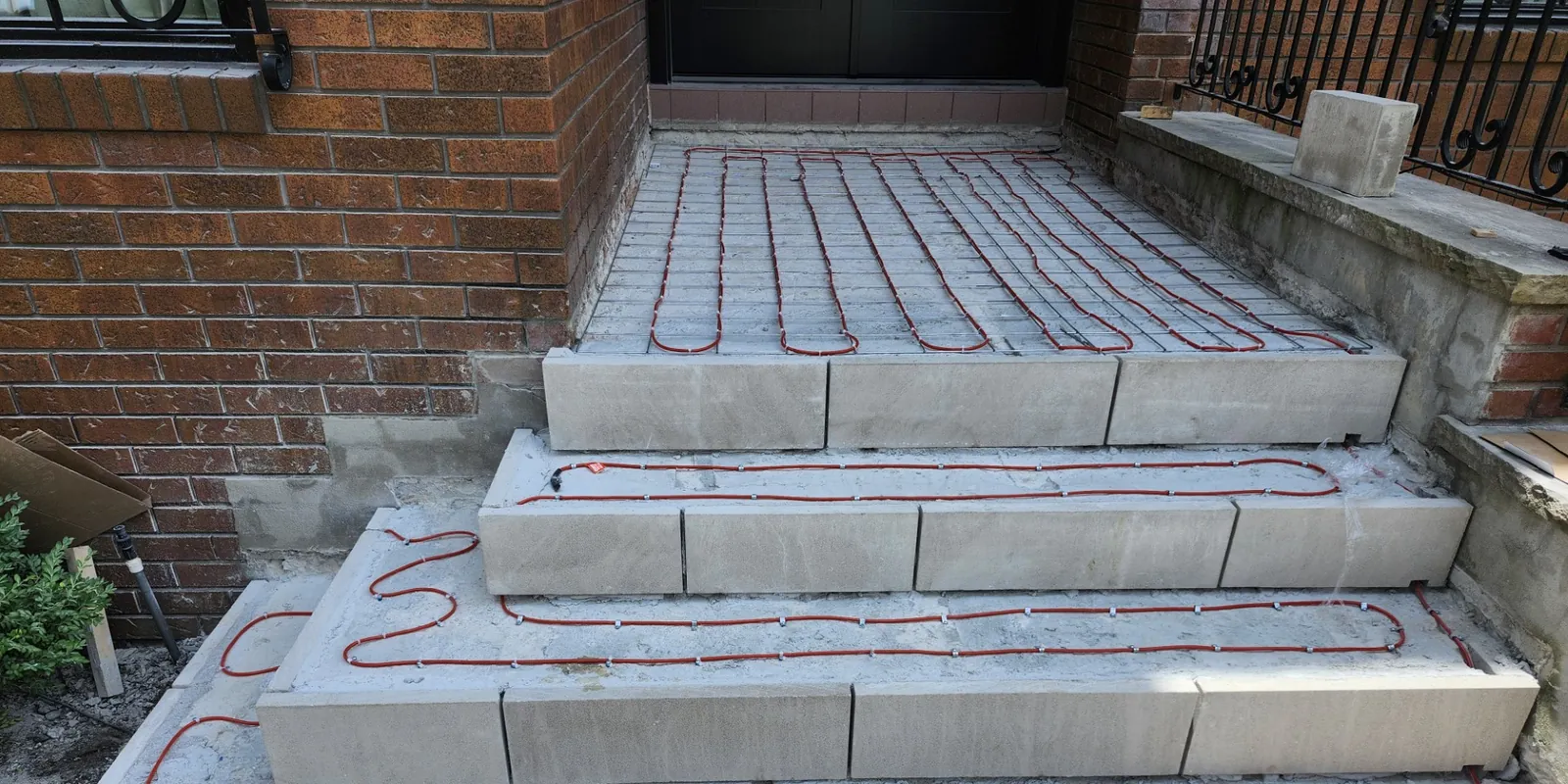
Heating cable embedded in a driveway, walkway, garage apron or set of front steps, switched automatically when snow starts. The largest electrical load of the three, and the one that most often brings a service upgrade with it.
- Asphalt, interlock and concrete
- Full coverage or tire tracks
- Pavement and aerial snow sensors
- Installed with your paving contractor
Electric Radiant Floor Heating
Heated floors under tile and stone in bathrooms, kitchens, basements and mudrooms. A modest, well-controlled load that often fits an existing service without an upgrade.
- Cable, mats and membrane systems
- Dedicated circuit and floor sensor
- Programmable and smart thermostats
- Scheduled around your tile setter
Roof & Gutter De-Icing
Self-regulating heating cable run along roof edges, in valleys, and through gutters and downspouts, so meltwater keeps moving instead of refreezing at the eave and building into an ice dam.
- Roof edges, valleys and gutters
- Downspouts kept clear to grade
- GFCI-protected exterior circuit
- Controller or manual switching
Stopping Ice Dams Before They Start
An ice dam forms when snow melts higher up a roof, runs down to the cold eave and refreezes there. The ridge of ice that builds up holds the next round of meltwater back until it finds its way under the shingles — which is when it stops being a roof problem and becomes a ceiling problem.
De-icing cable keeps a drainage path open. It is run along the roof edge, through the valleys where snow collects, and down through gutters and downspouts so water has somewhere to go all the way to grade. Self-regulating cable adjusts its output with the temperature rather than running flat out.
On the electrical side it needs a properly protected exterior circuit, weatherproof connections and a way to switch it — either a controller that watches conditions or a switch inside the house. It is worth saying plainly: de-icing cable manages the symptom. If the underlying cause is heat escaping into the attic, insulation and ventilation are the real fix, and the cable is there to protect the eave while you deal with that.
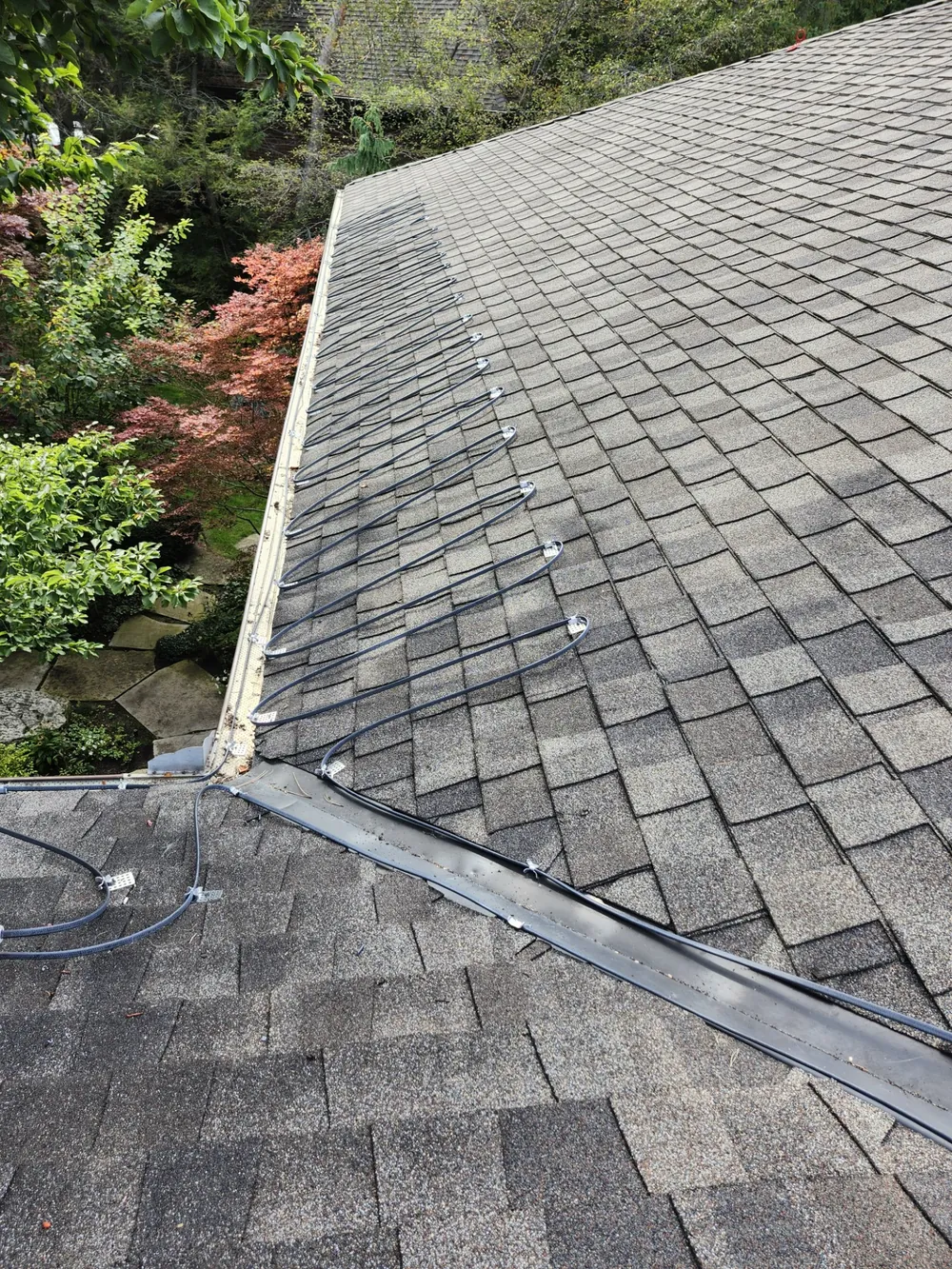
De-icing cable run along a roof edge to keep a melt path open at the eave.
The Electrical Work Behind All Three
Different systems, same fundamentals. This is the part that decides whether a system performs for a decade or causes problems in its first winter.
A Load Calculation First
Every electric heating system is a continuous load. Before anything is quoted, we calculate what it adds to your existing service — this is what decides whether the project needs a panel or service upgrade.
Dedicated Circuits
Nothing here shares a circuit with anything else. Conductors and breakers are sized for continuous operation, and larger systems are split into zones with a circuit each.
Ground-Fault Protection
Floor heating and exterior de-icing both require ground-fault protection under the Ontario Electrical Safety Code, applied the way the Code and the manufacturer's instructions specify.
Controls That Match the Job
A thermostat with a floor sensor indoors; temperature and moisture sensing outdoors. The controls decide whether a system quietly works or quietly wastes money.
ESA Notification & Inspection
The work is filed with the Electrical Safety Authority, the inspection is coordinated, and you get the documentation at the end.
Testing That Is Recorded
Embedded heating cable is tested before, during and after the surface goes over it, so damage is found while it can still be repaired.
Capacity is the usual constraint. A heated bathroom floor rarely troubles a modern panel. A heated driveway frequently means a service upgrade first — especially on the 60 and 100 amp services still common in older Toronto homes.
Planning Electric Heating in Toronto?
Tell us what you are heating and roughly how big it is, and send a photo of your electrical panel. We will come back with what it needs, whether your service can carry it, and what the electrical scope looks like.
ECRA/ESA Licence #7018049 · Licensed Electrical Contractor · Toronto & the GTA