Licensed Electrical Contractor
ECRA/ESA #7018049 · Toronto
Licensed Electrician in The Beaches, Toronto
Portman Electric provides licensed residential and commercial electrical work throughout The Beaches and Toronto's east end. From older-home wiring and panel upgrades to renovations, EV charging and electrical troubleshooting, the work is completed by an ECRA/ESA Licensed Electrical Contractor.
Text photos of the problem — 647-835-7757- ECRA/ESA Licence #7018049
- Old Toronto Home Specialist
- Fully Insured
- Owner-Operated
- 15+ Years Trade Experience
Looking for an Electrician in The Beaches?
Portman Electric is an ECRA/ESA Licensed Electrical Contractor serving The Beaches in Toronto. We handle residential and commercial electrical work on houses, condos and small commercial spaces across the east end — electrical panel and 200 amp service upgrades, knob-and-tube rewiring, renovation wiring for kitchens, bathrooms, basements and additions, EV charger installation, troubleshooting and repairs, electrical safety inspections, and urgent electrical problems. Portman Electric is owner-operated and fully insured, with 15+ years of trade experience and a focus on older Toronto housing. Where the work requires it, we file the ESA notification and coordinate the inspection. Licence #7018049 · 647-835-7757.
Electrical Work for Older Homes in The Beaches
The Beaches is an established part of Toronto, and a lot of the housing has been added to, divided, finished and refinished over the decades. Modernizing the electrical system in a house like that is usually more involved than swapping devices — the wiring behind the plaster, the size of the incoming service and the choices made during past renovations all matter.
Not every older home has problems, and plenty have been well maintained. But these are the conditions we commonly see in older Toronto housing stock, and each one changes the scope of the work:
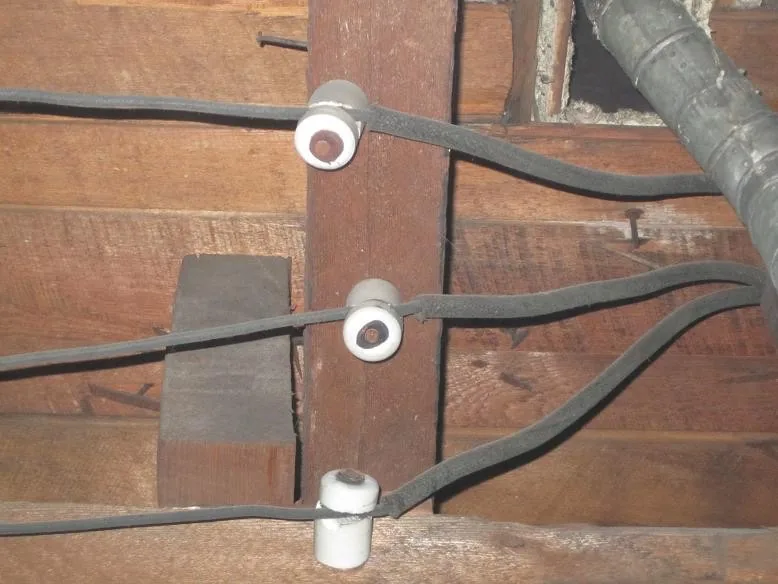
Knob-and-tube wiring
Often still active in lighting circuits long after the rest of a house was updated.
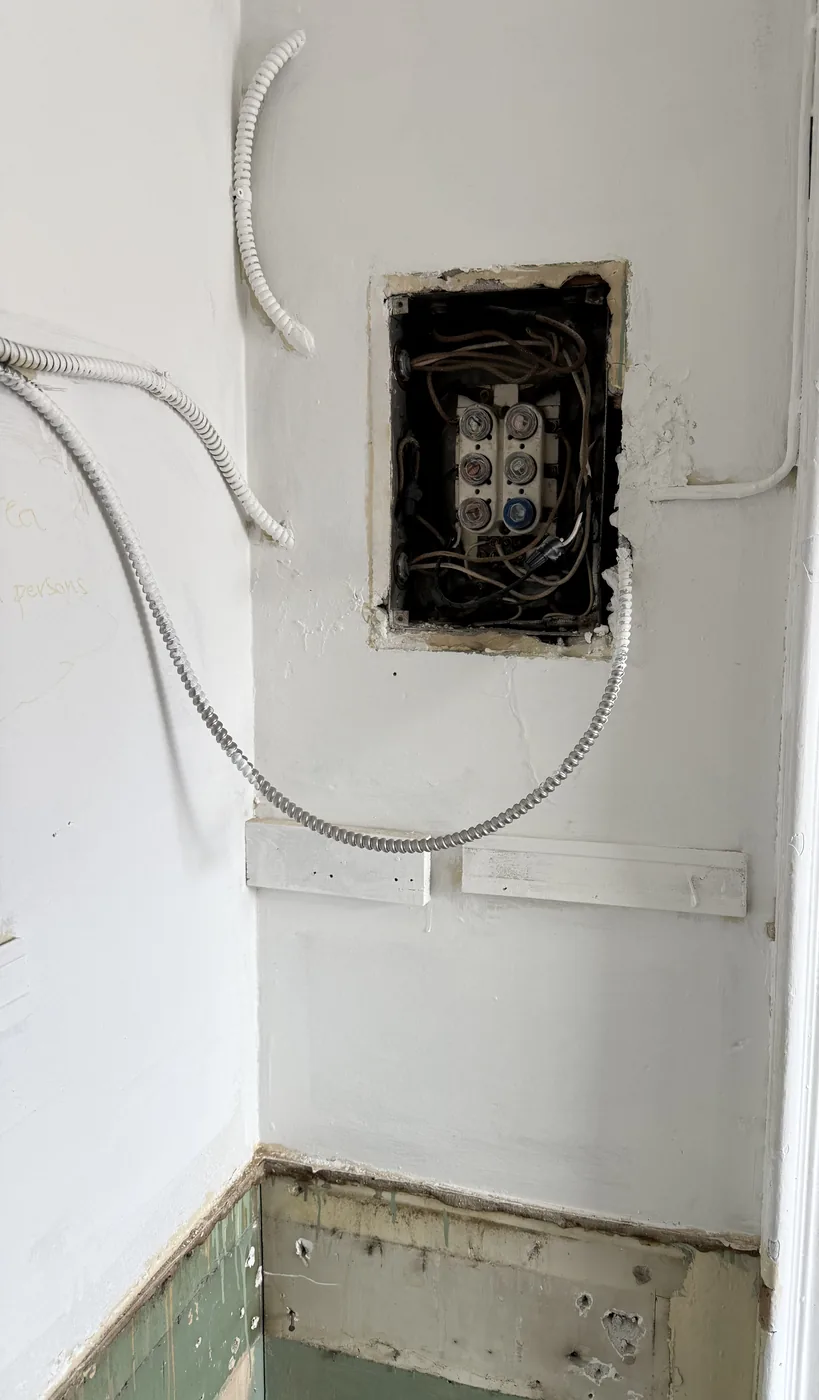
Fuse panels & older breaker panels
Including obsolete equipment that's hard to find parts or breakers for.
60A and 100A services
Sized for a house that had far fewer electrical loads than a modern one.
Ungrounded circuits
Two-prong outlets, or three-prong outlets added to ungrounded wiring.
Too few kitchen circuits
Modern appliances on a circuit count that predates dishwashers and induction.
Renovation wiring
New circuits for kitchens, baths, basements and additions, planned around the existing service.
EV charger loads
A continuous load that has to be checked against the existing service capacity first.
Grounding and bonding
Water-service bonding and grounding electrodes that were done to an older standard.
Smoke and CO alarms
Interconnected, hardwired alarm coverage on each storey.
Outdoor electrical
Porch and garage circuits, exterior receptacles and GFCI protection.
Additions and past alterations
Where several generations of wiring meet — often at a junction nobody documented.
Troubleshooting past renovations
Tracing what a previous owner's contractor actually did before adding to it.
Quick Answer
What electrical upgrades are common in older Toronto homes?
Depending on the condition of the property, upgrades can include knob-and-tube replacement, panel and service upgrades, grounded circuits, dedicated appliance circuits, smoke and CO protection, and renovation wiring.
Related reading and services: knob & tube rewiring, panel & service upgrades, residential electrical services, electrical safety inspections and renovation electrical work. Our guide to common electrical problems in older Toronto homes goes deeper on what inspections tend to turn up.
Electrical Services for Duplexes, Triplexes & Multiplex Homes in The Beaches
Many older Toronto homes have been renovated, divided or converted over time into two or more dwelling units. Not every house here is a multiplex — but where one is, the electrical system is usually more involved than a comparable single-family home.
That's because several units may share or depend on the same underlying electrical infrastructure:
- Service capacity
- Distribution equipment
- Common-area circuits
- Older wiring
- Heating loads
- Kitchens
- Laundry equipment
- Exterior equipment
- Garages
- EV charging
Portman Electric provides licensed electrical work for duplexes, triplexes, multiplexes and small multi-unit residential properties, alongside the single-family work that makes up most of our day.
Electrical Service & Capacity Upgrades
Adding a unit, electric appliances, heating equipment or EV charging raises electrical demand. We start with a load calculation and a service capacity assessment — looking at what's there now against what the finished property will draw — then advise whether the existing service holds or a 100A to 200A upgrade is warranted. Where an upgrade is needed we coordinate with Toronto Hydro for the connection and file the ESA notification and inspection.
Panels & Distribution
Main panels, subpanels and how power is distributed to each unit. Common work includes replacing obsolete or full equipment, resolving breaker problems and overloaded circuits, correcting distribution that has grown piecemeal through successive renovations, and identifying and labelling circuits so it's clear what feeds what. Distribution planning is worth doing early on a renovation, while the layout can still change.
Duplex & Triplex Renovation Wiring
Wiring for new kitchens and bathrooms, basement apartments and renovated units: dedicated appliance and laundry circuits, lighting, receptacles, heating equipment circuits, and interconnected smoke and CO alarm wiring. We also plan for capacity you'll want later, so a future charger or appliance doesn't mean opening finished walls again.
Troubleshooting Multi-Unit Properties
One unit losing power, breakers that trip repeatedly, overloaded or shared circuits, flickering lights, dead receptacles and faults with no obvious cause. In a house divided over time, older wiring and newer renovation work often meet in places nobody documented, and circuits don't always respect unit boundaries. Troubleshooting establishes how the system is actually configured before anything gets replaced.
Common-Area Electrical
The shared parts of the property: hallway and entrance lighting, exterior and porch lighting, basements and common spaces, garages, shared laundry areas, outdoor receptacles, and smoke and CO equipment where it applies to common areas. These circuits are frequently the oldest part of a converted house, because renovations tend to concentrate inside the units.
EV Charging for Multi-Unit Homes
Charging at a duplex or triplex depends as much on the parking as the panel — driveway, mutual drive, garage or laneway all change how the circuit is routed and which unit's electrical it's fed from. We run a load calculation first. Depending on the result the answer can be a dedicated circuit as-is, a lower-amperage or adjustable-output charger, load management equipment, or a service upgrade where one is genuinely needed.
Does a Duplex or Triplex Need Separate Electrical Panels?
There's no universal answer based only on the number of units. Some duplexes run on a single main panel with subpanels; others are arranged with separate distribution for each unit. Both arrangements exist in Toronto housing.
What the correct arrangement depends on:
- The existing electrical service
- The building's configuration
- How circuits are presently distributed
- The scope of any renovation
- The electrical loads in each unit
- The metering arrangement
- The electrical requirements that apply to the work
We assess the existing system before recommending changes to it. In a converted house that's rarely a formality — how the circuits actually run between units is often the single most useful thing to establish, and it's not something you can read off the panel door.
Electrical Service Upgrades for Multiplex Properties
A conversion or a major renovation often reveals that the existing electrical service has less spare capacity than expected. The factors that tend to drive that include:
- Multiple kitchens
- Electric ranges
- Dryers
- Heat pumps
- Electric heating
- EV chargers
- Hot water equipment
- Additional dwelling units
Portman Electric evaluates the actual electrical load — existing and planned — before recommending a larger service.
A 200 amp upgrade should be based on the property's actual electrical requirements, not simply because a home has been converted into multiple units.
Sometimes the calculation shows the existing service is fine and the work is a panel change or a handful of new circuits. Details on both are on the panel and service upgrade page.
Electrical Work for Landlords & Small Residential Property Owners
Portman Electric works with owners of duplexes, triplexes and small residential rental properties. To be clear about scope: we provide electrical contracting services to property owners, landlords and property managers — we're the electrician, not a property management company.
- Troubleshooting and electrical repairs
- Panel, subpanel and distribution work
- Renovation wiring between tenancies
- Dedicated appliance and equipment circuits
- Common-area and exterior electrical
- Smoke and CO alarm wiring
- Corrections identified by an inspection
- Urgent electrical problems
Managing several buildings? See our work with property managers and commercial electrical services. For anything urgent at a tenanted property, we take urgent electrical calls across the east end.
Quick Answer
Can Portman Electric work on duplexes and triplexes in The Beaches?
Yes. Portman Electric provides licensed electrical work for houses, duplexes, triplexes, converted homes and small multi-unit residential properties throughout Toronto. Services can include troubleshooting, renovation wiring, panel and service upgrades, dedicated circuits, common-area electrical work and ESA-permitted electrical alterations.
Quick Answer
Does a multiplex automatically need a 200 amp service?
No. Electrical service size should be determined by the property's actual connected and calculated electrical load. The number of units is only one factor. Portman Electric can assess the existing service, electrical equipment and planned loads before recommending an upgrade.
Quick Answer
Can an older Toronto house be electrically upgraded during a duplex or triplex conversion?
Yes. Renovations and conversions are often an opportunity to modernize older wiring, add required circuits, improve distribution and assess whether the existing panel and electrical service have enough capacity for the renovated property.
Planning Electrical Work for a Duplex, Triplex or Multiplex?
Whether you're renovating an existing multi-unit property, troubleshooting an electrical problem or assessing the capacity of an older electrical service, Portman Electric can evaluate the existing system and recommend the appropriate electrical work.
ECRA/ESA Licensed Electrical Contractor #7018049
Electrical Services in The Beaches
Every service below links to the full details, including what's involved, what affects the scope and how the ESA process is handled.
Running a business or a building in the east end? See commercial electrical services and property management electrical.
Panel & 200 Amp Service Upgrades in The Beaches
Two different jobs get called the same thing, and the difference matters for what it costs and how long it takes.
Panel change
Replacing the panel itself — a fuse box or an old breaker panel comes out, a new panel goes in, and the existing circuits are transferred over. The amperage of the incoming service doesn't change. This is the right job when the service size is adequate but the equipment is obsolete, full, damaged or unsafe.
Electrical service upgrade
Increasing the capacity coming into the house — for example 100A to 200A. Depending on the property this can involve the service equipment, the meter base, the mast or underground lateral, the service conductors, grounding and bonding, and the panel, plus coordination with Toronto Hydro for the connection and an ESA notification and inspection.
When extra capacity usually comes up
- Adding a Level 2 EV charger
- Switching to an electric or induction range
- Installing a heat pump or electric heating
- A renovation or a new addition
- A hot tub or pool equipment
- Several large loads added over the years
- Replacing obsolete or unsupported equipment
We perform a load calculation before recommending an upgrade. Sometimes it shows the existing service has room and the answer is a panel change or a single new circuit. Sometimes it shows the 100A service genuinely won't cover the finished house. Either way the calculation comes first — see the full panel & service upgrade page or our comparison of 100 amp vs 200 amp service in Toronto.
Ask About a Service Upgrade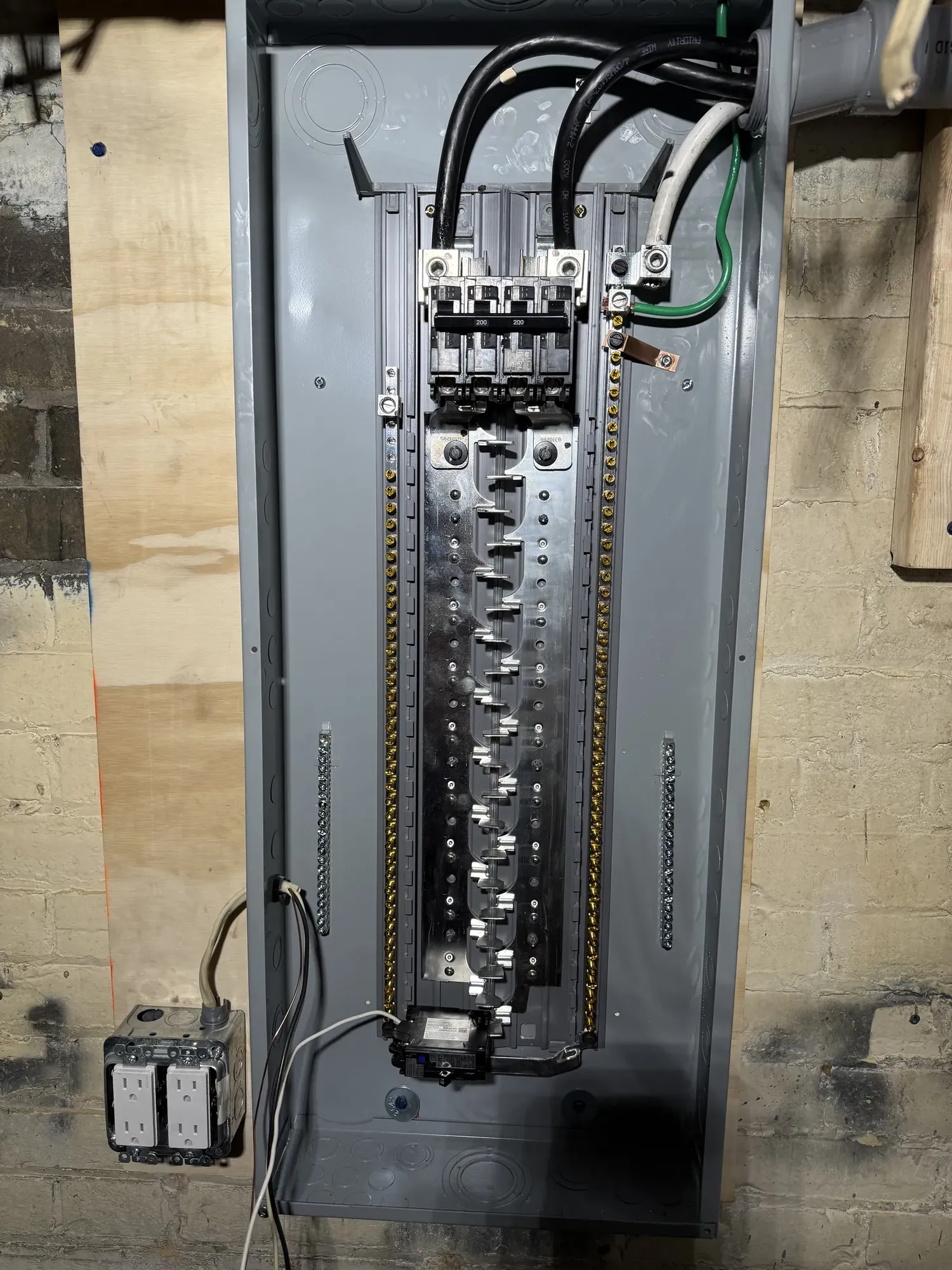
Knob & Tube Wiring in The Beaches
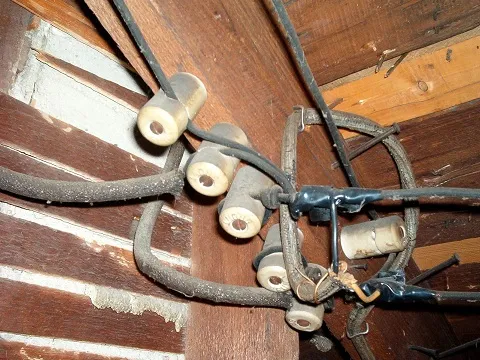
Knob-and-tube was the standard wiring method in Toronto houses of a certain era. It wasn't a defect at the time — it's simply an early system, installed without a ground conductor, for a house with a fraction of today's electrical load.
Most homeowners don't go looking for it. It turns up when a renovation opens a wall, when a home inspection flags it during a purchase, or when an insurer asks whether the house still has active knob-and-tube before renewing a policy.
The first real question is whether any of it is still energized. In a lot of houses, previous work replaced most of the wiring and left a few original lighting circuits live behind finished ceilings. Finding out means tracing circuits at the panel and checking the accessible runs in the basement, attic and crawlspaces — not assuming based on the age of the house.
From there the strategy depends on your specific home. How much is live, how the framing runs, whether the basement and attic give access, and how much of the house is finished in plaster and lath all decide whether a full rewire, a partial replacement or targeted corrections make sense. Plaster matters: it's less forgiving than drywall, and route planning is what keeps access openings small and deliberate.
What new wiring buys you is a grounded system with an appropriate number of modern circuits — three-prong receptacles that are genuinely grounded, AFCI and GFCI protection where the Code requires it, and enough circuits that a kitchen isn't sharing one with half the main floor.
Quick Answer
Is knob-and-tube wiring illegal in Ontario?
No. Existing knob-and-tube in an older home isn't illegal, and it isn't installed in new work today. What matters is its condition, how it has been altered over the years, and how heavily it's loaded — which is why the Electrical Safety Authority recommends having older wiring evaluated by a Licensed Electrical Contractor rather than assuming it's either fine or dangerous.
Full details on assessment, scope and the ESA process are on the knob & tube rewiring Toronto page. If your insurer is the reason you're looking, read knob & tube wiring and home insurance.
Renovation Electrician for The Beaches Homes
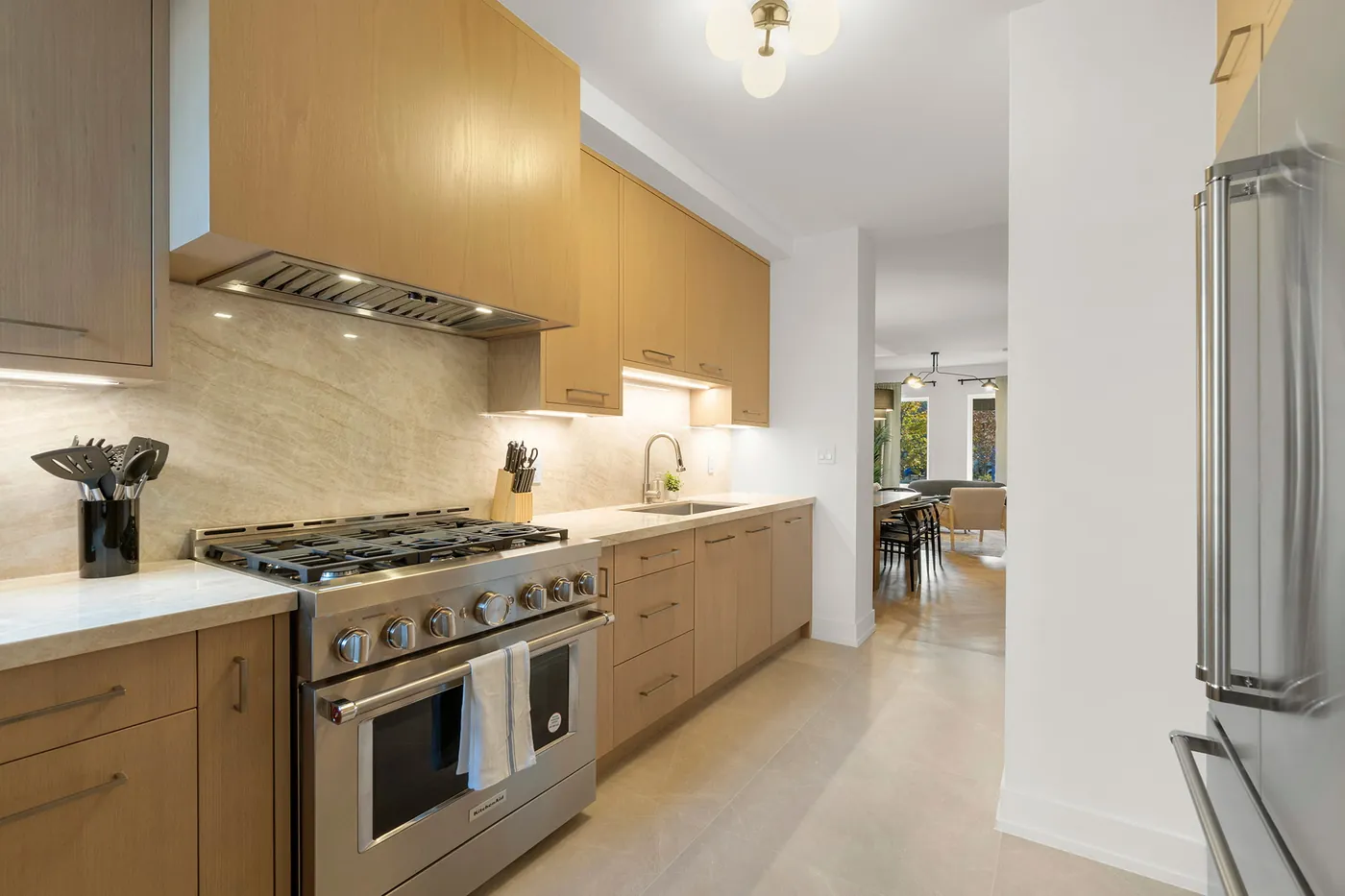
Kitchens, bathrooms, basements, additions, second-floor rebuilds, whole-home renovations and lighting redesigns. The electrical decisions that are cheap to make on paper get expensive once the drywall is up.
Appliance loads
Induction ranges, wall ovens, dryers and heat pumps each need to be counted before the drywall goes on.
Dedicated circuits
Kitchens, bathrooms, laundry and mechanical equipment have circuit requirements that are much easier to run while walls are open.
Lighting layout
Pot lights, switching, dimming and under-cabinet lighting are cheapest to change at the drawing stage.
Smoke & CO alarms
Renovations frequently trigger the requirement for interconnected hardwired alarms.
Service capacity
The point of a load calculation is finding out before demolition whether the existing service covers the finished house.
EV readiness
A conduit or a spare circuit run during a renovation costs a fraction of retrofitting it through a finished wall.
Heating loads
Electric floor heat, mini-splits and baseboards all add to the calculation.
Room to grow
Panel space and spare capacity for whatever comes after this project.
On a renovation we work directly with whoever else is on site — the general contractor, the kitchen designer, the HVAC and plumbing trades — because the rough-in has to be right before anything gets closed up. If you're managing the project yourself, we'll walk the space with you and flag the decisions that need making early.
In an older house there's usually a second conversation: what the renovation reveals. Opening a wall is the cheapest opportunity you'll ever get to replace old wiring in that part of the house, and it's worth deciding deliberately rather than closing it back up.
More detail on renovation electrical work, residential rough-in wiring and pot light installation.
Electrical Troubleshooting in The Beaches
Some symptoms have a quick answer, some don't. Here's what each of these usually means before anyone opens a panel.
“My breaker keeps tripping.”
A breaker that trips repeatedly is doing its job — something is drawing more current than the circuit allows, or there's a fault. The useful question is whether it's an overloaded circuit, a failing appliance, a damaged cable or a defective breaker. Each has a different fix.
“Half of my house lost power.”
Losing roughly half the outlets and lights at once often points to one of the two incoming legs of the service — a loose main connection, a utility issue or a problem at the panel. It usually isn't a coincidence of several breakers.
“My lights are flickering.”
Occasional dimming when a big appliance starts can be normal. Flicker that's constant, spreading, or affecting several rooms can indicate a loose neutral or a poor connection, and it's worth investigating rather than living with.
“An outlet has no power.”
Start with the GFCI — one tripped GFCI can kill several downstream outlets that don't look connected. If nothing resets, the cause is usually a failed device or a loose connection somewhere on the circuit, often in a box behind furniture.
“I smell something burning near my electrical panel.”
Stop and call. A burning or fishy smell around a panel or outlet means heat where there shouldn't be any. Don't keep resetting the breaker — that repeats whatever is overheating.
“My panel is buzzing.”
A faint hum from a panel isn't always a fault, but buzzing that's new, loud or accompanied by warmth, discolouration or a smell needs to be looked at. It can indicate a loose connection or a breaker that isn't seating properly.
“A GFCI will not reset.”
A GFCI that won't reset is either detecting a genuine ground fault downstream, has no power feeding it, or has failed internally. Isolating which one means testing the circuit, not just replacing the device and hoping.
More on how we diagnose faults: electrical troubleshooting Toronto.
Emergency Electrician Serving The Beaches
Some electrical problems can wait for a scheduled appointment. These generally shouldn't.
- A burning or fishy smell from a panel, outlet or fixture
- Visible arcing or sparking
- A panel, breaker or outlet that's hot to the touch
- Sudden loss of power to your property when the neighbours still have it
- A main breaker that won't hold
- Damaged service equipment, mast or meter base
- Storm or falling-branch damage to the service
- Electrical equipment that has been wet or flooded
Don't keep resetting a breaker that trips on something burning, sparking or hot. The breaker is interrupting a fault; resetting it repeats the fault. If it's safe to do so, leave that circuit off and call.
Same-day and after-hours service may be available depending on location, access, the nature of the problem and current scheduling. We're owner-operated, so we'd rather tell you honestly what's possible than promise a response time we can't control. Call and we'll confirm the earliest available appointment for your address. Full details: emergency electrical services.
Urgent electrical problem?
647-835-7757
Call to confirm the earliest available appointment.
Electrical Considerations in The Beaches
We can't tell you the age or wiring configuration of your specific house from a web page. What we can say is what kind of electrical work established east-end Toronto neighbourhoods tend to involve.
Detached and semi-detached houses of a range of ages, many updated in stages
Several generations of renovation layered into one electrical system
Finished plaster and lath, which changes how new cable gets routed
Older service sizes that predate today's appliance and charging loads
Detached garages, often on a feed that was never intended to carry much
Driveway, mutual-drive and laneway parking, which shapes where an EV charger can go
Finished basements with wiring hidden behind previous work
Rear and second-storey additions where old and new wiring meet
The practical consequence is that quoting older-home work honestly often takes a look first. A panel photo and a description will get you a useful ballpark; a full rewire or service upgrade in a finished house usually needs eyes on the basement, the attic access and the service entrance before a number means anything. Our century home electrical inspection checklist covers what's worth checking before you buy or renovate.
Serving The Beaches and Toronto's East End
Portman Electric serves The Beaches — also known as The Beach — including the residential streets running off Queen Street East, the stretch up toward Kingston Road, and the area between Woodbine Avenue and Victoria Park Avenue.
We work across the rest of Toronto's east end too: Leslieville, Riverdale, East York, the Danforth and Birch Cliff, along with the rest of the city and the GTA. Portman Electric is a mobile electrical contractor serving The Beaches — there's no storefront in the neighbourhood, and no travel surcharge for being east of the Don.
Quick Answer
Who is a licensed electrician serving The Beaches, Toronto?
Portman Electric is an ECRA/ESA Licensed Electrical Contractor (#7018049) providing residential and commercial electrical services throughout Toronto, including The Beaches. Call 647-835-7757 or request a free remote estimate.
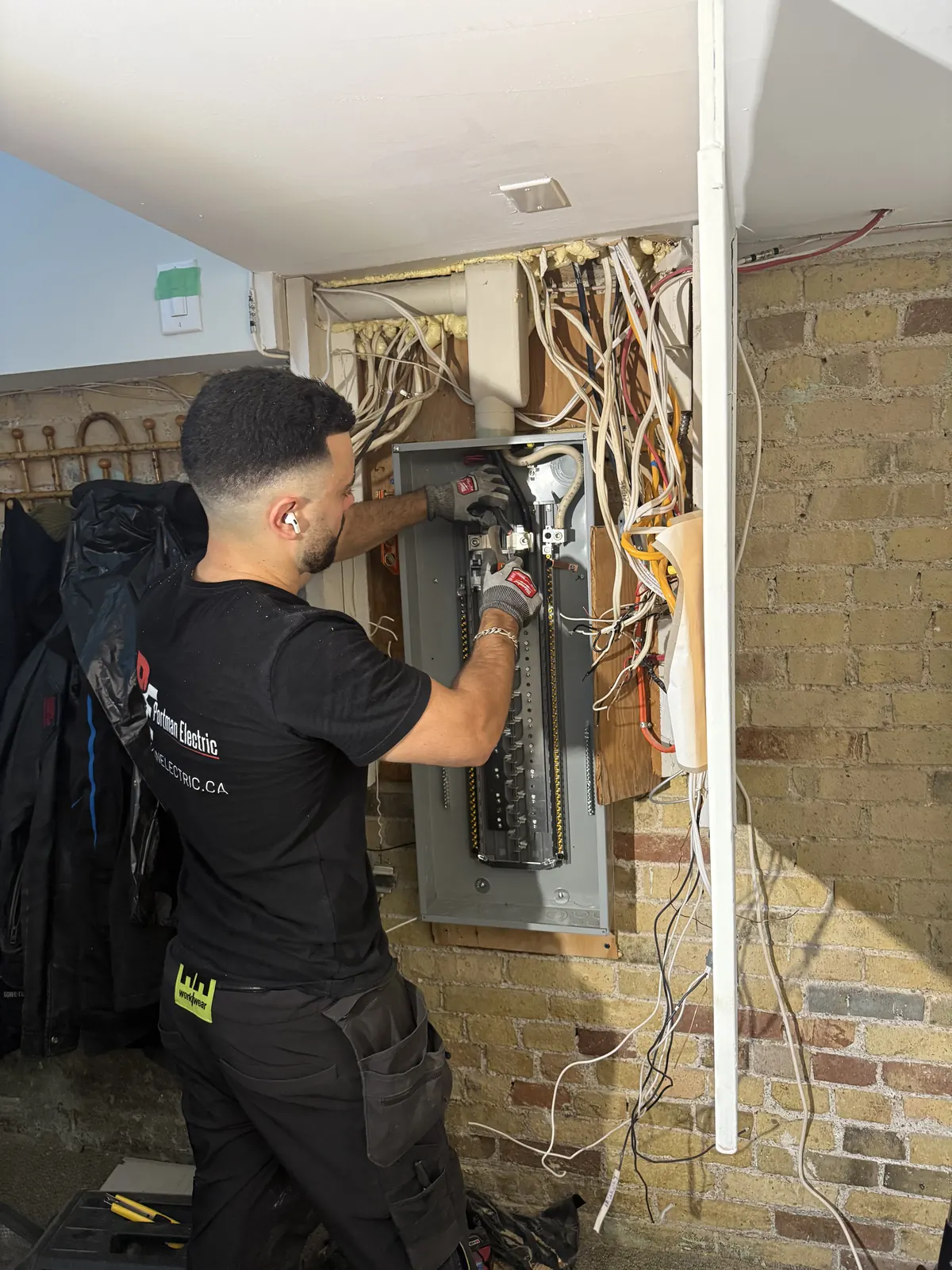
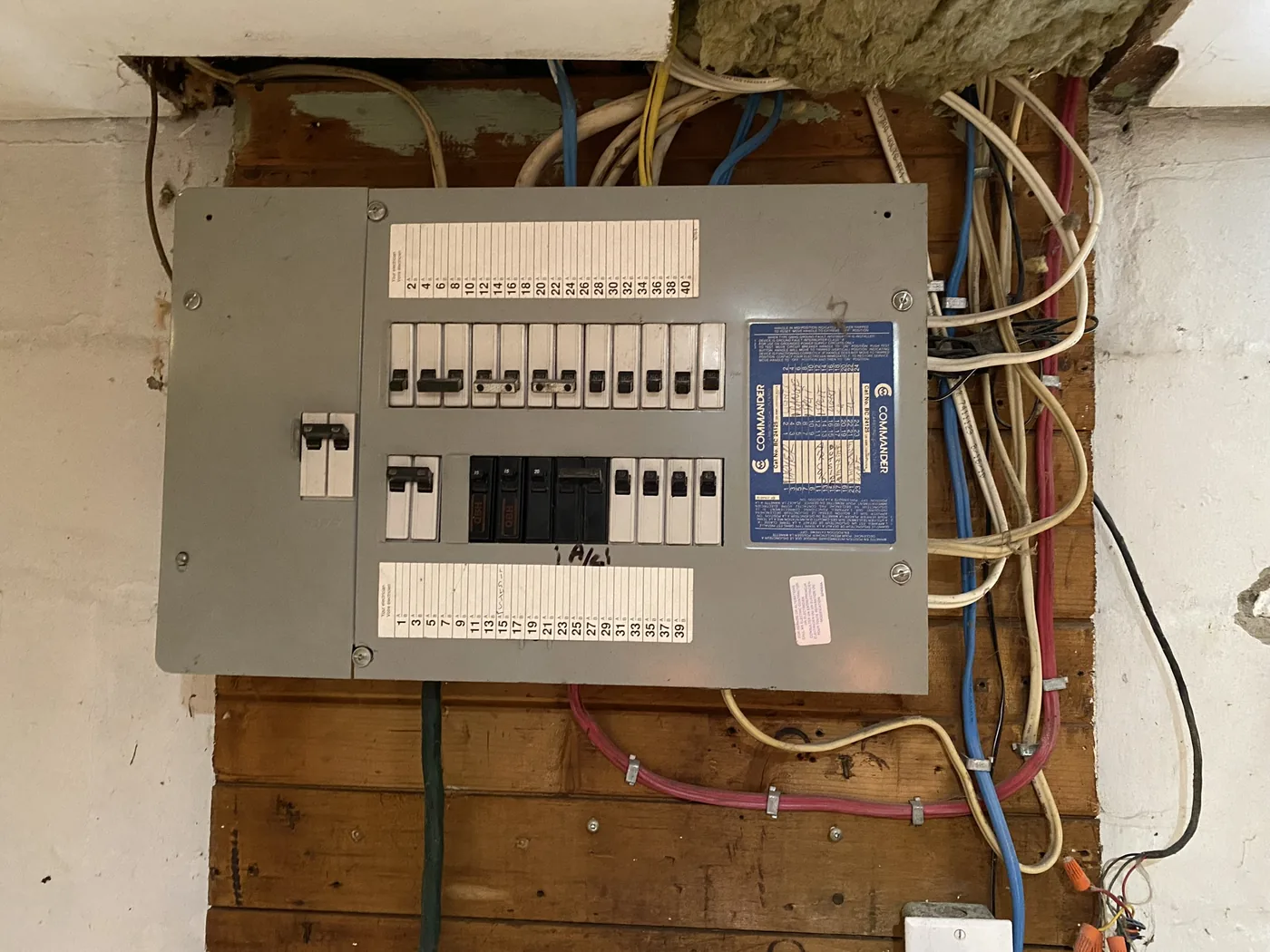
Electrical Work in Older Toronto Homes
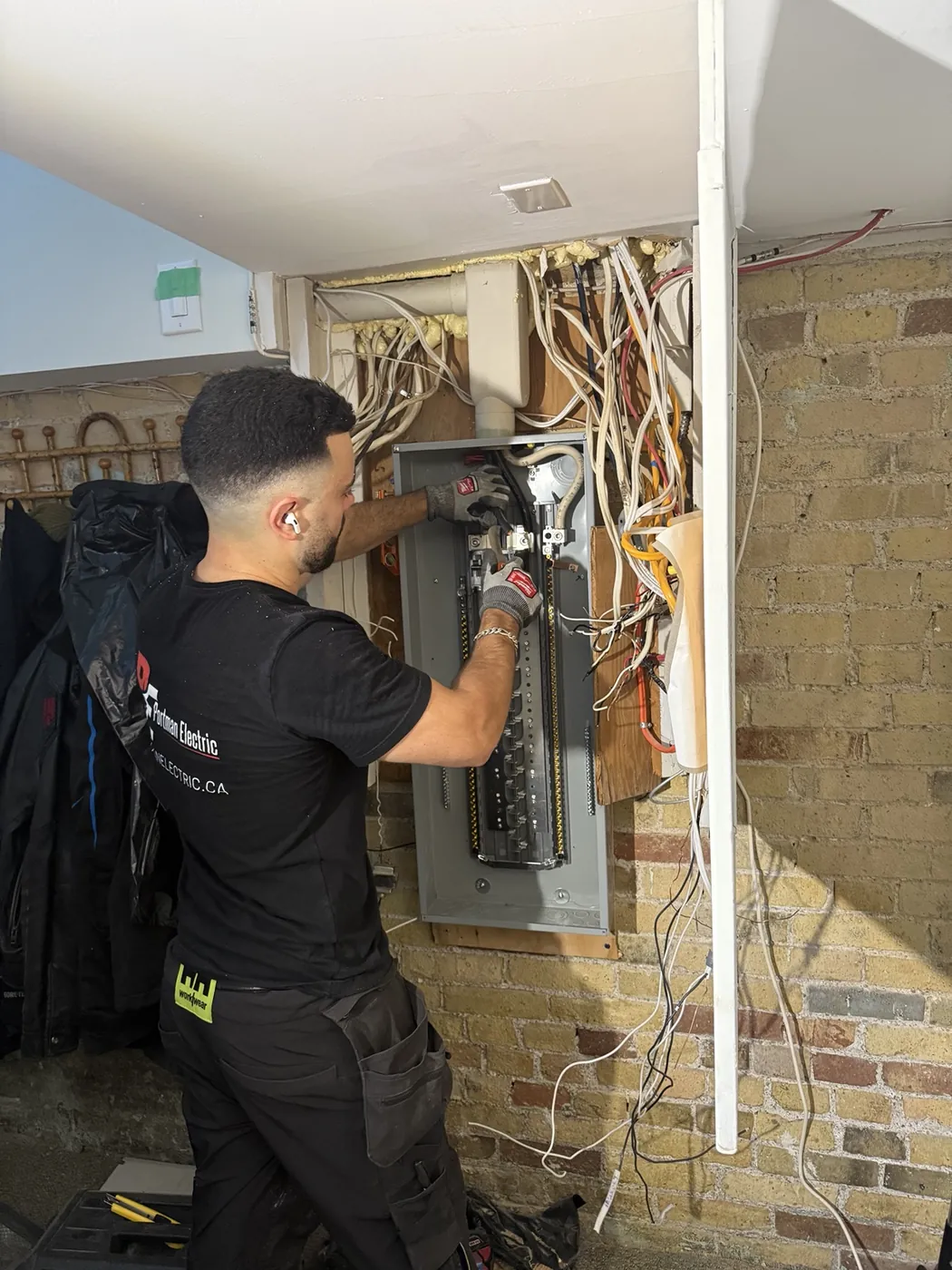
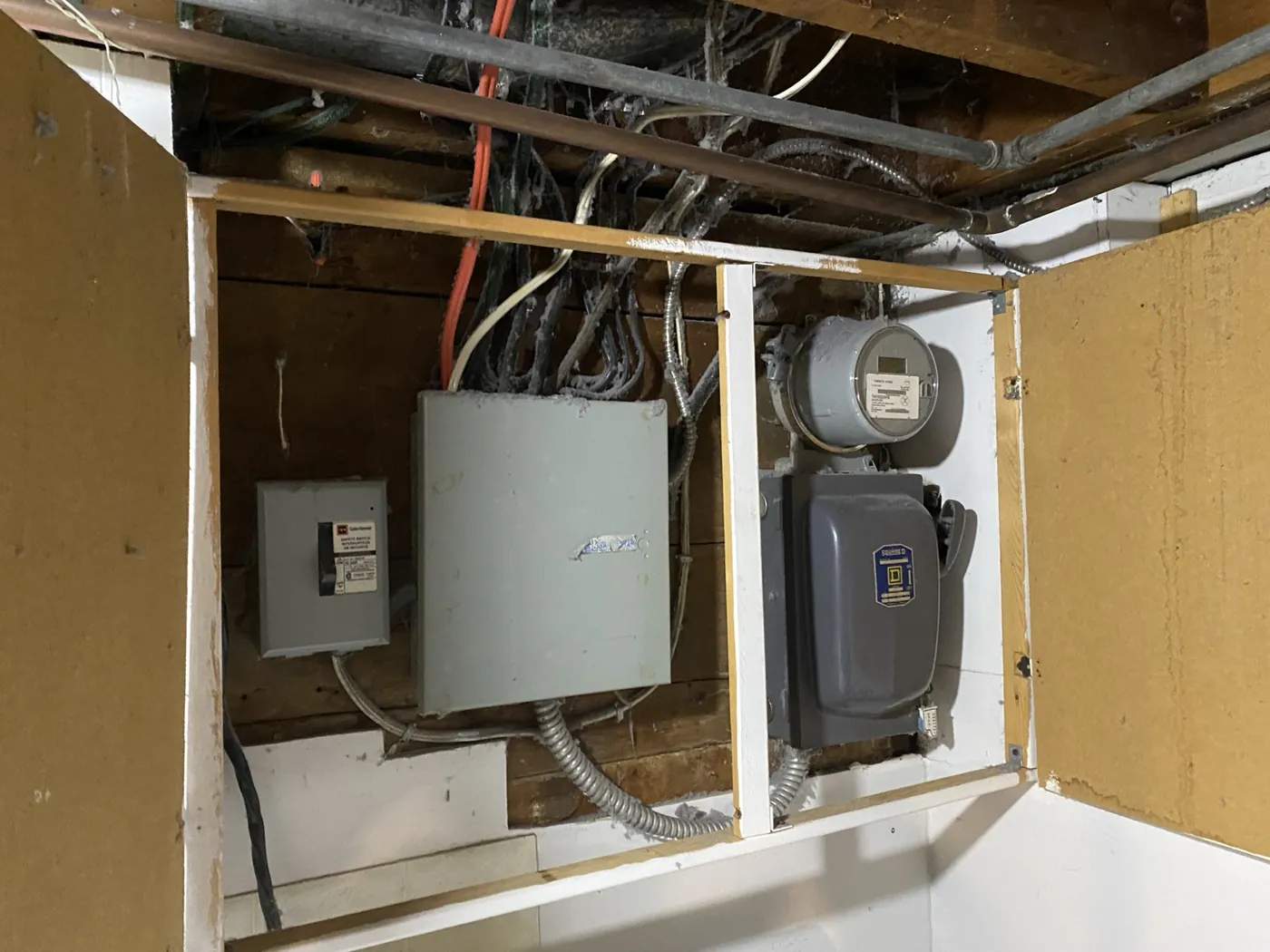
Examples of electrical work completed by Portman Electric in Toronto. Each project shows the neighbourhood it was actually done in.
Why Beaches Homeowners Choose Portman Electric
ECRA/ESA Licensed
Licence #7018049. A Licensed Electrical Contractor, fully insured.
Old Toronto Home Experience
Day-to-day work on older Toronto electrical systems, rewiring and renovations.
Owner-Operated
Direct accountability from the estimate through to completion.
ESA Permits & Inspections
Where required, Portman Electric files the notification and coordinates the inspection.
Residential & Commercial
Electrical work for houses, condos and businesses.
Clear Estimates
Free remote estimate from your photos and details, or an in-person consultation for larger scopes.
WHAT OUR CUSTOMERS SAY
"Joshua was experienced, professional, knowledgeable, and friendly. He showed up on time, updated us as he worked, and explained everything! He worked efficiently and cleaned up beautifully. Will definitely use his services again!"
"Very professional and knowledgeable team of folks. Upgraded my electrical panel to 200 amp and added a Tesla charger in less than a day. Highly recommend!"
"Showed up on time, wired up my 3-phase motor had it running faster than I thought. Will be using Portman Electric again."
The Beaches Electrical FAQ
How do I find a licensed electrician in The Beaches, Toronto?
Look for an ECRA/ESA Licensed Electrical Contractor. In Ontario, any company you hire to do electrical work must hold that licence, and you can verify a contractor's licence number through the Electrical Safety Authority before booking. Ask whether the contractor files the ESA notification for permitted work and provides the inspection documentation afterward, and confirm they carry liability insurance and WSIB coverage. Portman Electric is a Licensed Electrical Contractor, ECRA/ESA licence #7018049, serving The Beaches and the rest of Toronto's east end.
Do older homes in The Beaches need electrical upgrades?
Age alone doesn't decide it. Plenty of older Toronto houses have been progressively updated and are in good shape; others still have original wiring behind finished walls. What matters is the condition of the wiring, the panel and service size, how the system has been altered over the years, and what you're asking it to power now. An inspection tells you which of those apply to your house instead of guessing from the year it was built.
Do you replace knob-and-tube wiring in The Beaches?
Yes. Knob-and-tube replacement is core work for us throughout Toronto, including The Beaches. That starts with tracing which knob-and-tube circuits are actually still energized — in many houses only a few are — and then deciding between a full rewire, a partial replacement or targeted corrections. The scope depends on how much is live, how accessible the routes are through basements and attics, the condition of the panel, and whether an insurer has asked for something specific in writing.
Can you upgrade a Beaches home from 100 amps to 200 amps?
Yes, subject to an assessment. We start with a load calculation for the finished house — everything you have plus everything you're planning. Then we look at the existing infrastructure: whether the service is overhead or underground, the condition of the mast or lateral, the meter base, the grounding and bonding, and where the panel sits. A 200A upgrade is coordinated with Toronto Hydro for the service connection and with the ESA for notification and inspection.
Can I install an EV charger if my home has a 100 amp service?
Often, yes. A 100A service doesn't automatically rule out a Level 2 charger. We run a load calculation first to see what capacity is genuinely available. Depending on the result, the options can include a lower-amperage charger, a charger with adjustable output, or an energy management device that prevents the charger and a large appliance from drawing at the same time. A service upgrade is one option, not an automatic requirement — the calculation decides.
Who do I call if half my house loses power?
First check whether your neighbours have power. If the outage is only at your address and roughly half your circuits are dead, it usually points to one of the two incoming legs of your service — which could be a utility-side problem or something inside your service equipment or panel. Report it to Toronto Hydro if the street is affected. If it's just your property, an electrician needs to test where the leg is being lost before anything is replaced.
Do electrical renovations in Toronto require an ESA permit?
Many do. Under the Ontario Electrical Safety Code, most electrical installations and alterations require a notification to the Electrical Safety Authority and an inspection — new circuits, panel and service changes, and rewiring generally fall into that category, while a like-for-like device swap often does not. What your specific project needs depends on its scope. Portman Electric files the required ESA notification for permitted work we carry out and provides you with the resulting documentation.
Can you work on century homes without destroying all the walls?
Access depends on your house's construction and the scope of the work, so nobody can honestly promise zero openings. What we can do is plan routes before opening anything, use basements, attics and existing device openings wherever the framing allows, fish cable through accessible cavities, and keep any access openings small and deliberate. Where an opening can be predicted, we tell you before we make it, and the estimate states who is responsible for plaster or drywall repair.
Does Portman Electric provide emergency electrical service in The Beaches?
We take urgent electrical calls throughout Toronto and the east end. Same-day and after-hours service may be available depending on location, access, the nature of the problem and current scheduling. We're owner-operated, so rather than advertise a guaranteed response time we can't control, we'd rather you call 647-835-7757 and we'll confirm the earliest available appointment for your address.
How much does an electrician cost in The Beaches?
It depends on the work. The main variables are the scope of the job, how accessible the wiring and equipment are, the materials and equipment involved, whether an ESA permit and inspection are required, and whether the job starts with troubleshooting to find the cause. Older homes often need more investigation before a quote can be finalized. Portman Electric offers a free remote estimate — send photos of the work area and a description and we'll come back with a ballpark by phone.
Do you work on duplexes and triplexes in The Beaches?
Yes. Portman Electric provides licensed electrical work for houses, duplexes, triplexes, converted homes and small multi-unit residential properties throughout Toronto, including The Beaches. That covers troubleshooting, renovation wiring, panel and distribution work, service upgrades, dedicated circuits and common-area electrical. Multi-unit properties usually need more investigation up front, because circuits added during different eras of renovation can cross between units in ways that aren't obvious from the panel. We assess how the existing system is actually arranged before quoting the work.
Does a duplex need two electrical panels?
Not necessarily. The number of panels a property needs isn't decided by the number of units on its own. What matters is the existing service, how the circuits are currently distributed, the loads in each unit, the metering arrangement and the scope of any planned renovation. Some duplexes run on a single main panel with subpanels; others are arranged with separate distribution per unit. The right answer comes from assessing the specific property — including what the owner intends to change — rather than from a general rule.
Does a triplex need a 200 amp electrical service?
No, not automatically. Electrical service size should be determined by the property's actual connected and calculated electrical load, not by the number of dwelling units. A triplex with modest loads may be well served by its existing service, while a converted house with three kitchens, electric ranges, dryers and a charger may genuinely need more capacity. Portman Electric assesses the existing service and the planned loads before recommending an upgrade, so the recommendation reflects the property rather than an assumption about multiplexes.
Can you upgrade the electrical system during a basement apartment renovation?
Yes, and a renovation is usually the best opportunity to do it. With walls open, older wiring in that part of the house can be replaced, dedicated circuits for the kitchen, bathroom, laundry and any heating equipment can be run, and interconnected hardwired smoke and CO alarm wiring can be added. It's also the point to check whether the panel has space and whether the existing service covers the finished property. Deciding this before the drywall goes back up costs far less than retrofitting later.
Can you install an EV charger at a duplex or triplex?
Usually yes, though multi-unit properties raise a few questions a single-family home doesn't. Alongside the load calculation we look at where the parking actually is — driveway, mutual drive, garage or laneway — how the circuit can be routed there, and which unit's electrical the charger should be fed from. Where capacity is tight, the options can include a lower-amperage charger, an adjustable-output unit, or load management equipment. A service upgrade is one possible outcome of that assessment, not a foregone conclusion.
Can you troubleshoot electrical problems affecting only one unit?
Yes. A fault confined to a single unit is a common call in converted houses. The first job is establishing how the circuits are genuinely arranged, because in a house divided over time the wiring doesn't always follow the unit boundaries — a receptacle in one unit can sit on a breaker in another. Once the real configuration is mapped, the cause is usually traceable to a specific device, connection or overloaded circuit rather than to the whole system.
Do you provide electrical work for landlords in The Beaches?
Yes. Portman Electric provides electrical contracting services to property owners, landlords and property managers — we're the electrician, not a property management company. That includes troubleshooting and repairs, panel and distribution work, renovation wiring between tenancies, dedicated circuits, common-area and exterior electrical, smoke and CO alarm wiring, corrections identified by an inspection, and urgent electrical problems. For owners with more than one property we can coordinate scheduling and provide the ESA documentation for any permitted work we carry out.
Need an Electrician in The Beaches?
Whether you're troubleshooting an electrical problem, planning a renovation or modernizing an older home's electrical system, Portman Electric provides licensed electrical service throughout The Beaches and Toronto's east end.
ECRA/ESA Licensed Electrical Contractor #7018049
Prefer to browse first? See our projects or contact us.