
Licensed Electrician in The Annex, Toronto
Portman Electric provides licensed electrical work for homes, multi-unit properties and businesses throughout The Annex and central Toronto. We specialise in older-home rewiring, knob-and-tube replacement, panel and service upgrades, renovations, troubleshooting, EV charging and electrical assessments.
Text photos of your panel, your wiring or your renovation drawings — 647-835-7757
- ECRA/ESA Licence #7018049
- Master Electrician
- Old Toronto Home Specialist
- Fully Insured
- Owner-Operated
- Residential & Commercial
Looking for an Electrician in The Annex?
Portman Electric is an ECRA/ESA Licensed Electrical Contractor serving The Annex in Toronto. Services include older-home rewiring, knob-and-tube replacement, electrical panel replacements and 100 amp and 200 amp service upgrades, renovation electrical, electrical troubleshooting, electrical assessments, EV charger installation, work on duplexes, triplexes and converted houses, and commercial electrical work. Where the work requires notification, we file the ESA notification and coordinate the inspection. Owner-operated and fully insured. Licence #7018049 · 647-835-7757.
Quick Answer
Who is a licensed electrician serving The Annex Toronto?
Portman Electric is an ECRA/ESA Licensed Electrical Contractor (#7018049) serving The Annex and Toronto. Services include older-home rewiring, knob-and-tube replacement, panel and service upgrades, renovation electrical, troubleshooting, electrical assessments and EV charging.
Electrical Work for Older Homes in The Annex
Many properties here have been renovated and electrically modified repeatedly across more than a century of use. Each round of work solved the problem in front of it, and the result is a system nobody designed as a whole.
An older Annex house can contain several generations of electrical work at the same time. The first step is determining what remains active and how the existing circuits are actually arranged.
Conditions that can be present, in any combination, depending on the property:
- Knob-and-tube wiring, sometimes active and sometimes long abandoned in place
- Cloth-covered conductors from mid-century wiring work
- Armoured cable added during a later renovation
- Modern copper branch circuits in the parts of the house that were updated
- Fuse equipment still in service
- 60 amp and 100 amp electrical services
- Breaker panels that are themselves now decades old
- Ungrounded circuits and two-prong receptacles on upper floors
- Rear and third-floor additions wired into the original system
- Units created inside the house during an earlier conversion
- Basement wiring that is newer than everything above it
- Kitchen circuits added long after the house was built
- Junctions and splices nobody documented
- Abandoned cable left in place because removing it meant opening plaster
None of this means an older house is in trouble. It means the electrical system deserves to be looked at as a whole before anyone quotes a scope for it. Most of the bad advice homeowners get about older wiring comes from skipping that step and pricing an assumption instead.
Electrical Planning in Large Older Annex Homes
Not every property here is large or multi-storey, but many are — and size changes the job. In a big finished house the difficulty is rarely the device being installed. It is getting a circuit to it.
Electrical planning in a large finished house is not only about where the new circuit ends. The electrician also has to determine how to reach that location without creating unnecessary openings throughout the house.
Basement-to-third-floor routes
A three-storey house with a finished basement means a cable may have to travel through four levels of finished structure. The route is usually the hard part of the job, not the device at the end of it.
Long circuit runs
Distance affects how a circuit is planned and where it is fed from. In a larger house, the panel location and the load location are often nowhere near each other.
Finished plaster ceilings
Plaster over lath does not behave like drywall. It cracks along the lath, it patches differently, and whether a ceiling can be crossed without opening it depends entirely on what sits above.
Original millwork and trim
Baseboards, casings, panelling and stair details are often original. Where they are, the wiring route is planned around them rather than through them.
Several renovation eras at once
A house renovated in the 1960s, the 1990s and again recently has three different wall build-ups. Access that works in one part of the house can be useless in another.
More than one panel
Larger and converted houses sometimes have subpanels added over the years. Where they are, what feeds them and what they actually serve all has to be established before new work is planned.
Upper-floor kitchens
In a converted property, a kitchen on the second or third floor changes both the circuit routing and the load picture for the whole building.
Detached garages and rear parking
Where a property has rear parking or a detached garage, getting a supply out there is its own piece of work — often trenching, and always a separate route from the house wiring.
Rewiring While Limiting Unnecessary Damage
This is where a lot of marketing gets vague. Here is the honest version.
The amount of access required depends on how the house was built and how previous renovations changed it. Portman plans the wiring routes to avoid unnecessary openings, but we won't promise zero access holes when the electrical work genuinely requires them.
Often helps
- An accessible unfinished basement
- Attic access above the top floor
- Existing chases, closets and stair voids
- Areas already being opened for a renovation
- Rooms where flooring is coming up anyway
Usually makes it harder
- Finished plaster ceilings on every level
- Original millwork that should not be disturbed
- Insulation blown into the wall cavities
- Fire blocking and unusual framing in older construction
- Finished basements with no service access
Where a renovation is already happening, the openings are usually free — the walls are coming apart anyway. That is why a rewire timed with a renovation is almost always less disruptive and less expensive than the same rewire done on its own two years later.
Knob & Tube Wiring in The Annex
Knob-and-tube is the single most misunderstood thing about older Toronto houses. The most useful distinction is not whether a house has it — it is what state it is in.
Active knob-and-tube
Old wiring that is still supplying electrical loads in the house. This is the wiring that matters most when scope, grounding and insurer questions come up.
Abandoned knob-and-tube
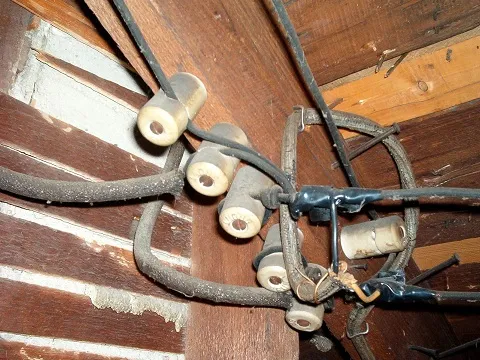
Old wiring that is still physically present — often visible in a basement or attic — but no longer supplying a circuit. It can sit in place for decades after newer wiring replaced it.
Partially rewired house
A house where some circuits were modernised and others were not. This is extremely common, and it is the reason a single visible run tells you very little about the rest of the property.
- Knob-and-tube was an ordinary wiring method when much of this housing stock was built, which is why it still turns up in central Toronto.
- A house's age does not establish that knob-and-tube is still active in it.
- Seeing ceramic knobs or old conductors does not by itself prove that circuit is still energised.
- Knob-and-tube does not include a modern equipment grounding conductor, which is why grounding comes up alongside it.
- Later trades sometimes made junctions into old wiring. Those connections are not always visible.
- Renovations are usually the moment hidden wiring finally becomes visible.
- Insurers set their own requirements around older wiring and they differ between companies.
- The scope should follow what tracing and testing actually find, not the year the house was built.
Quick Answer
Do all older Annex homes still have knob-and-tube wiring?
No. A home's age does not confirm that knob-and-tube wiring is still active. Some Annex homes have been completely rewired, some were upgraded in stages, and abandoned knob-and-tube may remain visible after newer wiring was installed. The existing circuits should be traced and tested before determining the rewiring scope.
For the full picture, see our knob-and-tube rewiring page, and the guides on whether knob-and-tube is dangerous and knob-and-tube and home insurance.
Partial Rewiring vs Whole-House Rewiring
Both are legitimate. Which one is right is decided by what the circuit tracing finds and what the house is being asked to do — never by the year it was built.
Partial or targeted rewiring
Can make sense when:
- Legacy wiring is limited to identifiable circuits
- Substantial parts of the house were already modernised correctly
- A renovation only affects part of the house
- Circuit tracing establishes a limited remaining scope
Whole-house rewiring
Can make sense when:
- Active legacy wiring serves large portions of the house
- A major renovation exposes most of the electrical system
- The existing circuits no longer match the new floor plan
- Grounding and branch-circuit distribution need broad modernisation
- The owner is carrying out comprehensive electrical modernisation anyway
Quick Answer
Does every Annex home with visible knob-and-tube need a full rewire?
No. Visible knob-and-tube may be active or abandoned, and some homes have already been partially rewired. The circuits should be traced before determining the appropriate scope.
Complete Electrical Modernization of an Older Toronto Home
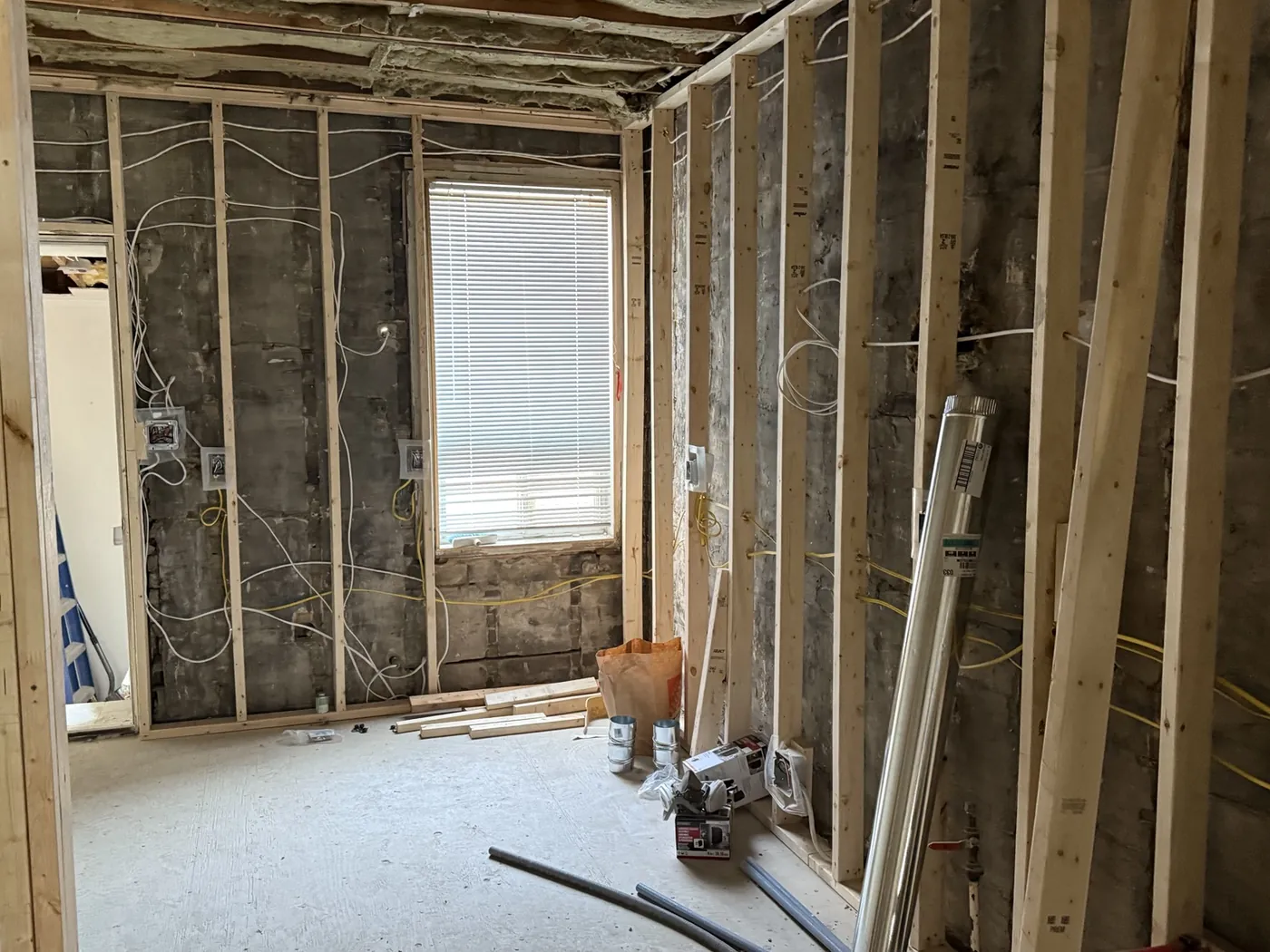
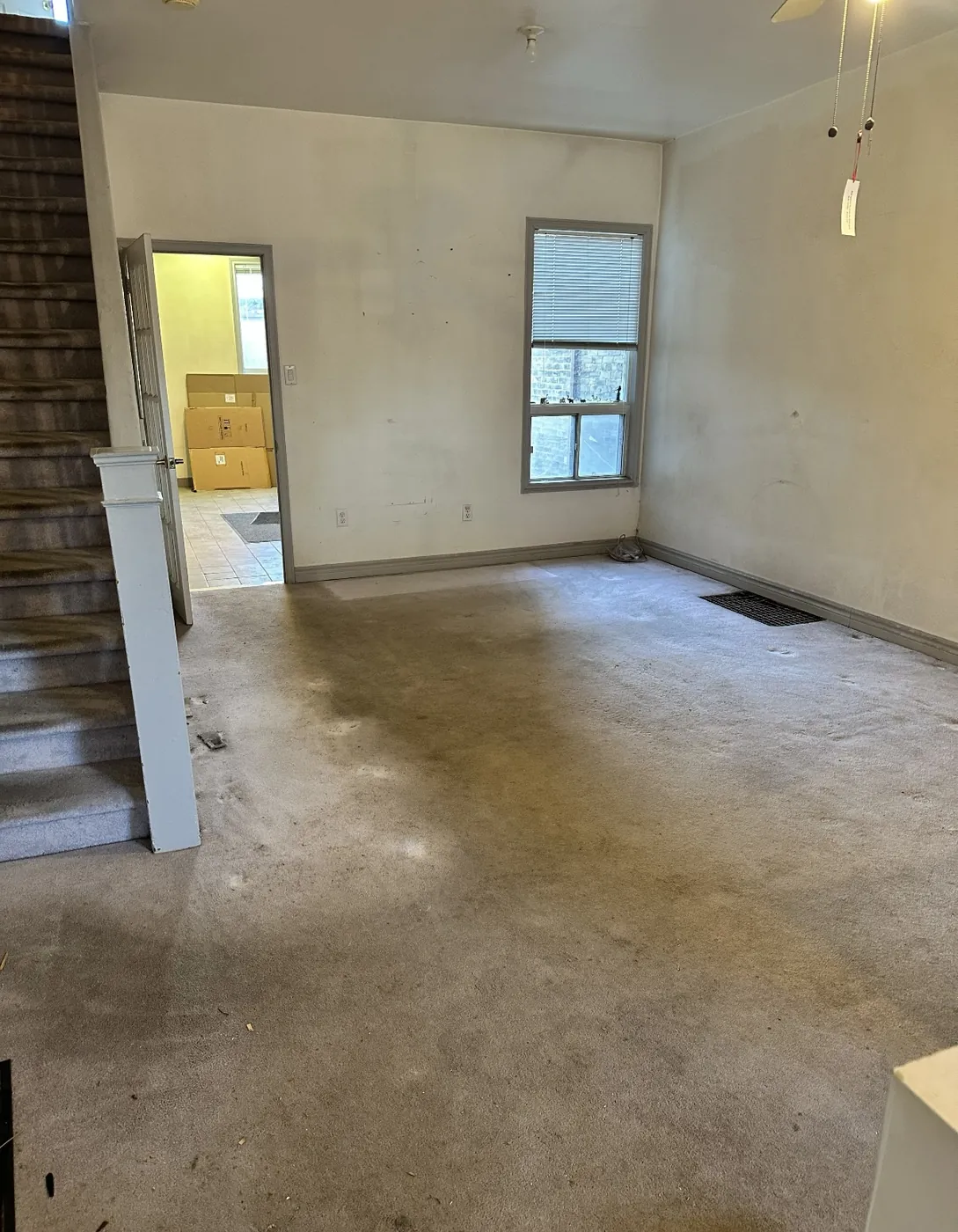
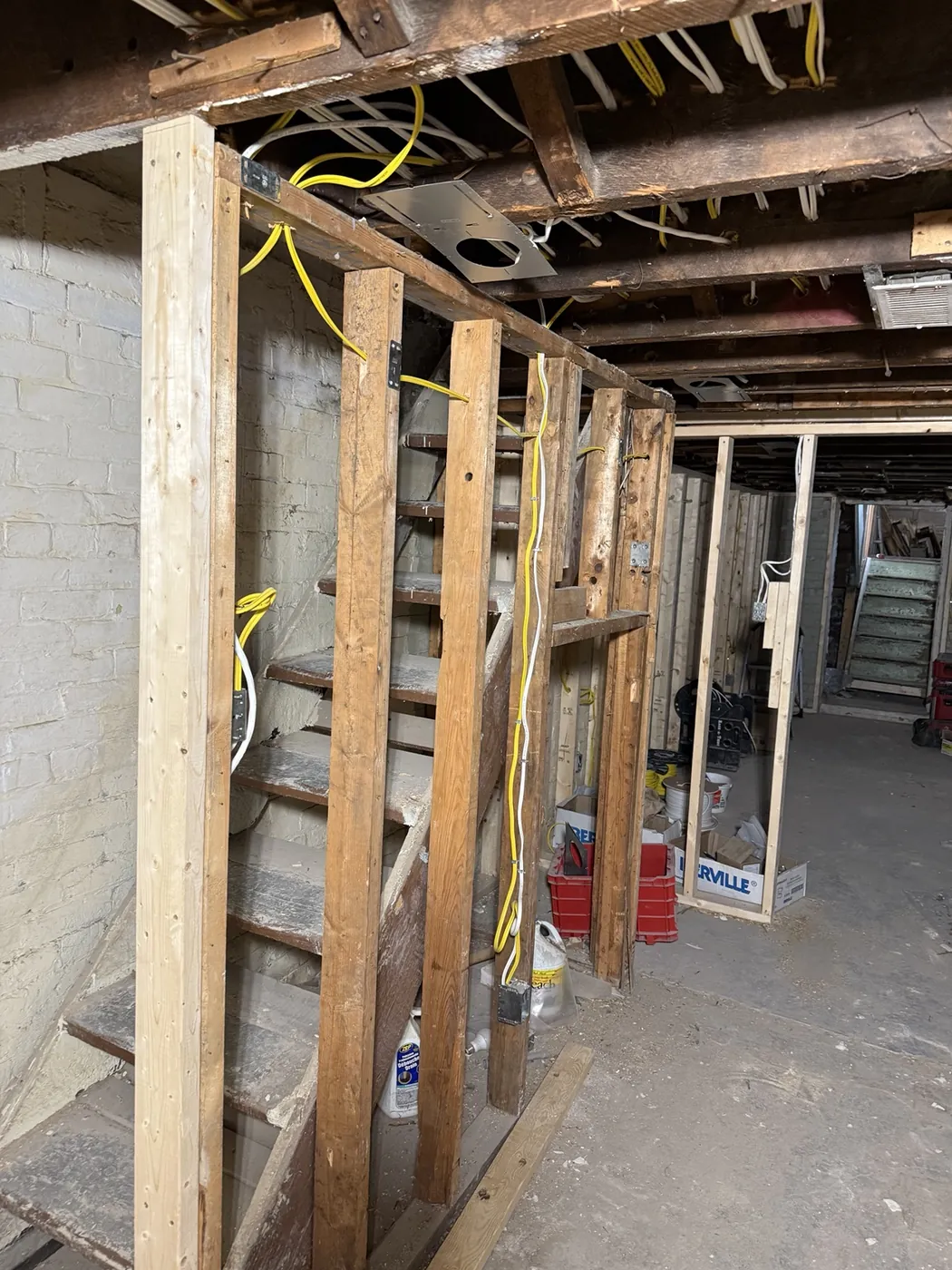
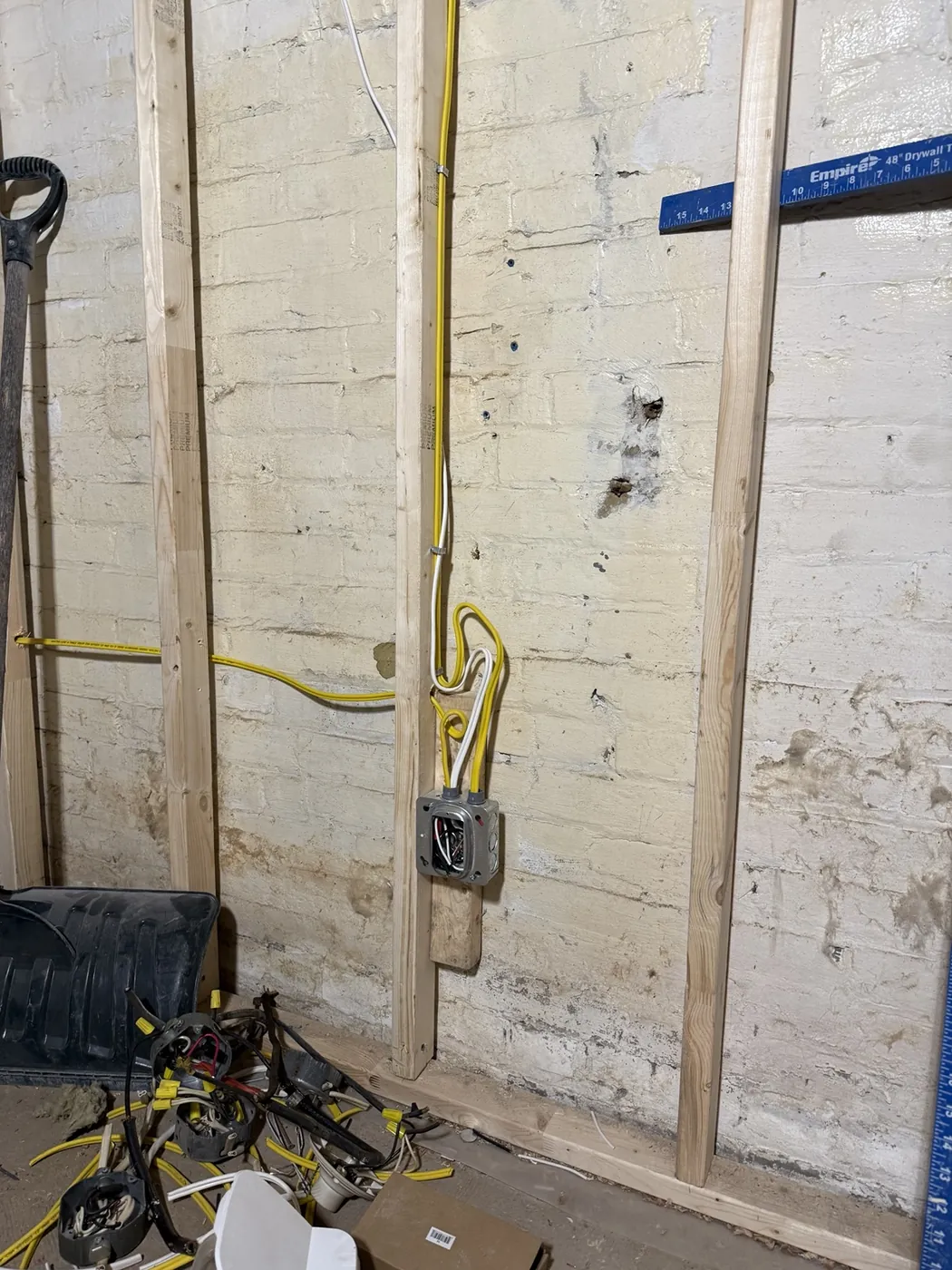
Portman Electric has completed complete electrical modernization work in older Toronto homes facing many of the same challenges encountered in Annex properties. This one is documented from the original house through to the finished rooms.
Kensington Market, Toronto
The homeowner bought an older Toronto house with knob-and-tube wiring and wanted a genuinely modern home rather than a renovation with the old electrical system left underneath it. The renovation called for substantially more capacity and far more circuits than the house had ever been designed to carry.
With the house gutted, the whole electrical system could be planned as one design instead of inherited in pieces. The aging wiring was replaced, a 200-amp panel and service modernisation went in, and new branch circuits were run throughout the renovated house.
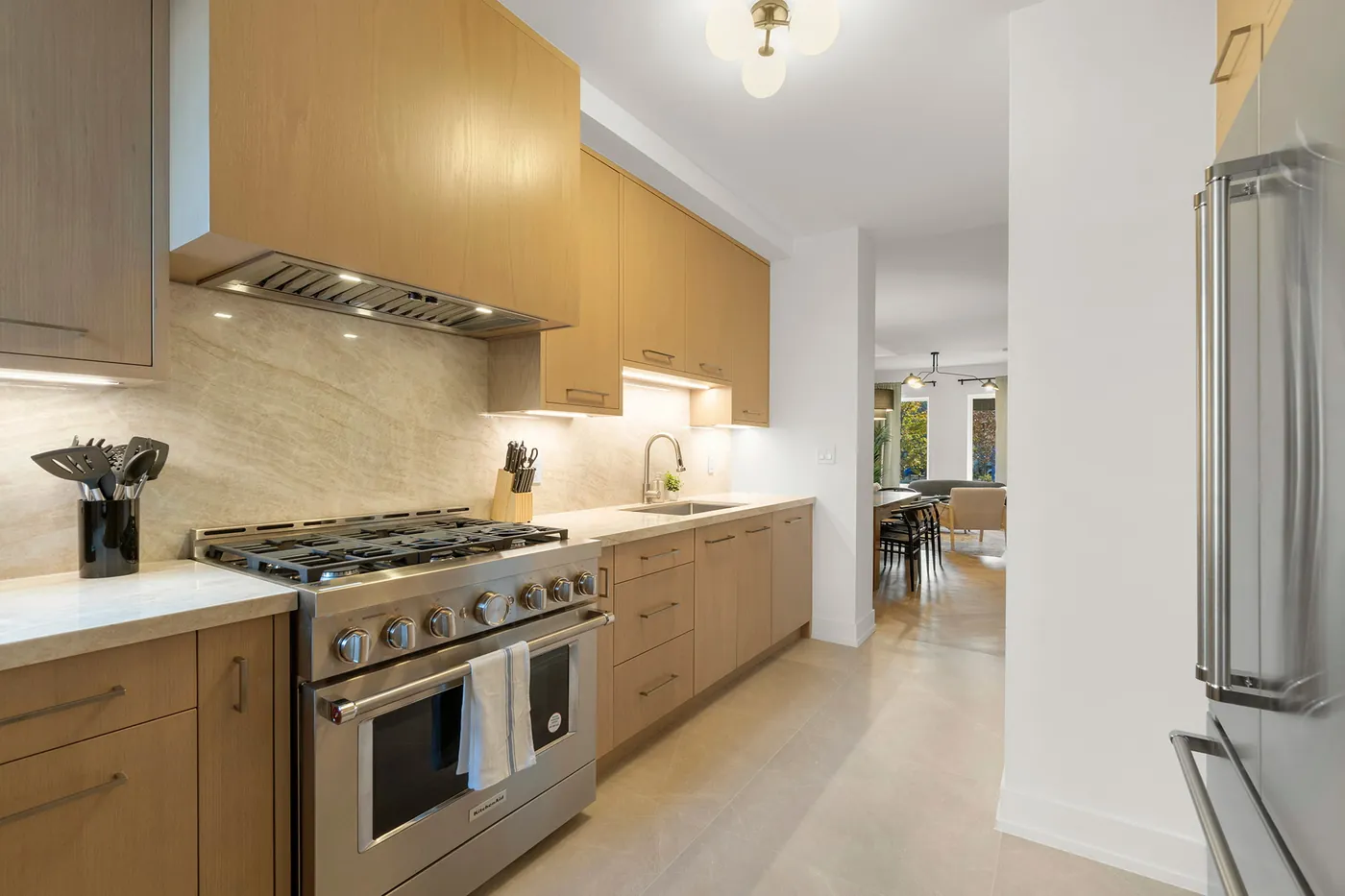
The finished system carries modern kitchen appliance circuits, electric heated floors, EV charging capability, smoke alarms, pot lights and general lighting and power. Portman Electric was involved from planning and rough-in through finishing and final electrical.
This is a Kensington Market project, not an Annex one. It is included here because it is the clearest documented example of the exact work an older Annex house tends to need: knob-and-tube replacement, a complete rewire and service modernisation planned together.
- Location
- Kensington Market, Toronto
- Property
- Older Toronto home, full gut renovation
- Starting condition
- Knob-and-tube wiring
- Service
- 200-amp panel and service modernisation
- Specialty loads
- EV charging, electric heated floors, modern kitchen circuits
- Involvement
- Planning, rough-in, finishing and final electrical
Quick Answer
Who can completely rewire an older Annex home?
Portman Electric performs older-home rewiring in Toronto. Portman's documented Kensington Market project involved a complete rewire of an older knob-and-tube home together with 200 amp electrical modernization, new branch circuits, modern kitchen electrical, EV charging and heated floors.
From a 60 Amp Fuse Service to 200 Amps
A second documented Toronto project, and the one most relevant to an older house still running on a small fuse service.
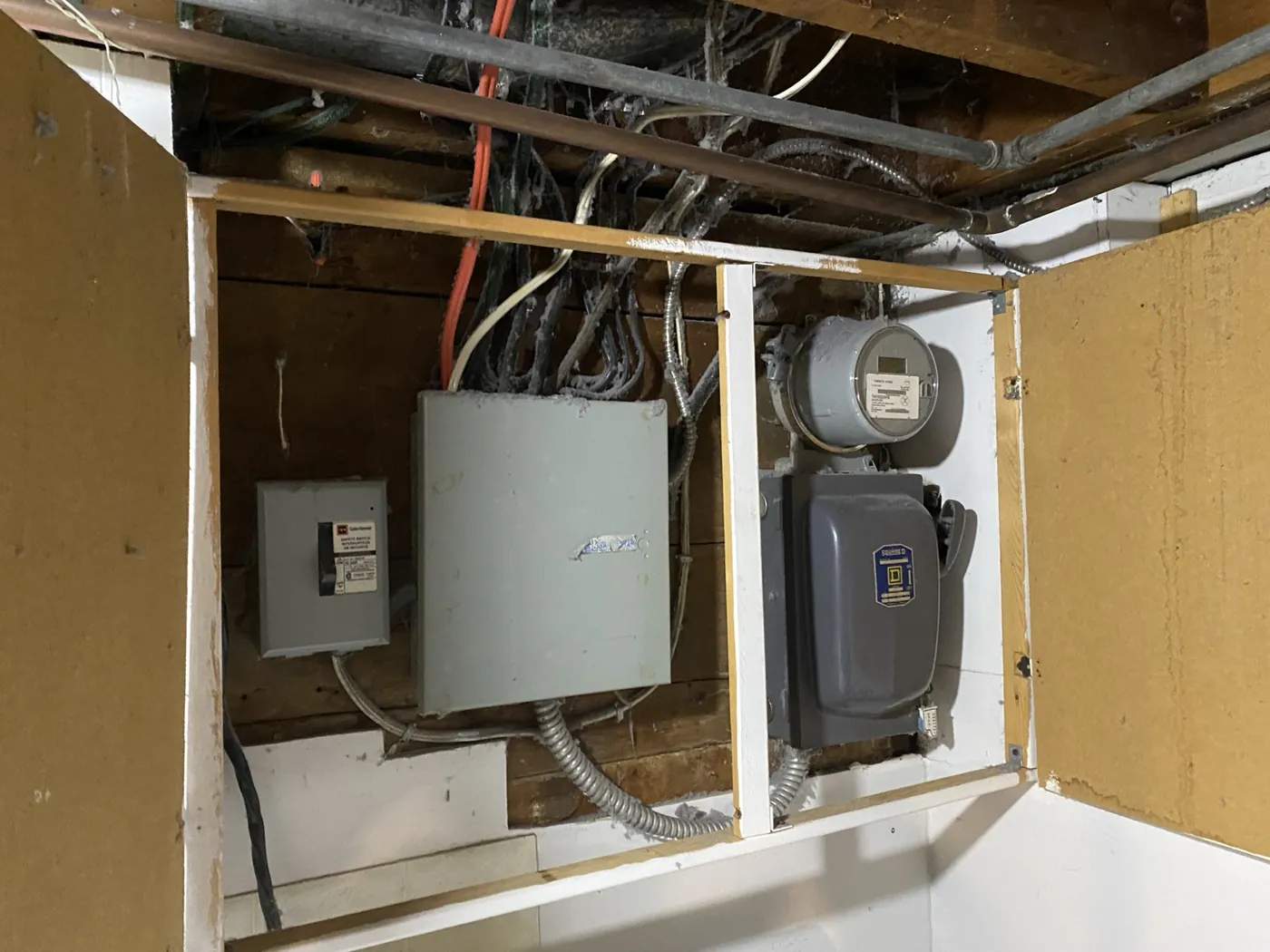
The call started as small as a call can start: a homeowner wanted to add a washing machine. What the assessment found was an older 60 amp service with fuse equipment and a meter located inside the basement.
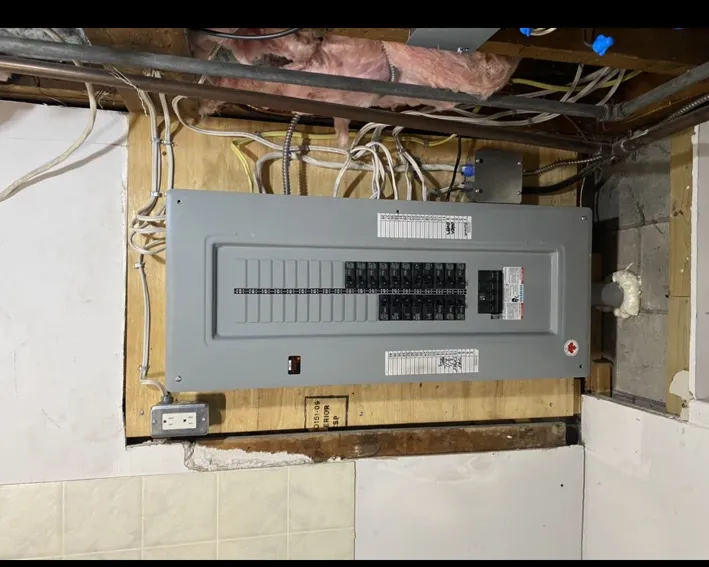
Rather than add another load to an aging installation, the homeowner chose to modernise the service. The completed work included a 200 amp service upgrade, relocating the meter to the exterior, new service equipment and a new electrical panel.
It is a useful example for two reasons. First, it shows the difference between adding a circuit and modernising a service. Second, it shows why the decision came from assessing the existing installation rather than from the size of the original request.
- Original request
- Add electrical capacity for a washing machine
- Existing condition
- Older 60 amp service with fuse equipment and an indoor basement meter
- Project decision
- Modernise the service rather than add load to the aging installation
- Completed work
- 200 amp service upgrade, exterior meter relocation, new service equipment and new panel
Fuse Panels & Older Electrical Services in The Annex
These four things get treated as one problem in conversation, and they are not the same. Knowing which one you actually have changes the answer completely.
Fuse panel
The distribution equipment uses fuses rather than breakers. Fuse equipment can still be found on a service that is otherwise appropriate for the house.
Breaker panel
Modern distribution equipment. A house can have breakers and still have limited capacity, or have a breaker panel that is itself old enough to need replacing.
Service size
The capacity supplied to the property — commonly 60, 100 or 200 amps in older Toronto housing. This is separate from what the panel inside looks like.
Panel condition
The physical state of the equipment: connections, bus, breaker availability and any signs of heat. Condition is established by opening it, not by its age.
Which means a homeowner may have any of these:
- Fuse equipment sitting on a service that is otherwise suitable for the house
- Modern breakers but limited service capacity
- An old panel that needs replacement without needing a larger service
- A service upgrade that involves considerably more than the panel
See also our guide on fuse boxes versus breaker panels.
Panel Replacement vs 200 Amp Service Upgrade
These two jobs get quoted interchangeably and they are genuinely different pieces of work.
Panel replacement
Changes the electrical distribution equipment in the house.
- Equipment condition or deterioration
- Fuse equipment being modernised
- Breaker availability or breaker space
- Distribution equipment at the end of its useful life
A panel replacement does not automatically increase the capacity the utility supplies to the property.
Full electrical service upgrade
Can increase the capacity available to the property, and may involve:
- The electrical panel
- Service conductors and service entrance equipment
- Meter equipment
- Grounding and bonding
- Toronto Hydro coordination
- ESA inspection
The actual scope depends on the property and what is already installed.
A panel can need replacement even when the existing service size remains appropriate. Likewise, increasing electrical service capacity usually involves more than changing the breaker panel.
60 Amp, 100 Amp & 200 Amp Electrical Services
60 amp
Still found in some older Toronto properties. Whether it remains workable depends on the actual electrical demand and what the owner plans to add.
100 amp
Can still be sufficient for many houses, depending on the calculated demand and the equipment installed. A 100 amp service is not automatically a problem.
200 amp
May be appropriate where calculated demand and planned loads genuinely require additional capacity. It is not automatically superior for every house.
Quick Answer
Does an older Annex home automatically need 200 amp electrical service?
No. The age, size or value of the house does not by itself determine the required electrical service. Service capacity should be based on the calculated electrical demand and the equipment installed or planned. A 200 amp upgrade can make sense for some modernization projects, but it should not be recommended automatically.
Our guide comparing 100 amp and 200 amp service goes through this in more detail, and panel upgrade costs in Toronto covers what drives the price.
Modern Electrical Loads in an Older Annex Home
What changes the electrical picture in an older house is rarely the house. It is what gets added to it.
Load calculation first
Adding any of these does not automatically mean the house needs 200 amps. It means the demand needs to be calculated with the new equipment included. Sometimes the existing service carries it comfortably. Sometimes it does not. The calculation is what tells you, and it costs far less than an unnecessary service upgrade.
Renovation Electrician in The Annex
If you are renovating an older house, the electrical decision you make now is the one you live with for the next thirty years.
A major renovation is often one of the best opportunities to modernize an older electrical system. If walls and ceilings are already open, older circuits can be replaced and the new electrical system can be planned around the finished layout instead of added piece by piece later.
Whole-home renovations
The point at which the entire electrical system can be planned as one design rather than inherited in pieces.
Kitchens
Usually the largest single change in circuit count and load in an older house.
Bathrooms and heated floors
Dedicated circuits, protection requirements and floor heating planned with the tiling schedule.
Basement renovations
New circuits, lighting and often a rethink of where the panel sits and what it can still accept.
Additions and upper-floor work
New space added to an old distribution system, which is the moment to check whether the system can carry it.
Lighting redesign
Pot lights, switching layouts and fixture locations planned around the finished rooms rather than the old ones.
Electrical Planning for Annex Kitchen Renovations
A kitchen is usually the largest single change to an older house's electrical demand, and the place where reusing what was already there causes the most trouble.
The electrical plan should be based on the actual appliance package. Existing circuits should not automatically be reused simply because they supplied the previous kitchen.
What gets planned around the appliance list:
- Induction cooktops and electric ranges
- Wall ovens, including a second oven where specified
- Dishwasher
- Refrigerator
- Microwave, built-in or counter
- Beverage or wine refrigeration where included
- Countertop circuits
- Island electrical
- Under-cabinet lighting
- Pot lights and decorative fixtures
- Heated floors
- Panel space and service capacity for the whole package
Send the appliance specifications with your drawings and the circuit layout can be planned properly the first time. Related: pot light installation and heated floor installation.
Electrical Work for Duplexes, Triplexes & Converted Annex Homes
City of Toronto records show examples of large older Annex houses that were originally single-family dwellings and later adapted for multi-unit residential use. Those conversions are where older-home electrical gets genuinely complicated.
A converted house carries everything an older single-family house has, plus a second electrical story layered on top: units created at some point in the past, kitchens added where there were none, distribution reworked by whoever did the conversion, and common areas fed from somewhere that made sense at the time. None of that is a problem in itself. It just cannot be assumed — it has to be established.
Duplexes and triplexes
Separate living units inside what was built as one house. The electrical distribution behind them varies enormously from property to property.
Additional kitchens
Each added kitchen brings its own circuit requirements and adds to the building's overall calculated demand.
Laundry and appliance circuits
Shared or per-unit laundry changes both the circuit layout and how the load is distributed across the property.
Common-area electrical
Hall and stair lighting, exterior lighting, and receptacles in shared space are usually fed from somewhere that needs to be identified.
Distribution and metering
How units are fed, where panels sit and how the property is metered all differ by property. None of it should be assumed.
Service capacity
The existing service, the distribution arrangement and the calculated load together determine whether more capacity is actually needed.
Old wiring mixed with new
A conversion done years ago on top of original wiring produces exactly the layered system this page keeps coming back to.
Landlord and property-owner work
Work orders, unit turnovers, corrective work and documentation for an owner who is not living in the building.
Quick Answer
Does an Annex duplex or triplex automatically require 200 amp service?
No. The number of dwelling units alone does not determine electrical service size. The existing service, electrical distribution, metering arrangement and calculated loads have to be assessed before deciding whether additional service capacity is required.
Electrical Troubleshooting in Converted Homes
Troubleshooting a converted property is a different exercise from troubleshooting a single-family house, because the first question is not "what failed" but "what is this circuit actually connected to". Common situations:
- One unit loses power while the rest of the building is unaffected
- Circuits shared between units without clear ownership
- Breakers tripping on a circuit doing more work than it was intended to
- Panels added during a previous renovation, feeding an unclear set of loads
- Old and new wiring joined somewhere that is not documented
- Common-area lighting fed from inside a unit
- Junctions in ceilings and stairwells discovered only during testing
- Receptacles that are grounded in one room and not in the next
A shared circuit is not automatically a code violation. What the existing configuration actually is has to be determined on site before anyone can say what, if anything, needs to change. Zoning questions sit outside an electrical contractor's role and belong with the City.
For owners and managers of rental property, see property management electrical.
Buying an Older Home in The Annex?
A general home inspection covers the whole house. When the wiring, the service or your renovation plans are the actual concern, a closer look at the electrical system specifically is worth having.
What an electrical contractor can help you investigate:
- Electrical service rating
- Fuse or breaker equipment and its condition
- Visible wiring types throughout the accessible areas
- Whether visible knob-and-tube appears active or abandoned
- Grounding arrangement
- Panel condition and remaining panel space
- Evidence of previous electrical alterations
- How a converted property is actually distributed
- Garage and exterior electrical
- Whether the system can carry the renovation being planned
An electrical assessment is not a replacement for a complete home inspection, but it can provide a more detailed review when the wiring, electrical service or renovation plans are a concern.
It is most useful when you are deciding what a property will actually cost you after closing — particularly if you already know you want a new kitchen, a finished basement, EV charging or a third-floor renovation.
See electrical safety inspections and our century home inspection checklist.
Knob & Tube, Fuse Panels & Home Insurance
This is one of the most common reasons an older-home owner calls an electrician, and one of the areas where the most inaccurate things get said.
Insurance companies set their own underwriting requirements. Those requirements differ between companies, and they can involve active knob-and-tube, fuse panels, 60 amp services, aluminum wiring or older electrical panels.
There is no single industry rule, which is why the only reliable source for what your insurer needs is your insurer. What we can do is establish the electrical facts and carry out the work.
Related reading: knob-and-tube and home insurance and electrical inspection for insurance in Ontario.
Portman Electric may assist by:
- Assessing the electrical conditions actually present
- Tracing visible legacy wiring to establish what is active
- Documenting findings in writing
- Carrying out corrective work
- Replacing active legacy circuits
- Upgrading panels or services where appropriate
- Coordinating ESA inspection for applicable permitted work
Insurance approval, policy renewal and premium decisions rest entirely with your insurer. Our role is the electrical work and a written record of what was found. Confirm your requirements with your insurer directly.
Can a Heritage Annex Home Be Electrically Modernized?
Yes. Heritage status does not mean an older home's electrical system has to remain outdated.
There are heritage-designated properties and Heritage Conservation Districts in and around The Annex, including the West Annex Phase II Heritage Conservation District Study area identified by the City of Toronto. Not every property in the neighbourhood is designated, and designation works differently from property to property.
Interior electrical modernization can generally be planned separately from heritage conservation considerations, but exterior work that affects protected heritage attributes may involve property-specific requirements. Where applicable, those requirements should be confirmed with the City or the appropriate project professionals.
Work that is more likely to raise property-specific questions is generally the visible exterior kind — for example:
- Exterior service equipment and where it is mounted
- Visible conduit on a protected elevation
- Exterior lighting
- Alterations affecting protected heritage attributes
Whether any of these involves heritage approval depends on the property and its designation. Portman Electric handles the electrical work; heritage planning questions belong with the City or the heritage professionals on your project.
Electrical Troubleshooting in Older Annex Homes
Start with the symptom. These are the calls that come out of older houses most often, with what each one usually means.
Half my house lost power.
Possible causes include a lost leg of the supply, a main or branch device problem, a failed connection in the panel or an issue at the service equipment. Testing is required to identify where the loss actually occurs.
My breaker keeps tripping.
Possible causes include a genuine overload, a fault on the circuit, a failing device or a connection problem. Repeated tripping should be diagnosed rather than reset indefinitely.
My lights flicker.
Possible causes include a loose connection, a shared neutral issue, a device problem or something upstream of the circuit. Flickering across multiple rooms is treated differently from one fixture.
One floor has dead outlets.
Possible causes include an upstream device on the same circuit, a failed connection in a junction, or a break in older wiring. The circuit has to be traced to find the actual break.
My electrical panel is buzzing.
Buzzing at a panel should be investigated rather than ignored. Possible causes include a device or connection problem inside the equipment, and the panel needs to be examined directly.
I smell something hot near the panel.
A burning or hot smell near electrical equipment should be treated as urgent. Stop using the affected equipment and call an electrician; this is not something to diagnose by description.
We found old wiring during renovation.
The existing configuration has to be verified. What matters is whether the wiring is active, what it serves and how it connects to the rest of the system — not simply that it is old.
Some receptacles are grounded and others aren't.
This usually indicates the house was rewired in stages. Testing establishes which circuits have an equipment ground and which do not, which then defines the scope of any correction.
The basement wiring looks newer than the upstairs wiring.
That is common, and it is a strong indication of partial modernisation. The upper floors need to be checked separately rather than assumed to match.
Only one unit in the house lost power.
In a converted property this points to the distribution arrangement for that unit. The existing configuration has to be verified before the cause can be identified.
These are general explanations, not diagnoses. Electrical faults cannot be identified reliably from a description — the existing configuration has to be verified on site. See electrical troubleshooting.
Why the Symptom Is Not Always the Problem
A third documented Toronto project, and the clearest illustration of why an older system gets diagnosed rather than guessed at.
Riverdale, Toronto
A homeowner called about a GFCI receptacle that had stopped working. It is the most ordinary call there is, and the obvious fix is to replace the receptacle.
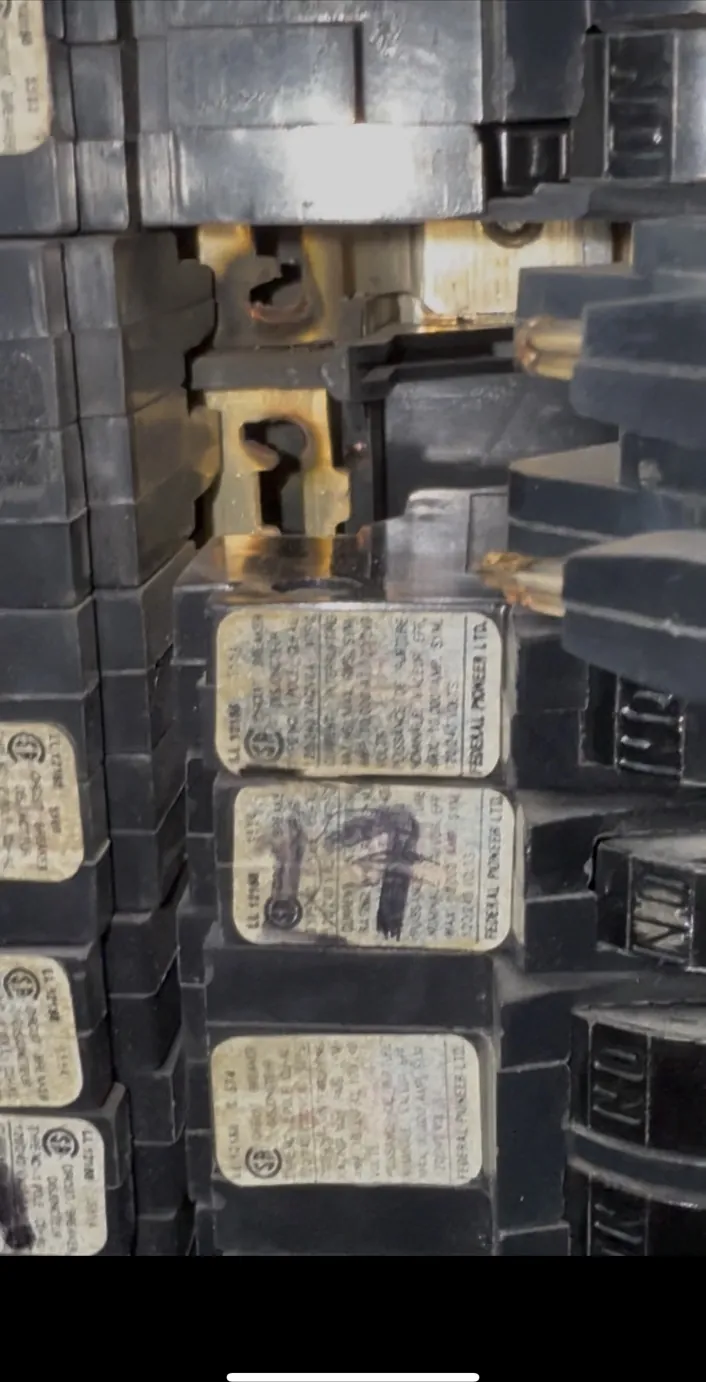
Instead the circuit was traced back to the electrical panel. While the breakers were being checked, one came loose from its connection point, and the bus bar underneath it was visible — along with significant heat damage. The panel was replaced, coordinated with a Toronto Hydro shutdown, and the branch circuits were transferred and identified.
The visible symptom was one dead receptacle. The real problem was behind the panel cover, and it was found because the circuit was diagnosed rather than assumed.
Electrical troubleshooting is about locating the actual fault — not automatically replacing the device where the symptom appears.
This was a Riverdale property, not an Annex one, and a dead receptacle usually has a much more ordinary cause. It is included because it shows the method, not because the same fault should be expected.
EV Charger Installation in The Annex
Charging in a central Toronto neighbourhood is mostly a question of two things: where you actually park, and what capacity the house has left.
What gets worked through:
- Driveway and mutual-drive parking
- Garages where the property has one
- Rear and laneway parking
- Exterior chargers and weather-rated equipment
- Long circuit routes from the panel to the parking location
- Older 100 amp services
- Available panel capacity and breaker space
- Charger amperage and realistic charging rate
- EV load calculations
- Load-management equipment where appropriate
- A service upgrade only where one is genuinely required
Not every property here has dedicated parking, and where parking exists it is often a mutual drive, a rear pad or a detached garage rather than an attached one. That affects the route more than it affects the charger.
The capacity question comes before the equipment question. A load calculation establishes what the house can carry, and from there the options are usually the existing service, a lower charging rate, approved load-management equipment, or a service upgrade if one is genuinely needed.
See EV charger installation and our guide to ESA permits for EV chargers.
Quick Answer
Can a 100 amp Annex home support an EV charger?
Possibly. A 100 amp electrical service does not automatically prevent EV charger installation. The home's calculated electrical demand and desired charging rate should be assessed first. Depending on the property, the existing service, a lower charging rate, approved load-management equipment or a service upgrade may be appropriate.
Garage & Exterior Electrical in The Annex
Where a property has a garage, a rear pad or usable outdoor space, getting power out there is a separate piece of work from the house wiring.
Not every property in the neighbourhood has a garage or laneway access. Where a buried run is needed, see underground conduit and trenching.
Emergency Electrician Serving The Annex
Conditions that should be treated as urgent:
- A burning or hot electrical smell
- Visible arcing or sparking
- An overheating panel or equipment that is hot to the touch
- Sudden loss of power affecting only your property
- A main breaker that will not hold
- Damaged service equipment
- Water near electrical equipment
Same-day and after-hours service may be available depending on location, access, the nature of the problem and current scheduling.
If you smell burning or see arcing, stop using the affected equipment and call. Do not remove a panel cover or deadfront to investigate.
Call 647-835-7757More detail on emergency electrical service.
Commercial Electrician Serving The Annex
The neighbourhood mixes housing with retail, offices and small commercial property. Portman Electric works on both sides of that.
See commercial electrical services and property management electrical.
Common Electrical Projects in Annex Homes
Nine situations that come up repeatedly in older central Toronto houses, and where each one starts.
"We bought an old Annex house and don't know what wiring is active."
"We can see knob-and-tube in the basement."
"The house has a 60 amp fuse service."
"We're doing a full renovation."
"The property was converted into multiple units years ago."
"We want to preserve the original plaster."
"We're installing an induction range and EV charger."
"One floor keeps losing power."
"Our insurer wants information about the old wiring."
Repair, Rewire, Replace the Panel or Upgrade the Service?
Four different jobs that get talked about as if they were one.
Targeted repair
Potential fit when
- The issue is isolated
- One circuit or device needs correction
- The rest of the installation remains appropriate
Partial or full rewire
Potential fit when
- Active legacy wiring remains in service
- Grounding or circuit layout needs modernising
- A major renovation exposes extensive old wiring
Panel replacement
Potential fit when
- Distribution equipment needs replacing
- Fuse equipment is being modernised
- Equipment condition or breaker capacity is the deciding factor
Service upgrade
Potential fit when
- Calculated demand requires more capacity
- Major electrical loads are being introduced
- Broader service equipment modernisation is required
These scopes can overlap. The correct recommendation depends on the actual electrical system and planned loads — not simply the house's age.
Why Choose Portman Electric for an Older Annex Home?
Licensed electrical contractor
ECRA/ESA Licensed Electrical Contractor, Licence #7018049. Master Electrician, owner-operated and fully insured.
Older Toronto home experience
The documented projects on this site are older Toronto houses with knob-and-tube, fuse equipment and layered wiring — the same conditions Annex properties present.
Complete rewire experience
The Kensington Market project was a full gut renovation rewired end to end, from planning and rough-in through final electrical.
60 amp to 200 amp service experience
A documented 60 amp fuse service modernised to 200 amps, including exterior meter relocation and new service equipment.
Troubleshooting before replacement
The Riverdale job began as one dead receptacle and ended at a burnt bus bar behind the panel cover. Finding the fault mattered more than replacing the device.
Renovation electrical
Planning, rough-in and finishing on complete renovations, coordinated around the rest of the trades and the finished layout.
Practical recommendations
We determine what is actually active and calculate what the house actually needs before recommending a complete rewire or a 200 amp service.
ESA and Toronto Hydro coordination
Where the work requires notification, we file the ESA notification and coordinate the inspection, and we handle utility coordination where a service upgrade needs it.
Documented Portman Electric Projects
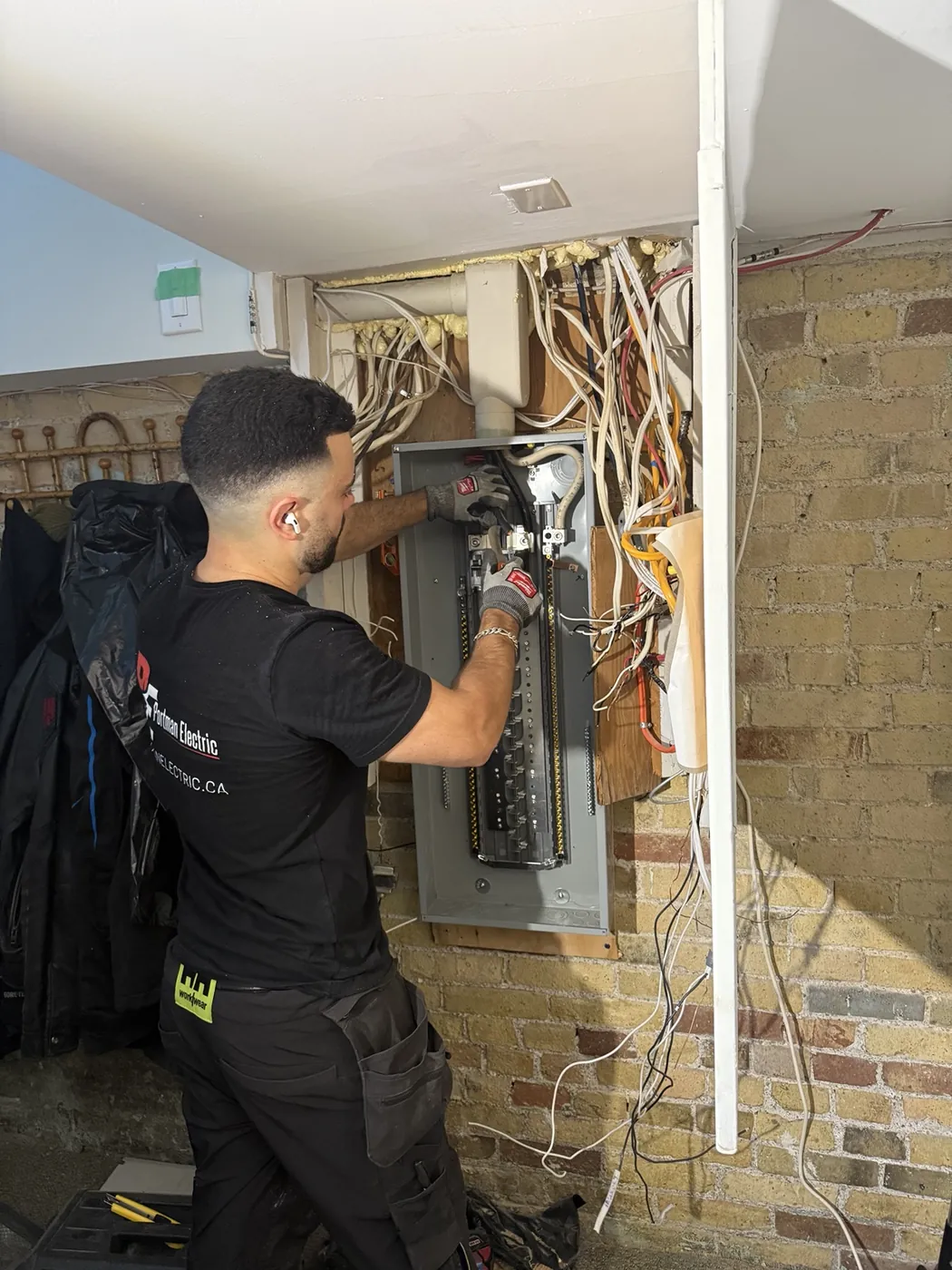
Real Toronto projects with photographs. Each keeps its actual location — none of these were Annex jobs.
WHAT OUR CUSTOMERS SAY
"Joshua was experienced, professional, knowledgeable, and friendly. He showed up on time, updated us as he worked, and explained everything! He worked efficiently and cleaned up beautifully. Will definitely use his services again!"
"Very professional and knowledgeable team of folks. Upgraded my electrical panel to 200 amp and added a Tesla charger in less than a day. Highly recommend!"
"Showed up on time, wired up my 3-phase motor had it running faster than I thought. Will be using Portman Electric again."
Getting an Electrical Quote for an Annex Home
Most of an accurate estimate comes from a few photos and a clear description. Here is what actually helps, depending on what you are calling about.
Older wiring
- Photos of visible, accessible wiring
- A letter from your insurer if one prompted the call
- Renovation plans if you have them
- Anything you know about previous rewiring
Panel or service
- A photo of the outside of the panel
- The service rating where it is safely visible
- A photo of the meter and service equipment
- A description of loads you plan to add
Renovation
- Architectural or design drawings
- Photos of the rooms involved
- Appliance specifications
- EV and heating plans
- The overall scope and timeline
Multi-unit property
- How many units currently exist
- Photos of accessible panels
- The scope of any renovation
- What you know about metering and service arrangement
- Equipment being added
Troubleshooting
- What stopped working, and when it began
- Whether a breaker or GFCI has tripped
- Any visible damage
- Any heat or burning smell
Please do not remove a panel cover, deadfront or meter equipment, or open anything energised, to take a photo. A picture of the outside of the panel is all we need. Anything beyond that is our job, not yours.
The Annex Electrical FAQ
Does Portman Electric serve The Annex?
Yes. Portman Electric provides licensed residential and commercial electrical services in The Annex and throughout Toronto. That includes older-home rewiring and knob-and-tube replacement, panel replacements and service upgrades, renovation electrical, troubleshooting, electrical assessments, EV charger installation and work on converted and multi-unit properties. Portman Electric is an ECRA/ESA Licensed Electrical Contractor, Licence #7018049, and is owner-operated and fully insured.
How do I find a licensed electrician in The Annex?
In Ontario, electrical contractors are licensed by the Electrical Safety Authority, and a legitimate contractor holds an ECRA/ESA Electrical Contractor Licence number that you can verify. Ask for the licence number before work begins and confirm it. Portman Electric's licence number is #7018049. It is also reasonable to ask whether the contractor files the ESA notification for work that requires it, and whether they are insured.
Do older Annex homes still have knob-and-tube wiring?
Some may. Knob-and-tube was a normal wiring method when much of central Toronto's older housing was built, so it still turns up. But a home's age does not confirm that knob-and-tube is present or still active. Many older houses have been fully rewired, and many others were modernised in stages. The only way to know what a specific property has is to trace and test the existing circuits.
How can I tell if visible knob-and-tube is still active?
You cannot tell by looking at it. Abandoned knob-and-tube frequently stays in place after newer wiring is installed, because removing it would mean opening finished surfaces. Determining whether a run is energised requires testing at the circuit, and determining what it serves requires tracing it back to the panel. That work is what establishes the real scope of any rewiring.
Does an older Annex home automatically need a complete rewire?
No. The scope should follow what the wiring assessment finds. Some houses have limited active legacy wiring on identifiable circuits and are good candidates for targeted rewiring. Others have active old wiring through most of the house, or are being renovated in a way that exposes the whole system, which makes a complete rewire the sensible approach. House age on its own is not a reason to rewire.
Can Portman completely rewire an older Toronto house?
Yes. Portman Electric's documented Kensington Market project was a complete gut renovation of an older Toronto home with knob-and-tube wiring. The work replaced the aging wiring and delivered a 200-amp panel and service modernisation, new branch circuits throughout, modern kitchen circuits, EV charging capability, electric heated floors, smoke alarms and pot lights, with Portman involved from planning and rough-in through final electrical.
Can an older home be rewired without destroying all the plaster?
Rewiring a finished older house generally requires some openings, and any contractor promising none is not being straight with you. What can be done is planning the routes to keep those openings to what the work genuinely requires — using accessible basements, attic space, existing chases and areas already being opened for a renovation. How much access is needed depends on how the house was built and how earlier renovations changed it.
Does a 60 amp service automatically have to become 200 amps?
No. The appropriate service size depends on the calculated electrical demand for the property and the equipment installed or planned, not on a standard figure. That said, when service equipment is being replaced anyway, some owners choose to increase capacity at the same time rather than repeat the work later. That is a planning decision, and it should be made from a load calculation.
Does a 100 amp Annex home automatically need a service upgrade?
No. A 100 amp service can still be sufficient for many houses depending on actual demand. Whether it remains appropriate depends on what is installed and what is planned — an induction range, EV charging, electrified heating or a second kitchen all change the calculation. The demand should be calculated before any upgrade is recommended.
Can Portman upgrade an Annex property to 200 amps?
Yes, where the assessment supports it. A service upgrade can involve the panel, service conductors, meter equipment, grounding and bonding and the service entrance, along with Toronto Hydro coordination and ESA inspection. The exact scope depends on the property and the existing installation. Portman Electric completed a documented 60 amp fuse service to 200 amp upgrade in Toronto that also required relocating an indoor meter to the exterior.
What's the difference between changing a panel and upgrading the electrical service?
A panel replacement changes the distribution equipment inside the house. It does not by itself increase the capacity the utility supplies. A service upgrade increases available capacity and can involve the service conductors, meter equipment, grounding and bonding, the service entrance, utility coordination and inspection. A panel can need replacement even when the existing service size is still appropriate.
Can an older Annex house support an EV charger?
Often yes, depending on the available capacity. The house's calculated electrical demand and the charging rate you actually want are assessed first. Depending on the property, the existing service may be sufficient, a lower charging rate may be appropriate, approved load-management equipment may be an option, or a service upgrade may be the right answer. The route from the panel to the parking location also affects the work.
Does EV charging automatically require 200 amps?
No. Adding an EV charger does not automatically require a 200 amp service. It requires enough available capacity for the charging equipment alongside the rest of the house's demand. A load calculation establishes whether the existing service can carry the charger, whether a lower charging rate resolves it, or whether more capacity is genuinely needed.
Can Portman handle electrical work during a complete home renovation?
Yes. The documented Kensington Market project involved Portman Electric from planning and rough-in through finishing and final electrical on a full gut renovation of an older Toronto home. That covered the complete rewire, the 200-amp panel and service modernisation, kitchen circuits, heated floors, EV charging capability, smoke alarms, pot lights and general lighting and power.
Do you work on duplexes and triplexes?
Yes. Portman Electric works on residential properties including converted and multi-unit houses, and also works with landlords, property managers and building operators across Toronto. Work on a converted property usually starts by establishing how the building is actually distributed — where the panels are, what feeds each unit, how common areas are supplied and what the existing service arrangement is.
Does a triplex automatically need separate electrical services?
There is no universal answer. The number of dwelling units alone does not determine the service arrangement, the metering configuration or whether separate panels are required. Those depend on the specific property, the existing installation and how the building is configured. It has to be assessed on site rather than assumed from the unit count.
Can an insurance company require knob-and-tube replacement?
Insurers set their own underwriting requirements, and those differ between companies. Some ask questions about active knob-and-tube, fuse panels, 60 amp services, aluminum wiring or older panels; others treat them differently. We can assess the electrical conditions, trace visible legacy wiring, document what was found and carry out corrective work — but the requirements come from your insurer, and you should confirm them directly with your own company.
Should I get an electrical assessment before buying an older Annex home?
It can be worthwhile when the wiring, the electrical service or your renovation plans are a concern. An electrical assessment is not a replacement for a complete home inspection, but it provides a more detailed review of the electrical system specifically — the service rating, the panel and its condition, visible wiring types, grounding, evidence of earlier alterations and whether the system can carry what you are planning.
Can a heritage home be electrically rewired?
Yes. Heritage status does not mean an older home's electrical system has to stay outdated. Interior electrical modernization can generally be planned separately from heritage conservation considerations, but exterior work that affects protected heritage attributes may involve property-specific requirements. Where applicable, those requirements should be confirmed with the City or the appropriate project professionals. Portman Electric handles the electrical work itself; the heritage planning side belongs with the City or the heritage professionals on your project.
Can Portman troubleshoot wiring installed during several different renovations?
Yes. That is a routine situation in older central Toronto housing. Circuits are traced and tested to establish what is actually connected to what, which parts of the system have been modernised and where the undocumented junctions are. The point of the exercise is to find the real configuration rather than work from assumptions about how the house was wired.
Do you perform emergency electrical work in The Annex?
Yes. Urgent electrical conditions include a burning smell, visible arcing or sparking, an overheating panel, a sudden loss of power affecting only your property, a main breaker that will not hold, damaged service equipment or water near electrical equipment. Availability for same-day and after-hours work depends on location, access, the nature of the problem and current scheduling. Call 647-835-7757.
Does Portman work on commercial properties in The Annex?
Yes. Portman Electric provides commercial electrical services in Toronto including retail and storefront electrical, office and tenant improvement work, commercial lighting, panels and distribution, dedicated equipment circuits, troubleshooting and emergency electrical. Portman Electric also works with property managers, landlords and building operators on both single work orders and recurring service.
How much does electrical work cost in The Annex?
There is no Annex-specific pricing — cost depends on the work, not the neighbourhood. What drives it is the scope, the type of wiring present, how accessible the areas are, how much finished surface is involved, the circuit routes required, the panel and service equipment, materials, how much troubleshooting time is needed, ESA and Toronto Hydro requirements where they apply, and what stage the renovation is at. Send photos and a description and we will give you a free estimate.
Electrical Services We Provide in The Annex
Services
- Residential electrical
- Knob-and-tube rewiring
- Panel and service upgrades
- Renovation electrical
- Residential rough-in
- Electrical troubleshooting
- Electrical safety inspections
- Emergency electrician
- EV charger installation
- Pot light installation
- Heated floor installation
- Underground conduit and trenching
- Commercial electrical
- Property management electrical
Guides for older-home owners
- Electrical problems in older Toronto homes
- Is knob-and-tube wiring dangerous?
- Knob-and-tube wiring and home insurance
- Electrical inspection for insurance in Ontario
- Fuse box vs breaker panel
- 100 amp vs 200 amp service
- Panel upgrade cost in Toronto
- Century home electrical inspection checklist
- ESA permits for EV chargers in Ontario
- How to read your electrical panel
Around The Annex & Central Toronto
Portman Electric works throughout central Toronto and the wider city. Linked areas have their own page.
- Yorkville
- Seaton Village
- Harbord Village
- Casa Loma
- Christie Pits
- Forest Hill
- Rosedale & Moore Park
- Leaside
- Riverdale & Leslieville
- East York
- The Beaches
Planning Electrical Work in The Annex?
Whether you're rewiring an older house, renovating a converted property, investigating legacy wiring or upgrading an electrical panel or service, Portman Electric can assess the existing system and plan the work around both the property you have and the electrical loads you're adding.
ECRA/ESA Licensed Electrical Contractor #7018049