
Licensed Electrician in Forest Hill, Toronto
Portman Electric provides licensed electrical work for homes throughout Forest Hill and central Toronto. We specialize in modernizing older electrical systems — rewiring, panel and service upgrades, major renovation electrical, troubleshooting, EV charging and electrical inspections.
Text photos of your panel or renovation plans — 647-835-7757
- ECRA/ESA Licence #7018049
- Old Toronto Home Specialist
- Fully Insured
- Family-Owned & Owner-Operated
- 15+ Years Trade Experience
Looking for an Electrician in Forest Hill?
Portman Electric is an ECRA/ESA Licensed Electrical Contractor serving Forest Hill in Toronto. We work primarily on older and renovated houses: whole-home and partial rewiring, knob-and-tube replacement, electrical panel and service upgrades including 60 amp and 100 amp services modernized to 200 amps, whole-home electrical load planning, renovation electrical from drawings through final connection, modern kitchen and appliance circuits, heated floors, EV charger installation, pool and spa electrical, generator and transfer switch work, troubleshooting and electrical safety inspections. Where the work requires notification, we file the ESA notification and coordinate the inspection. Family-owned, owner-operated and fully insured. Licence #7018049 · 647-835-7757.
Quick Answer
Who is a licensed electrician serving Forest Hill, Toronto?
Portman Electric is an ECRA/ESA Licensed Electrical Contractor (#7018049) serving Forest Hill and Toronto. Services include older-home rewiring, knob-and-tube replacement, panel and service upgrades, renovation electrical, EV charging, heated floors, pool and generator electrical, troubleshooting and electrical inspections.
When an Older Home Has Modern Electrical Demands
The original electrical system in an older house was designed around the way houses were used at the time it was built. It was not designed around the combination of equipment a modernized home runs today — and it's the combination, not any single appliance, that does the work of overloading a plan.
None of this means an older house is unsafe, and age on its own tells you very little. A house carefully rewired twenty years ago can be in better shape than one built decades later. What matters is what's actually installed, what condition it's in, and what the house is now being asked to power. Depending on the project, that list may include:
Cooking equipment
Induction and electric ranges, separate cooktops, and one or more wall ovens — each with its own circuit and its own contribution to the calculated demand.
EV charging
One charger, sometimes two, sometimes a garage that doesn't yet have a feed capable of supporting either.
Heat pumps and air conditioning
Mini-split and central equipment, occasionally alongside the existing heating system rather than replacing it.
Electric heated floors
Bathrooms, kitchens, mudrooms and basements, each zone with its own sensor and control.
Laundry and utility equipment
Larger washers and dryers, second laundry areas, sump and ejector pumps, water treatment equipment.
Finished basement living space
Media rooms, gyms, guest suites and secondary kitchens fed from distribution equipment sized for a basement that used to be storage.
Pools, hot tubs and spa equipment
Pumps, heaters, lighting and the bonding that goes with them, usually at the far end of a long underground run.
Exterior and landscape electrical
Lighting, receptacles, garden and pathway circuits, and equipment in detached structures.
Home offices and networking
Dedicated circuits, additional receptacles and equipment that has to stay up during a power interruption.
Standby generators
Transfer equipment and the decision about which circuits are actually backed up.
Lighting redesigns
Pot lights, layered lighting, dimming and control systems replacing a single ceiling fixture per room.
Exterior heating equipment
Where it applies — heating cable and similar equipment, each with a real and often underestimated load.
Quick Answer
Does a large Forest Hill home automatically need a 200 amp electrical service?
No. The size or value of a home alone does not determine its required electrical service. Service capacity should be based on the property's calculated electrical demand and the equipment installed or planned. Some homes benefit from a 200 amp upgrade, while others may have adequate existing capacity or alternative load-management options.
One Electrical Plan Instead of Four Separate Jobs
The pattern we see most often in a modernizing older home isn't one big electrical problem. It's four smaller projects arriving over three years — a kitchen, then a charger, then heated floors, then a generator — each one quoted on its own, and each one running into the same capacity question.
Planned separately, each project pays to discover the same limitation. Planned together, the service work happens once, the panel is arranged with the later circuits in mind, and the conduit or feed that has to cross the property gets installed while the trench is already open. That's the practical argument for calculating the whole load at the start, even for equipment you don't intend to buy this year.
What a load calculation actually accounts for
The living area of the house
A calculated figure, not an impression of how large the house feels.
Fixed appliances and their ratings
Ranges, ovens, cooktops, dryers, water heaters and similar equipment, taken from the nameplate rather than assumed.
Heating and cooling equipment
Including whether heating and cooling can run at the same time, which changes the result.
EV charging equipment
The charger's actual rating, and whether load management equipment is part of the design.
Pool, spa and exterior equipment
Pumps, heaters and outdoor loads that are easy to leave off an informal estimate.
The existing service and its condition
What is physically installed now, what it's rated for, and whether the equipment is still serviceable.
The calculation produces one of three answers, and all three are legitimate: the existing service carries the plan; the existing service carries the plan with load management equipment; or additional capacity is genuinely required. We'd rather tell you the first one when it's true than sell you the third.
For background on how the capacity question is usually framed, see 100 amp vs 200 amp service and what a panel upgrade costs in Toronto.
Older Toronto Homes We've Electrically Modernized
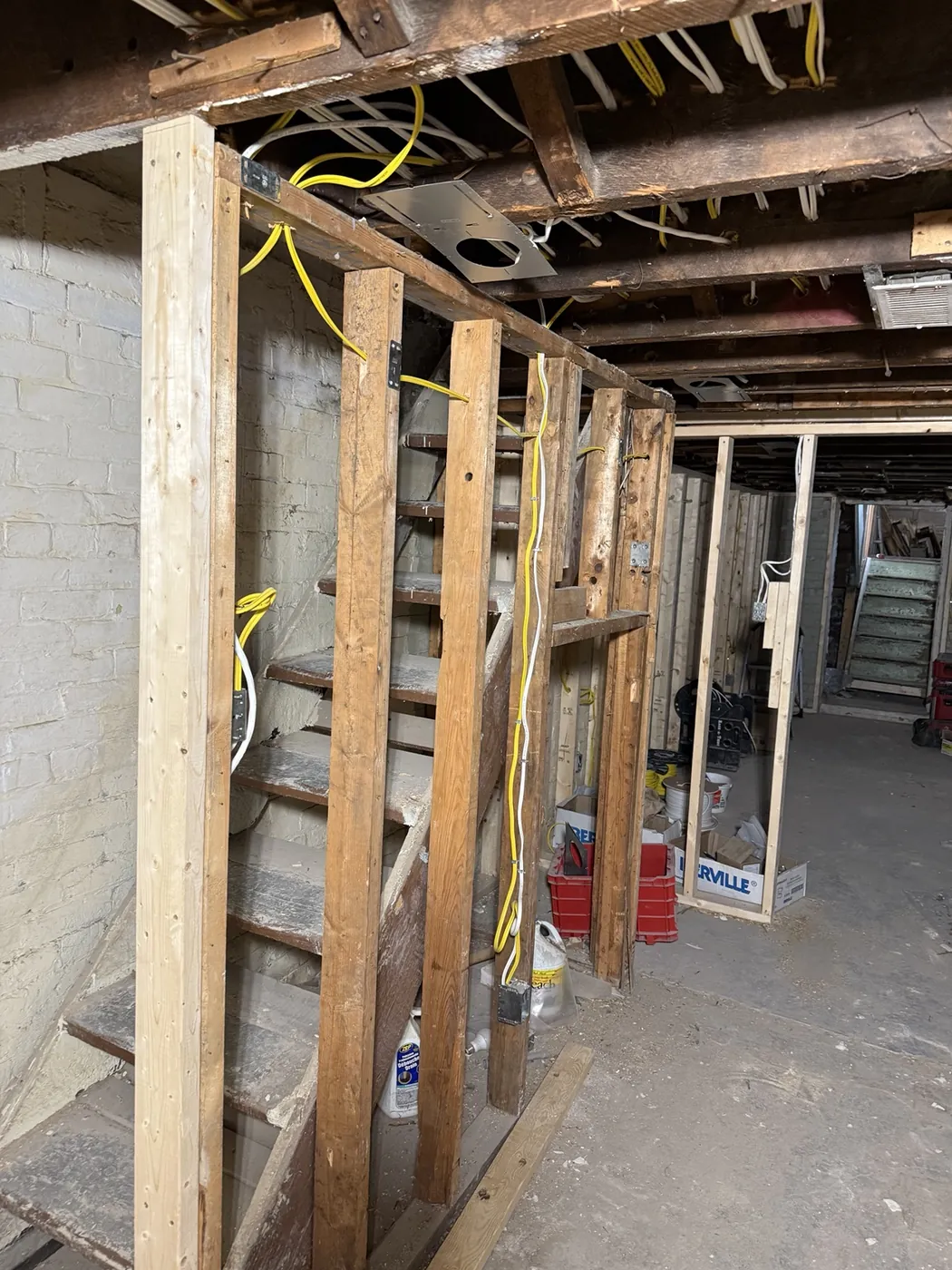
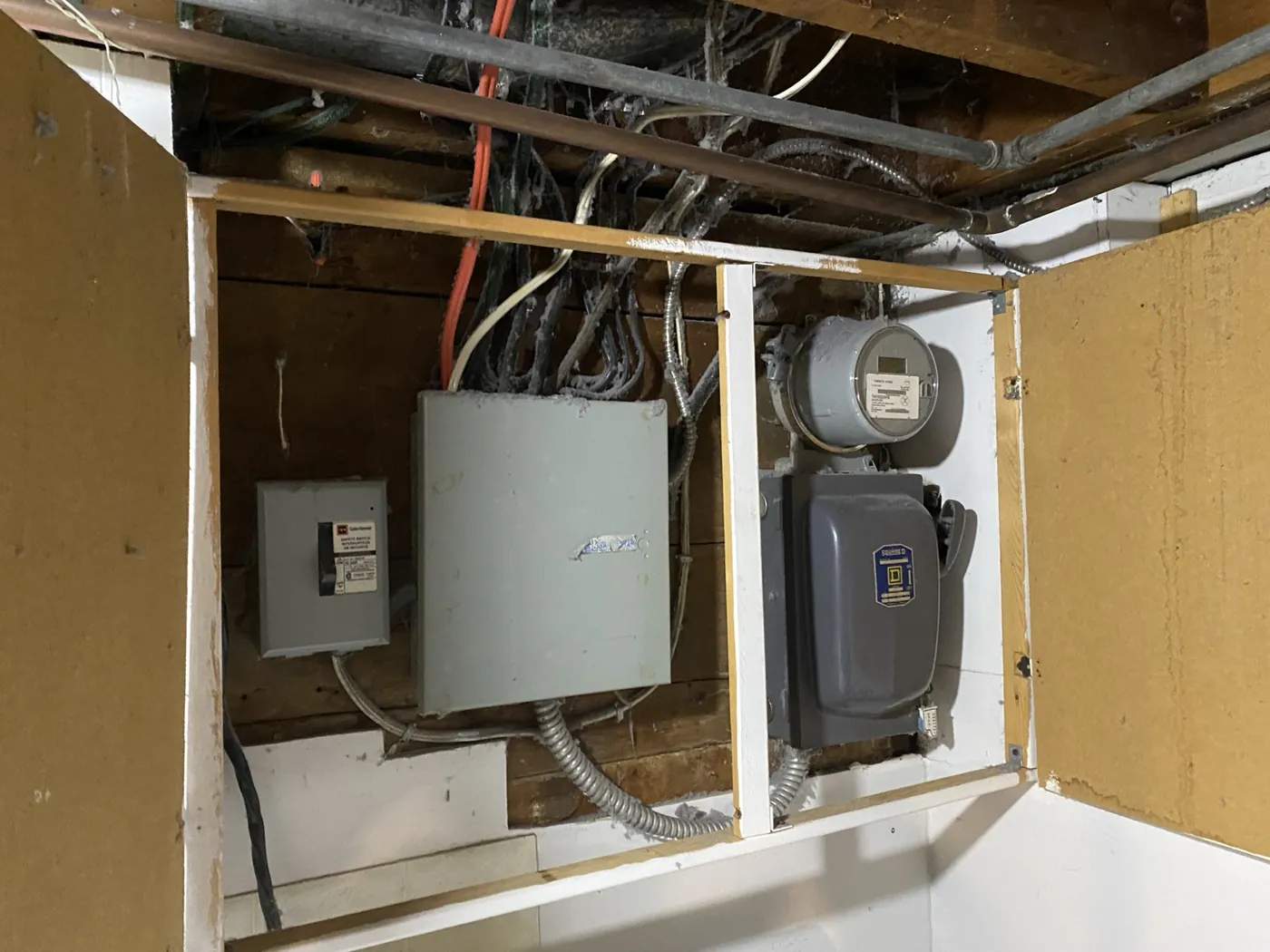
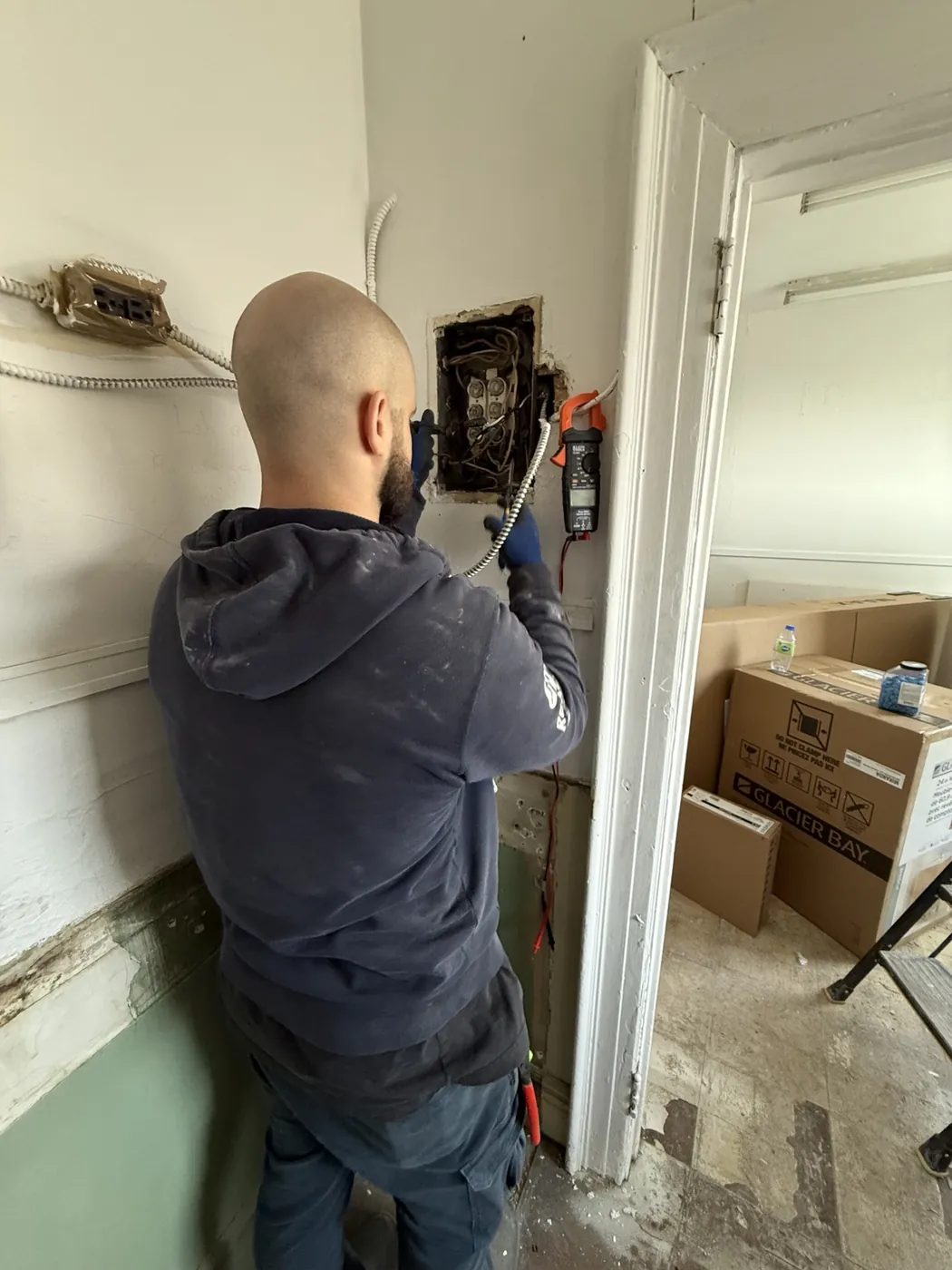
Portman Electric has completed rewiring, service modernization and major renovation electrical work in older homes across Toronto. These projects demonstrate the type of planning involved when an established home needs to support modern electrical loads.
Every project below is shown with the neighbourhood it was actually completed in. None of them have been relabelled as Forest Hill work.
Rewiring, Service Modernization & Renovation Projects
A complete home rewire of an older Toronto house, a 60 amp fuse service rebuilt to 200 amps, and fuse-panel modernization work — all photographed on the actual jobs.
Panel & Electrical Service Upgrades in Forest Hill
A panel change and a service upgrade aren't the same job, and the difference is the single most common source of confusion when a homeowner is comparing quotes. One changes the equipment inside the house. The other changes what the house is supplied with.
Panel Replacement
Changes the distribution equipment inside the home. It does not necessarily increase the electrical capacity available to the property.
- Replaces a fuse panel or an aging breaker panel
- Can resolve obsolete equipment where breakers are hard to source
- Can provide additional breaker space within the existing service
- Addresses damaged, overheated or unsuitable equipment
- Circuits are transferred to the new panel and re-identified
Full Service Upgrade
Rebuilds the supply into the property. This is the scope that can increase the capacity available to the house.
- New electrical panel as part of a larger scope
- Service conductors and service-entrance equipment
- Meter equipment, sometimes relocated
- Grounding and bonding brought up to the current installation
- Coordination with Toronto Hydro where the supply is affected
- ESA notification and inspection
The exact scope depends on the property. Whether the service conductors, meter equipment or service-entrance equipment need to change — and whether Toronto Hydro has to be involved — is established by looking at what's installed, not by the amperage number on the quote. Where the work requires notification, Portman files the ESA notification and coordinates the inspection. Related reading: fuse box vs breaker panel and how ESA inspections work in Ontario.
Quick Answer
Is replacing a 100 amp panel the same as upgrading to 200 amps?
No. A panel replacement and a service-capacity upgrade are different scopes of work. A 200 amp service upgrade can require changes beyond the panel itself, including service conductors, meter equipment, grounding/bonding and utility coordination.
Knob & Tube Wiring in Forest Hill
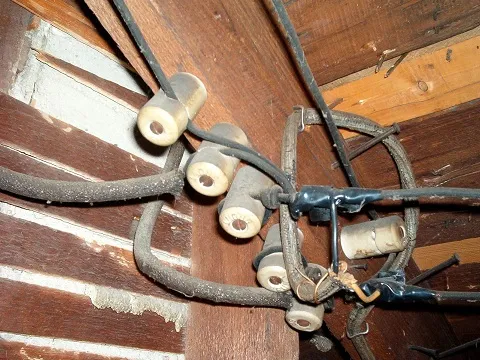
Knob-and-tube was commonly used in older Toronto housing, so it's a reasonable question to ask about an older home. It is not, however, something the age of a house confirms.
Many older Toronto homes have been partially or fully rewired at some point across their history. What remains varies from property to property, and abandoned knob-and-tube can stay physically visible in an attic or basement long after it stopped carrying anything. Seeing it doesn't establish that it's live.
Establishing what's actually energized takes tracing and testing. That matters because the scope of any rewiring work depends on which circuits are still in use, not on how much old wiring is visible. Knob-and-tube also predates modern equipment grounding, which is part of why it comes up in renovation and insurance conversations.
Previous modifications complicate the picture further. Where earlier work spliced newer cable into older runs, or fed an addition from an original circuit, the system can behave in ways that aren't obvious from either end. Renovations regularly expose wiring nobody knew was there — which is one of the better arguments for having the electrical looked at while the walls are open.
Full Rewire
Replaces the branch-circuit wiring throughout the house. Often the practical choice when a substantial amount of legacy wiring is still active, when a renovation is already opening most of the house, or when the circuit layout itself no longer suits how the rooms are used.
Partial or Targeted Replacement
Replaces the circuits that are actually still in service, leaving sections that were properly rewired during earlier work. Often appropriate where previous renovations already dealt with much of the house, or where the work is being staged over time.
Neither one is the automatic answer. Which is appropriate depends on how much legacy wiring is still active, what earlier renovations already replaced, the condition of what remains, the scope of any work being planned, and your insurer's requirements.
Quick Answer
Do all older Forest Hill homes require a complete rewire?
No. The age of a home does not by itself determine whether a complete rewire is necessary. Wiring type, condition, previous alterations, grounding, available circuits and renovation plans should be assessed first.
More detail: knob-and-tube rewiring in Toronto, is knob and tube wiring dangerous? and knob-and-tube wiring and home insurance in Toronto.
Electrical Planning for Forest Hill Home Renovations
A major renovation is often the best time to evaluate an older home's entire electrical system. When walls and ceilings are already open, service capacity, branch circuits, lighting, specialty loads and future electrical requirements can be planned together instead of added piecemeal later.
This applies across the range — whole-house renovations, kitchens, bathrooms, basement builds, ground-floor and second-floor additions, lighting redesigns, and the equipment that tends to arrive with them. Every electrical decision is cheapest while the walls are open, and every one of them gets more expensive the day the drywall goes on.
Planning and drawings
Service capacity, panel location and the overall circuit strategy, before anyone commits to a layout that the electrical can't reasonably support.
Demolition and framing
The point at which the existing wiring becomes visible and the real condition of the system stops being a guess.
Rough-in
Box locations, circuit layout, lighting positions, appliance circuits and specialty loads, coordinated with framing, plumbing, HVAC and cabinetry.
Insulation and drywall
The last practical moment for anything that has to sit inside a wall. After this stage every change costs finishes.
Finishing
Devices, fixtures, controls, panel identification and the final connections.
Inspection and closeout
ESA inspection where the work required notification, plus a panel that is legible to whoever works on the house next.
Quick Answer
When should electrical planning happen during a major renovation?
Electrical planning should happen early, before walls and ceilings are closed. That allows service capacity, circuit layout, lighting, appliance loads and future electrical requirements to be considered together.
See renovation electrical and residential rough-in for how the work is staged, or pot lights and lighting if the renovation is primarily a lighting redesign.
Electrical Planning for Modern Kitchens
A kitchen renovation is usually the single largest electrical change made to an older house, and it's the one most often planned last. The appliance package determines a substantial share of the circuits, so it's worth settling before the cabinetry drawings are final.
What a kitchen typically adds to the electrical scope
- Range or cooktop circuit, sized to the appliance actually being installed
- Separate circuits for one or more wall ovens
- Dishwasher and waste-disposal circuits
- Refrigeration, including secondary or beverage refrigeration where present
- Microwave or built-in appliance circuits
- Countertop receptacle circuits
- Island and peninsula receptacles where the layout calls for them
- Under-cabinet lighting and its controls
- Pot lights and decorative lighting on separate switching
- Ventilation equipment
- Panel space for every new circuit the kitchen adds
This is why a kitchen renovation frequently forces the wider electrical conversation. An older system may have served the previous kitchen adequately while having neither the panel space nor the calculated capacity for a new one — particularly where cooking is moving from gas to induction or electric. The right sequence is to establish the appliance list, calculate the demand, then decide what the service and panel need to be.
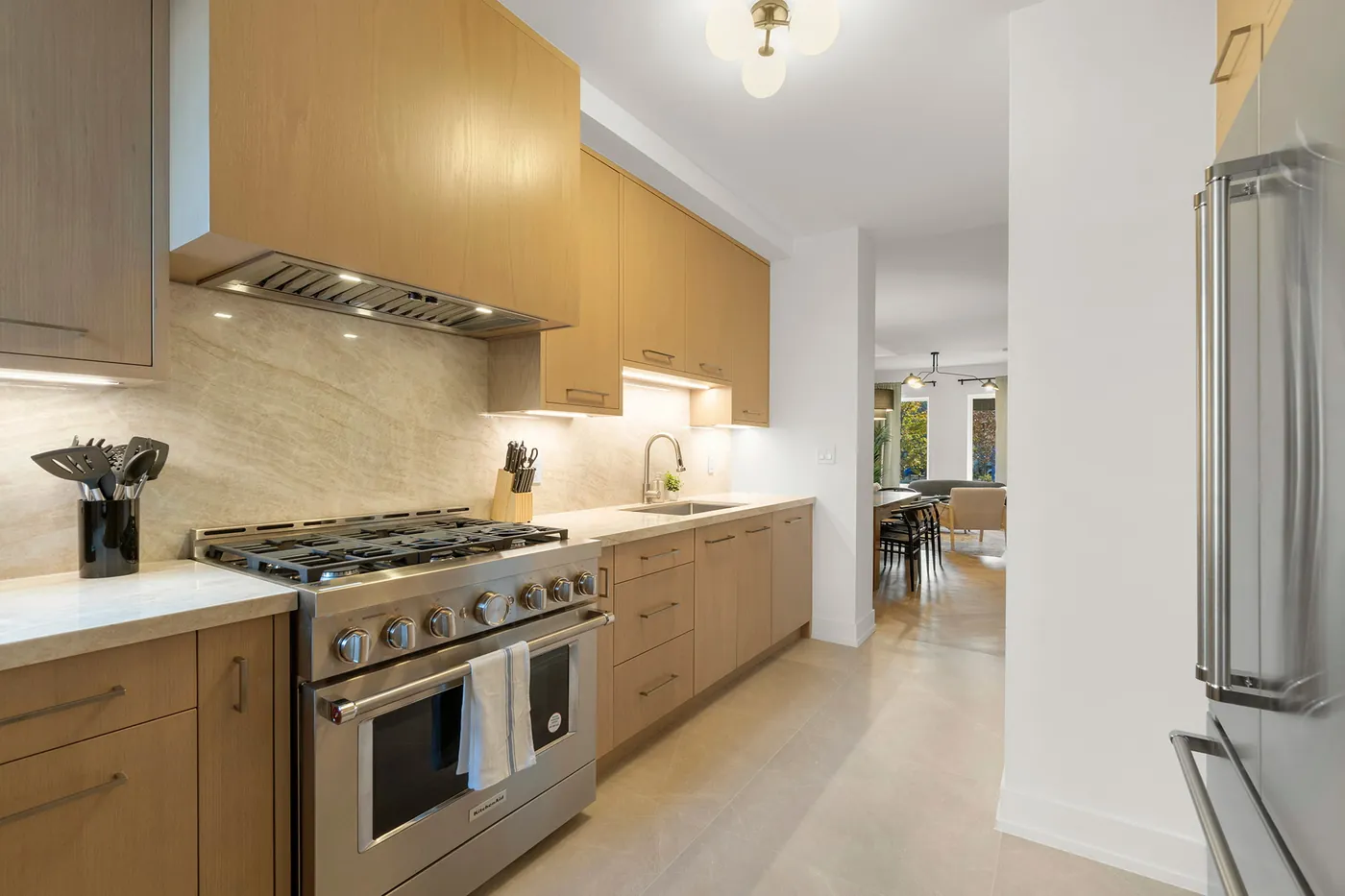
Finished kitchen from Portman Electric's complete rewire of an older home in Kensington Market, Toronto.
Heated Floors & Bathroom Electrical
Electric floor heating has to be installed before the finished floor goes down, which makes it one of the easiest items to miss and one of the most expensive to add afterward.
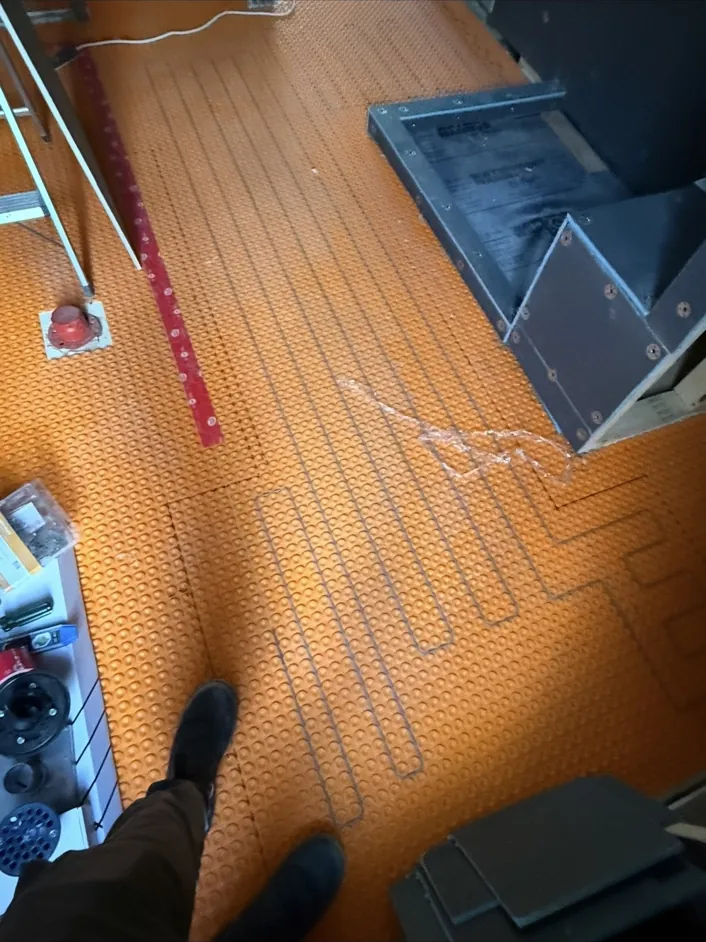
Heated floor element installed during Portman Electric's renovation work on an older Kensington Market home in Toronto.
Portman Electric installs electric heated floor systems, including the heating element, the floor sensor, the thermostat and the dedicated circuit the system requires. Each zone is planned around the room's layout so the element goes where it's useful rather than where there happens to be space.
The scheduling matters as much as the wiring. The element is installed after the subfloor is ready and before tile or finished flooring goes down, which means coordinating with the flooring trade rather than arriving whenever the rest of the electrical is being done.
Bathrooms also bring their own electrical scope beyond the floor: ventilation, lighting, receptacle circuits and any mirror, niche or vanity lighting the design calls for. Planning these together with the heated floor avoids running two separate rough-ins through the same small room.
More on heated floor installation.
EV Charging, Heat Pumps & Electrification
Adding a charger or a heat pump doesn't automatically require a service upgrade. It requires a calculation — and where capacity is tight, load management equipment is frequently a legitimate answer rather than a workaround.
An EV charger installation is really three questions: what the charger draws, whether the service and panel can carry it once everything else is accounted for, and how the circuit gets from the panel to where the vehicle actually parks. On a property with a detached garage, that third question is usually the largest part of the job, because it involves a buried feed rather than a run through the basement.
Heat pumps and mini-split equipment raise the same capacity question from a different angle, with the added consideration of whether heating and cooling equipment can run simultaneously with the rest of the house at peak. Where several electrification items are planned across a few years, calculating them together is what prevents the second one from re-opening work the first one just paid for.
More on EV charger installation and heat pump electrical.
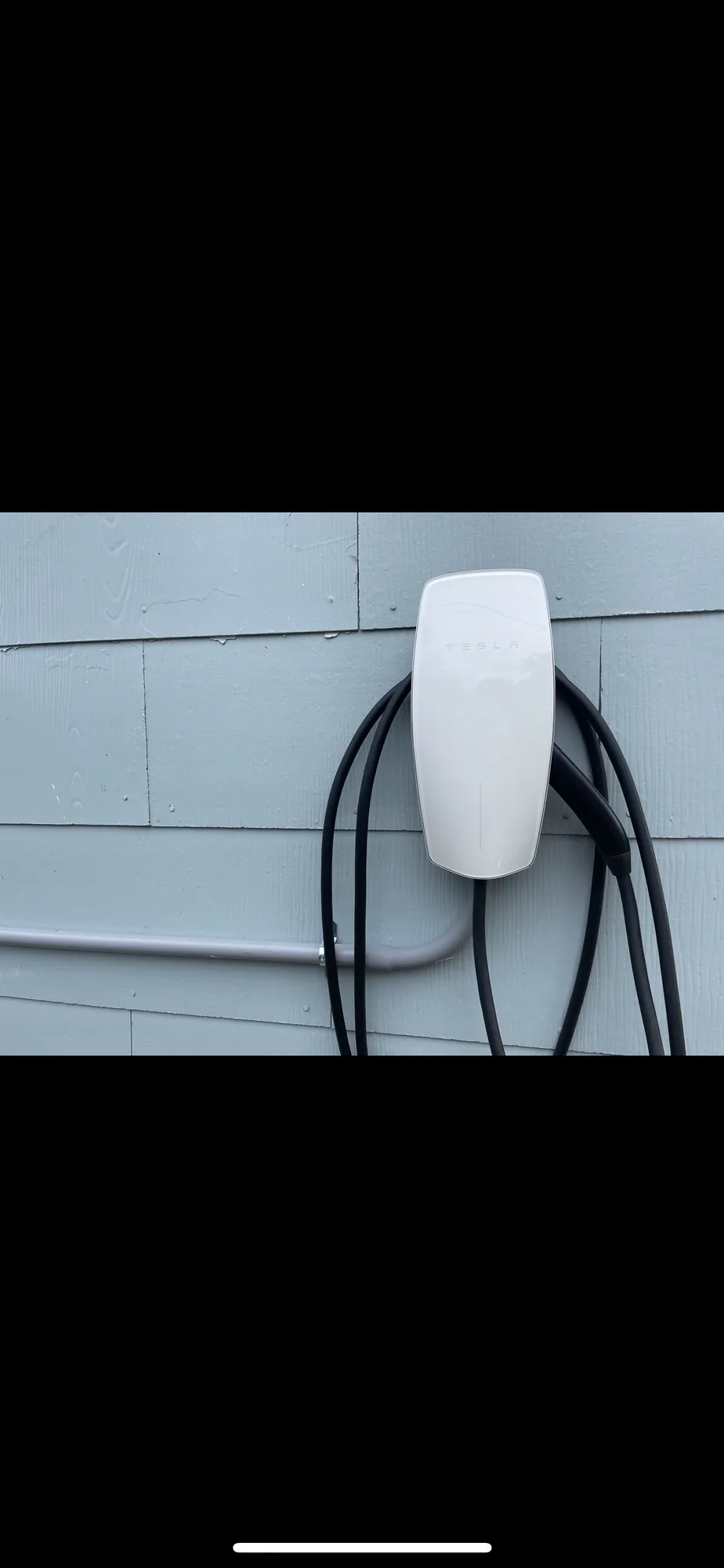
Worth knowing: a charger's circuit is sized to the charger, not to the vehicle. Choosing the equipment before the load calculation is done can commit you to a circuit the existing service can't carry — which is a much easier conversation to have before the charger is purchased.
Garages, Exterior, Pool & Landscape Electrical
Exterior work usually involves the longest circuit runs on a property, and it's the part of a project most often left until the landscaping is already finished. Planning it alongside the interior work is what keeps the trench from being dug twice.
Pool and spa equipment
Pump, heater and equipment circuits, plus the bonding that applies to the installation.
Learn moreLandscape and garden lighting
Lighting circuits, transformers where used, controls and timers.
Exterior receptacles
Weather-resistant receptacles and covers where they're actually needed, rather than one at the back door.
Garage and outbuilding power
Feeding a detached structure properly, which is usually the larger half of an EV or workshop project.
Underground conduit and trenching
The buried run between the house and a garage, pool, or outdoor kitchen.
Learn moreExterior heating equipment
Heating cable and similar equipment where it forms part of the project, each with its own circuit and load.
Pool and spa equipment brings its own bonding requirements alongside the equipment circuits, and both are considerably simpler to install while the surrounding area is still open. See pool, hot tub and spa electrical and trenching and underground conduit.
Standby Generator Electrical
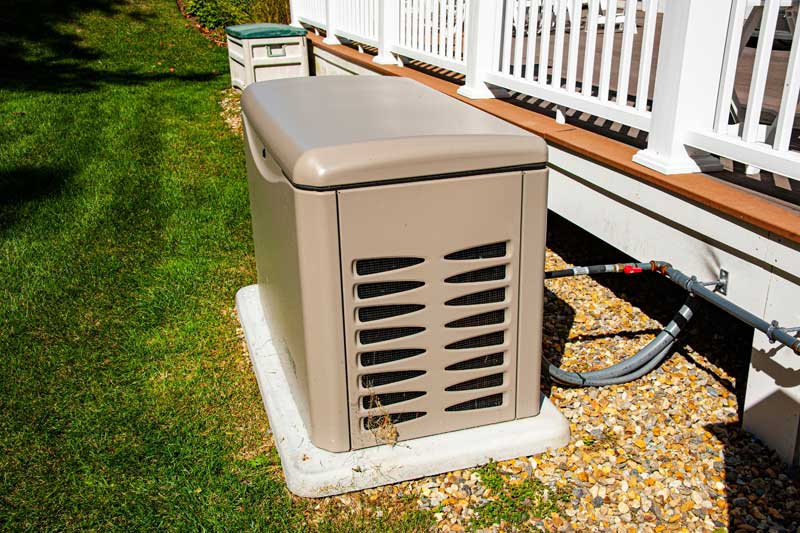
Portman Electric provides generator and transfer switch installation — the electrical side of a standby system, including the transfer equipment and the connection to the electrical service.
The question worth settling first isn't which generator to buy. It's which circuits are actually backed up when the power goes out. That decision determines the size of the transfer equipment, how the panel is arranged, and in practice how much the installation costs.
Homeowners usually start by naming the obvious items — heating, the fridge, some lighting, the sump pump — and then discover that a home office, a septic or ejector pump, or a freezer in the basement matters more than they expected. Working through that list properly is most of the design work.
Where a generator is planned alongside a service upgrade or a renovation, doing them in one coordinated scope avoids rearranging the panel twice.
Rewiring an Older Home While Limiting Unnecessary Damage
Rewiring can require access through finished walls or ceilings. Experienced planning can reduce unnecessary openings, but it can't eliminate the need for access where access is genuinely required — and we'd rather say so up front than discover it with you on day three.
Attic access
Where an attic is accessible, circuits can often be dropped into wall cavities from above rather than opened along their length.
Basement access
An unfinished or accessible basement lets a substantial portion of the work be fed from below.
Existing wiring routes
Where an existing route is usable, new cable can sometimes follow it rather than requiring a new path.
Careful circuit planning
Deciding where circuits run before anything is opened, so the openings that are needed are the ones that count.
Fishing where practical
Pulling cable through closed cavities where the construction allows it, rather than opening the wall.
Coordinating with open areas
Using the areas a renovation has already opened, and sequencing electrical work to those stages.
The amount of access required depends on how the home was built, previous renovations and the wiring routes available. Portman plans the work to minimize unnecessary disruption, but we won't promise zero openings where access is genuinely required.
Electrical Inspections for Older Forest Hill Homes
An electrical assessment is worth having when a decision depends on what's actually installed rather than on what's assumed to be installed.
Buying an older property
Establishing the service rating, panel type and visible wiring before the renovation budget is set.
Planning a renovation
Knowing what the existing system can support before the drawings assume it can support everything.
An insurer has asked
Documenting the visible conditions the insurer has raised, so any corrective work addresses the actual question.
Knob-and-tube concerns
Determining what legacy wiring is present and, more importantly, what's still energized.
Fuse equipment or old panels
Assessing the condition and serviceability of older distribution equipment.
Aluminum branch wiring, if found
Identifying where it's present and how the terminations have been handled.
Uncertain past modifications
Tracing junctions, splices and abandoned runs left behind by previous work.
Determining available capacity
Establishing what the existing service and panel can actually carry before new loads are committed to.
A Portman contractor assessment
A licensed electrical contractor examining and documenting the visible electrical conditions in an existing home, and recommending corrective work. It's an assessment carried out for you, by us.
An ESA inspection
A separate inspection carried out by the Electrical Safety Authority on work that required notification. Portman files the notification and coordinates the inspection where the work calls for it. Our assessment does not replace an ESA inspection, and neither replaces a full home inspection.
See electrical safety inspections or the century home electrical inspection checklist.
Buying an Older Home in Forest Hill?
If renovation plans depend on the electrical system, it's worth knowing what's actually there before the plans are finalized.
An electrical contractor can help evaluate the things that most affect a renovation budget:
- The service rating actually installed
- The panel type, condition and remaining breaker space
- Visible wiring types throughout accessible areas
- Whether active knob-and-tube is a concern
- Whether circuits are grounded
- Evidence of previous alterations and additions
- Garage and exterior electrical
- The likely electrical scope of your renovation plans
- Whether the property can support EV charging as it stands
An electrical assessment is not a substitute for a full home inspection, but it can provide a more detailed review of the electrical system when older wiring or major renovation plans are a concern.
Older Wiring, Fuse Panels & Home Insurance
Different insurers have different underwriting requirements, and the differences between them are real. What one company accepts, another may ask you to change.
The questions that come up most often involve active knob-and-tube wiring, fuse panels, 60 amp services, aluminum branch wiring and older equipment generally. Because the requirements vary by insurer, the only reliable source for what yours needs is your insurer.
What Portman can do
- Assess the visible electrical conditions in the home
- Investigate and trace wiring to establish what's actually present and active
- Document the findings
- Recommend and carry out corrective electrical work
- Complete permitted upgrades
- Coordinate ESA inspection for applicable work
Confirm coverage requirements directly with your insurer. We can carry out the electrical work and document it, but we can't guarantee any particular insurer's acceptance. Background reading: knob-and-tube wiring and home insurance in Toronto.
Electrical Troubleshooting in Forest Hill Homes
Symptoms rarely identify their own cause, and a system altered across several renovations produces more of them. These are the ones we're called about most — with what they can mean, not what they definitely mean.
Why did part of my house lose power?
Possible causes include a tripped breaker or blown fuse on a specific circuit, a failed connection at a device or junction, a loose or damaged conductor, or a problem in the panel itself. When a whole section of the house is out, the shared point of failure has to be identified by testing rather than assumed from which rooms are dark.
My breaker keeps tripping.
A breaker that trips repeatedly is responding to something. Possible causes include a genuine overload on the circuit, a short circuit, a ground fault, a failing device, moisture, or a breaker that has itself deteriorated. Replacing the breaker without establishing why it tripped can remove the symptom while leaving the cause in place.
Why do my lights dim when equipment starts?
Some momentary dimming when a large motor starts can be normal, but persistent or severe dimming may point to a loose connection, an undersized or overloaded circuit, a shared neutral problem, or a limitation at the service. The existing circuit configuration and the connections have to be verified before it can be attributed to any one of those.
My electrical panel is buzzing or humming.
Noise from a panel should be investigated rather than lived with. Possible causes include a loose connection, a deteriorating breaker, or equipment operating beyond its capability. If there is also heat, discolouration or a burning smell, treat it as urgent and call rather than continuing to use the equipment.
Some outlets are grounded and others aren't.
This is common in a house wired across several eras. Some circuits may have been replaced during a renovation while others were left as originally installed, and three-prong receptacles are sometimes fitted to circuits that were never grounded. Testing establishes which circuits are actually grounded, which is the information a rewiring scope depends on.
We found old wiring during a renovation.
Exposed wiring during demolition is worth having looked at before the walls close. What matters is the wiring type, whether it is still energized, what it feeds, its condition, and how it connects into the rest of the system. That assessment is far cheaper while the framing is open than after the drywall is up.
One section of the house has newer wiring than another.
That usually reflects an addition or a previous partial renovation. The question is how the two systems are joined, whether the older section is still carrying loads it was not designed for, and whether the distribution equipment was ever re-evaluated when the newer section was added.
My insurer flagged the electrical system.
Insurer requirements differ between companies, and the wording of the request matters. The practical first step is to establish what is actually installed — the service rating, the panel type, the wiring types present and what is still active — so that any corrective work addresses the specific concern rather than a general one. Confirm the requirement directly with your insurer.
My outlet or switch feels warm.
A device that feels warm to the touch should be investigated promptly. Possible causes include a loose connection, a deteriorated device, or a load beyond what the device or circuit is intended to carry. Stop using it and have it checked; heat at a device is one of the symptoms worth treating as urgent.
None of the above is a diagnosis. Testing is required, and the existing circuit configuration has to be verified before a cause can be established. See electrical troubleshooting or electrical problems commonly found in older Toronto homes.
Emergency Electrician Serving Forest Hill
Some electrical conditions shouldn't wait for a scheduled appointment. If you're seeing any of the following, stop using the affected equipment and call.
- A burning or hot-plastic smell near electrical equipment
- Sparking, arcing or visible flashes at a panel, device or fixture
- A panel or breaker that is hot, discoloured or scorched
- Sudden loss of power to the property when neighbouring homes still have it
- A main breaker that will not stay on
- Damage to the service mast, meter or service conductors
- Storm damage affecting the electrical service
- Water on, in or around electrical equipment
Same-day and after-hours service may be available depending on location, access, the nature of the problem and current scheduling.
Repair, Rewire, Replace the Panel or Upgrade the Service?
Four different answers to four different problems. Knowing which one you're actually looking at is most of the value of an assessment — and it's the difference between a scoped project and an open-ended one.
Targeted Repair
Potentially appropriate when:
- The issue is isolated to one location
- A single circuit or device has failed
- The rest of the installation remains suitable
- Testing points to a specific cause
Partial or Full Rewire
Potentially appropriate when:
- Active legacy wiring remains in use
- A renovation is exposing extensive older wiring
- Grounding or circuit distribution needs modernizing
- Insurer requirements apply to the existing wiring
Panel Replacement
Potentially appropriate when:
- The distribution equipment itself requires replacement
- Additional breaker space is needed
- Fuse equipment is being modernized
- Equipment has been damaged or is unsuitable
Service Upgrade
Potentially appropriate when:
- Calculated electrical demand requires greater capacity
- Major new loads are being added
- Service equipment is being modernized within a larger project
- The limitation is the supply rather than the panel
These scopes can overlap. The correct recommendation depends on the actual electrical system and the home's planned loads — not simply its age.
Electrical Considerations in Forest Hill
Forest Hill Village was incorporated in 1923, and much of the area's recognizable residential development took place in the earlier decades of the twentieth century. That's useful background, but it doesn't tell you anything definitive about any individual house — plenty have been rewired, extended and modernized since.
What it does mean is that the practical factors below come up often enough to be worth planning around. Which of them apply to your property is a question for an assessment, not an assumption:
Established detached housing
Much of the area's recognizable residential development dates from the earlier decades of the twentieth century, which means a wide range of original and replaced wiring depending on the property.
Homes modernized in stages
Where a house has been renovated more than once, the electrical system usually reflects each round of work rather than one coherent design.
Longer circuit routes
Distance between the panel and the far corners of a larger house affects circuit design, voltage drop considerations and how the work is staged.
Finished interiors
Where plaster, panelling, millwork or recent finishes are present, they change how wiring can be routed and how much opening a rewire genuinely needs.
Substantial basements and additions
Often built or finished at different times, and sometimes fed from equipment that was never re-evaluated when the space was added.
Garages and outbuildings
A separate structure normally means a buried feed, which is frequently the larger part of an EV charging or workshop project.
Landscaped properties
Exterior lighting, receptacles and equipment that have often been added piecemeal over many years.
Multiple modern loads at once
The common thread is not any single upgrade, but several of them arriving together and needing one coordinated plan.
Background on the area's development and character is published by the City of Toronto in its Forest Hill Village Urban Design Guidelines. We don't know the wiring of any particular house until we've looked at it.
Planning Electrical Work in Forest Hill? Here's What to Send Us
Send photos and a description and we'll give you a free remote estimate. If the scope genuinely can't be established from photos, we'll say so rather than quote a number we'd have to revise.
Tell us everything you're planning — not just the first item
The kitchen, the EV charger, the heated floors, the basement, the pool equipment, the generator. The list matters more than any one item on it, because the list is what the service has to carry.
Send photos of accessible equipment
Photograph what is safely visible — the outside of the panel, the meter, the service entrance, and any wiring already exposed in an open basement, attic or renovation area. Never open a panel or remove a cover.
We review what's installed now
Portman reviews what you've sent and tells you whether the scope can be established remotely or whether an on-site assessment is genuinely needed before a number means anything.
The load gets calculated before capacity is recommended
The calculation establishes whether the existing service carries the planned equipment, whether load management is an option, or whether additional capacity is genuinely required.
Permits and ESA inspection are coordinated
Where the work requires notification, Portman files the ESA notification and coordinates the inspection.
Panel or service work
- A photo of the electrical panel from the outside — cover closed
- The service rating or panel label where it's visible without removing anything
- The meter and service entrance equipment
- Where the panel sits in the house
- A description of the loads you're planning to add
Renovation work
- Architectural or electrical drawings, if you have them
- Photos of the rooms involved
- The scope of the renovation and what stage it's at
- An appliance list, including model numbers where you have them
- EV charging, heat pump and heated-floor plans
- Loads you expect to add later, even if they're not in this phase
Knob-and-tube enquiries
- Photos of visible wiring in an accessible attic or basement, where it's safe to photograph
- Your insurer's letter, if one prompted the enquiry
- Renovation plans, if the work is part of a larger project
Safety note: never remove an electrical panel cover or dead front to take a photograph, and don't expose energized wiring. Everything we need can be photographed with the panel closed.
Electrical Services for Forest Hill Homes
Serving Forest Hill & Central Toronto
Portman Electric serves Forest Hill Village, Forest Hill South and Forest Hill North, along with the surrounding central Toronto neighbourhoods. We're a Toronto electrical contractor serving the area — not a business with a Forest Hill storefront.
- Forest Hill
- Forest Hill Village
- Forest Hill South
- Forest Hill North
- Chaplin Estates
- Cedarvale
- Humewood
- Deer Park
- Yonge–St. Clair
We also have dedicated pages for Rosedale & Moore Park, The Beaches and East York. For anywhere else in the city, start with residential electrical services or just call.
Guides worth reading first
Why Choose Portman Electric for an Older Forest Hill Home?
Licensed Electrical Contractor
Portman Electric is an ECRA/ESA Licensed Electrical Contractor, Licence #7018049. Family-owned, owner-operated and fully insured, with over 15 years of trade experience.
Real Older-Home Projects
A complete rewire of an older Toronto house, a 60 amp fuse service rebuilt to 200 amps, and fuse-panel modernization work — all documented with our own photographs of the actual jobs.
Whole-Home Rewiring & Modernization
The Kensington Market project replaced aging knob-and-tube infrastructure with a modern 200 amp panel, new branch-circuit wiring throughout, EV charging capability, electric heated floors, smoke alarms, pot lights and modern kitchen appliance circuits.
Service Upgrade Experience
A documented 60 amp fuse service rebuilt to 200 amps, including relocating the meter from the basement to the exterior, a new service mast and a new Siemens panel.
Load Calculated Before Capacity Recommended
Portman assesses the actual wiring condition and calculates the electrical demand before recommending a complete rewire or a 200 amp service. Neither one is automatic.
Renovation Planning & Rough-In
Circuit layout, box locations, lighting and specialty loads coordinated with framing and cabinetry, from planning through rough-in to final connection.
ESA Coordination
Where the work requires notification, Portman files the ESA notification and coordinates the inspection.
Multiple Loads, One Plan
A kitchen, an EV charger, heated floors and a generator planned as one electrical scope rather than four separate visits that each discover the same capacity problem.
WHAT OUR CUSTOMERS SAY
"Joshua was experienced, professional, knowledgeable, and friendly. He showed up on time, updated us as he worked, and explained everything! He worked efficiently and cleaned up beautifully. Will definitely use his services again!"
"Very professional and knowledgeable team of folks. Upgraded my electrical panel to 200 amp and added a Tesla charger in less than a day. Highly recommend!"
"Showed up on time, wired up my 3-phase motor had it running faster than I thought. Will be using Portman Electric again."
Forest Hill Electrical FAQ
Does Portman Electric serve Forest Hill?
Yes. Portman Electric provides licensed residential electrical services in Forest Hill and throughout Toronto. That includes whole-home and partial rewiring, knob-and-tube replacement, electrical panel and service upgrades, renovation electrical from planning through final connection, modern kitchen circuits, heated floors, EV charger installation, pool and spa electrical, generator and transfer switch work, troubleshooting and electrical safety inspections. Portman Electric is an ECRA/ESA Licensed Electrical Contractor, Licence #7018049.
How do I find a licensed electrician in Forest Hill?
Check that the contractor holds an ECRA/ESA electrical contractor licence and ask for the licence number so you can verify it with the Electrical Safety Authority. In Ontario, electrical contracting work must be carried out by a licensed electrical contractor, and the contractor is responsible for filing the ESA notification where the work requires one. Portman Electric's licence number is #7018049. It's also reasonable to ask whether the contractor has completed comparable work on older houses, and to ask to see photographs of it.
Do older Forest Hill homes still have knob-and-tube wiring?
Some older properties may still contain knob-and-tube wiring, either active or abandoned in place, but the age of a house does not confirm what wiring is present. Many older Toronto homes have been partially or fully rewired at some point, and what remains varies from property to property. Tracing and testing are required to establish what wiring exists, what is still energized and what condition it's in.
Does an older Forest Hill home automatically need rewiring?
No. Whether rewiring is needed depends on the wiring types actually present, their condition, what previous alterations were made, whether circuits are grounded, how many circuits the house has relative to how it's used, and the scope of any renovation being planned. Some properties are best served by replacing only the circuits still in use; others, particularly during a substantial renovation, are better served by broader rewiring. The existing system should determine the scope.
Can you rewire an older home without destroying the walls?
Rewiring can often be planned to significantly reduce openings, but zero openings cannot be guaranteed. Where attics and basements are accessible, wiring can frequently be fished into wall cavities from above or below, and existing routes can sometimes be reused. How much access is genuinely required depends on how the home was built, previous renovations and the wiring routes available. Portman plans the work to minimize unnecessary disruption, but we won't promise zero openings where access is genuinely required.
Can Portman upgrade a Forest Hill home from 100 amps to 200 amps?
Yes. Portman Electric completes residential service upgrades and has documented a 60 amp fuse service rebuilt to 200 amps on an older Toronto home, including relocating the meter to the exterior, installing a new service mast and exterior metering, and installing a new 200 amp Siemens panel. Whether your property needs the upgrade depends on a load calculation and an assessment of the existing service. Where the supply is affected, the work involves coordination with Toronto Hydro, and ESA notification and inspection apply.
What's the difference between a panel replacement and a 200 amp service upgrade?
A panel replacement changes the distribution equipment inside the home, while a service upgrade rebuilds the supply into the property. Replacing a panel can resolve obsolete or damaged equipment and a shortage of breaker space, but it does not necessarily increase the capacity available to the house. A 200 amp service upgrade can involve the panel plus service conductors, meter equipment, service-entrance equipment, grounding and bonding, coordination with Toronto Hydro and ESA inspection. Which one a property needs depends on whether the limitation is the panel or the supply.
Does an EV charger require a 200 amp service?
No. Whether a service upgrade is needed depends on the calculated electrical demand of the property once the charger is included, not on the fact that a charger is being added. A load calculation establishes what the existing service can carry. Some homes can accommodate a charger on the existing service, some can do it with load management equipment that prevents the charger and other large loads from running at full draw simultaneously, and some genuinely need additional capacity. The calculation comes before the recommendation.
When is the best time to rewire an older house?
During a major renovation, when walls and ceilings are already open. At that stage wiring routes, box locations, circuit layout, lighting and specialty loads can be established properly instead of worked around, and the access that rewiring requires already exists. Rewiring an occupied, fully finished house is possible and is done regularly, but it involves more planning around access and more making-good afterward. If a renovation is already opening most of the walls, that usually changes the economics considerably.
Can Portman handle the electrical work for a complete home renovation?
Yes. Portman Electric completed the electrical portion of a full gut renovation of an older Kensington Market home in Toronto, from planning and rough-in through finishing and final electrical work. That project replaced aging knob-and-tube electrical infrastructure and added a modern 200 amp panel, new branch-circuit wiring throughout the renovated home, EV charging capability, electric heated floors, smoke alarms, pot lights and circuits for modern kitchen appliances.
Can an insurer ask for knob-and-tube or fuse-panel upgrades?
Insurance companies can have their own underwriting requirements, and they differ between insurers. Questions commonly arise around active knob-and-tube wiring, fuse panels, 60 amp services, aluminum branch wiring and older equipment generally. Because requirements vary, homeowners should confirm what their own insurer needs directly with the insurer. Portman can inspect the installation, document visible electrical conditions, recommend corrective work, carry out the electrical upgrades and coordinate ESA inspection for permitted alterations. We can't guarantee any particular insurer's acceptance.
Should I get an electrical assessment before buying an older Forest Hill home?
It can be worthwhile if you're planning renovations or if the listing suggests older electrical equipment. An electrical assessment can identify the service rating, panel type and condition, visible wiring types, whether circuits are grounded, available panel space, garage and exterior electrical, and evidence of previous alterations — useful information when you're building a renovation budget. An electrical assessment is not a substitute for a full home inspection, and it can't certify concealed wiring, since much of an electrical system isn't visible.
Can you install heated floors during a Forest Hill renovation?
Yes. Portman Electric installs electric heated floor systems, including the heating element, floor sensor, thermostat and the dedicated circuit the system requires. The work has to be coordinated with the flooring trade and scheduled at the right point in the renovation, because the element is installed before the finished floor goes down. Electric heated floors were part of the Kensington Market complete rewire and renovation project in Toronto.
Can you provide electrical work for pools, hot tubs or landscape lighting?
Yes. Portman Electric provides pool, hot tub and spa electrical work, including equipment circuits and bonding, along with exterior receptacles, landscape and garden lighting, garage and outbuilding power, and the trenching and underground conduit that feeds equipment away from the house. Exterior work is often the part of a project with the longest circuit runs, so it's worth including in the load planning from the beginning rather than adding it afterward.
Can you install a standby generator?
Yes. Portman Electric provides generator and transfer switch installation, covering the electrical side of a standby generator: the transfer equipment, the connection to the electrical service, and the decision about which circuits are actually backed up when the power goes out. That last question is worth settling early, because it determines the size of the transfer equipment and how the panel is arranged.
How much does electrical work cost in Forest Hill?
Cost is determined by the scope of the work, not by the neighbourhood. The factors that actually move the price are the size and scope of the job, how accessible the work areas are, what existing wiring is present, the wall and ceiling construction, the condition of the panel and service, the distance wiring has to travel, the equipment being installed, whether ESA notification and inspection are required, whether Toronto Hydro has to be involved, and what stage a renovation is at. Portman provides a free remote estimate from photos and a description, and will say when an on-site assessment is genuinely needed before a number can be given.
Planning Electrical Work in Forest Hill?
Whether you're renovating an older home, replacing legacy wiring, upgrading an electrical service or planning new electrical loads, Portman Electric can assess the existing system and build the electrical scope around both the current house and the way you plan to use it.
ECRA/ESA Licensed Electrical Contractor, Licence #7018049