Licensed Electrician in Rosedale & Moore Park, Toronto
Portman Electric provides licensed electrical work for homes throughout Rosedale, Moore Park and central Toronto. We specialize in the electrical modernization of older Toronto houses — rewiring, panel and service upgrades, renovations, troubleshooting, EV charging and electrical inspections.
Text photos of your panel or project — 647-835-7757
- ECRA/ESA Licence #7018049
- Older Toronto Home Experience
- Fully Insured
- Owner-Operated
- Residential & Commercial
Looking for an Electrician in Rosedale or Moore Park?
Portman Electric is an ECRA/ESA Licensed Electrical Contractor serving Rosedale and Moore Park in Toronto. We work primarily on older and renovated houses: whole-home and partial rewiring, knob-and-tube replacement, electrical panel and service upgrades including 60 amp and 100 amp services modernized to 200 amps, renovation electrical from planning through final connection, modern kitchen and appliance circuits, heated floors, EV charger installation, electrical troubleshooting and electrical safety inspections. Where the work requires notification, we file the ESA notification and coordinate the inspection. Owner-operated and fully insured. Licence #7018049 · 647-835-7757.
Electrical Modernization for Older Rosedale & Moore Park Homes
Many homes in these neighbourhoods were built long before the electrical loads a modern household expects. Just as often, the system has been modified repeatedly across decades of renovations, so what's actually installed is a mix of eras rather than one coherent design.
None of this means an older house is unsafe, and age on its own tells you very little. A house that was carefully rewired twenty years ago can be in better shape than one built decades later. What matters is what is actually installed, what condition it's in, and what the house is now being asked to power. Depending on previous renovations, some properties still have any of the following:
Knob-and-tube wiring
Sometimes still active, sometimes abandoned in place. Which one it is has to be traced and tested, not assumed.
Cloth-covered conductors
Insulation that has aged differently depending on heat, moisture and how much it has been disturbed.
Ungrounded circuits
Two-prong receptacles, or three-prong devices fitted to circuits that were never grounded.
Fuse equipment and early breaker panels
Including obsolete equipment where breakers and parts are difficult to source.
60 amp and 100 amp services
Sized for a house that predates modern kitchens, air conditioning, heat pumps and EV charging.
Limited circuit capacity
Too few branch circuits for how the rooms are actually used today.
Wiring from several different eras
Original runs, mid-century work and recent renovations connected into one system.
Additions tied into older systems
Newer square footage fed from distribution equipment that was never re-evaluated.
Older kitchens
Countertop and appliance loads sharing circuits that were never intended to carry them.
Undocumented modifications
Junctions, splices and abandoned runs left behind by previous work, often out of sight.
The electrical system should be assessed before assuming a complete rewire is required. That assessment is what separates the circuits that genuinely need replacing from the ones that don't, and it's the difference between a scoped project and an open-ended one.
Why Electrical Work in Rosedale & Moore Park Can Be Different
Rosedale contains many older residential properties, with architectural styles associated with upper-class residential housing built from roughly the 1880s through the 1930s. Moore Park's historic development includes detached, semi-detached and multi-family housing developed primarily between about 1900 and the 1930s.
Parts of these neighbourhoods fall within City of Toronto Heritage Conservation Districts, which can affect permits and exterior work. That is a planning matter to confirm with the City — not something an electrical contractor determines, and not something that applies to every property in the area.
What matters for the electrical work is more practical than historical. Older, larger and repeatedly renovated houses tend to share a set of conditions that affect how a job is planned:
Plaster and lath, where present
Not every house has it, but where it does exist it changes how wiring can be fished and how much opening a rewire actually needs.
Original millwork and finishes
Trim, panelling and built-ins affect where a circuit can reasonably be routed and where it can't.
Larger homes, longer circuit routes
Distance between the panel and the far end of the house affects circuit design and how work is staged.
Finished basements and additions
Often built at different times, sometimes fed in ways that need to be re-examined during a renovation.
Wiring altered across several renovations
Each round of work leaves something behind. Tracing what's actually live matters more than the age of the house.
Detached garages and outbuildings, where present
A separate structure usually means a buried feed, which is often the larger part of an EV charging project.
Exterior and landscape electrical
Lighting, receptacles and equipment outside the house, frequently added piecemeal over the years.
Higher loads after modernization
A renovated older home is usually asked to power far more than the original design accounted for.
The point is straightforward: the electrical plan should respect the house it's going into. A circuit route that would be routine in a new build can be the wrong answer in a finished older home, and the right answer is usually the one that gets the same result with less of the house opened up.
Modernizing the Electrical System Without Unnecessarily Damaging the Home
Rewiring an older house can require access through finished walls and ceilings. Anyone who tells you otherwise before seeing the property is guessing. What experience changes is how many openings the job actually ends up needing.
Evaluate the existing routes first
Some original wiring paths can be reused for new conductors. Some can't. That gets determined before anything is opened.
Work from basements and attics where available
Unfinished space above and below finished rooms is usually the least destructive way into a wall cavity.
Plan circuit paths before starting
Deciding the routing on paper first is what keeps the number of openings down.
Coordinate with renovation openings
If a contractor is already opening a ceiling or a wall, that is the moment to run what's needed through it.
Fish wiring where it's practical
Fishing avoids openings in a lot of situations, though not all of them — it depends on the construction.
Do the related work while areas are open
If a wall is open once, everything that belongs in it should go in during that opening rather than the next one.
The amount of access required depends on the home's construction, existing wiring routes and project scope. Portman plans the work to avoid unnecessary disruption, but we won't promise zero openings where access is genuinely required.
Knob & Tube Wiring in Rosedale & Moore Park
Knob-and-tube shows up in older Toronto housing stock, but it is far less predictable than people expect. What's present, what's still energized and what has already been replaced varies enormously from house to house.
What it is
An early wiring method using individual conductors supported by ceramic knobs and tubes. It was normal practice when many older Toronto houses were built.
No equipment grounding
Knob-and-tube systems do not include an equipment grounding conductor, which is why ungrounded receptacles are common in houses that still have it.
Decades of modification matter
What frequently matters more than the original wiring is what was done to it afterwards — extensions, splices, buried junctions and connections to newer wiring.
Active or abandoned
Old wire visible in a basement or attic is not automatically live. Circuits have to be traced and tested to establish what is still energized.
Renovation implications
Opening walls often reveals more of the existing system than expected, which can change the scope partway through a project if it wasn't planned for.
Buying a home
Knowing what wiring is present, and what condition it's in, is useful before committing to a renovation budget.
Insurance requirements vary
Insurers differ in what they ask about active knob-and-tube. Requirements should be confirmed directly with your own insurer.
Partial or complete replacement
Some properties need targeted replacement of what's active; others are better served by broader rewiring. The existing system determines which.
ESA documentation
Where replacement work requires notification and inspection, Portman files the ESA notification and coordinates the inspection.
We don't assume every old wire we see is still active. The existing circuits have to be traced and tested. That's what determines whether you're looking at targeted replacement or something broader.
We've written about this in more depth elsewhere on the site: is knob and tube wiring dangerous, knob-and-tube wiring and home insurance in Toronto, and the full knob and tube rewiring service including removal.
Quick Answer
Does an older Rosedale home automatically need a complete rewire?
No. The age of a home alone does not determine whether it needs a complete rewire. The existing wiring type, condition, previous alterations, grounding, circuit capacity and renovation plans all matter. Portman Electric can assess the existing electrical system and determine whether targeted upgrades or broader rewiring are appropriate.
Panel & Electrical Service Upgrades in Rosedale and Moore Park
A panel change isn't necessarily a service upgrade. The two get used interchangeably, and the difference determines both what the work costs and whether it actually solves your problem.
Panel Replacement
Replacing the distribution equipment inside the home.
- Existing panel or fuse equipment is being modernized
- Breaker space has run out
- Equipment is damaged, obsolete or hard to source parts for
- The distribution equipment is the actual limitation
A panel replacement changes the distribution equipment in the home but does not necessarily increase the capacity supplied to the property.
Panel & fuse box replacementFull Electrical Service Upgrade
Rebuilding the supply into the property, not just the panel.
- Panel and service-entrance equipment
- Service conductors and meter equipment
- Service mast, where the installation uses one
- Grounding and bonding
- Toronto Hydro coordination
- ESA notification and inspection
A service upgrade may increase the capacity available to the property. The actual scope depends on the existing installation.
Panel & service upgradesOlder services in these neighbourhoods can involve fuse equipment, early breaker panels, 60 amp or 100 amp supplies, and metering in locations that today's arrangements handle differently. The scope of a modernization depends on what's actually there — the panel, service conductors, meter equipment, service mast where the installation uses one, and grounding and bonding. Work of this kind generally involves coordination with Toronto Hydro and ESA notification and inspection.
Real Electrical Modernization Projects in Toronto
Portman Electric has completed older-home rewiring, service modernization and electrical renovation work across Toronto. These projects show the type of planning involved when an older electrical system has to support a modern home.
From Knob-and-Tube to a Fully Modern Electrical System
Kensington Market, Toronto
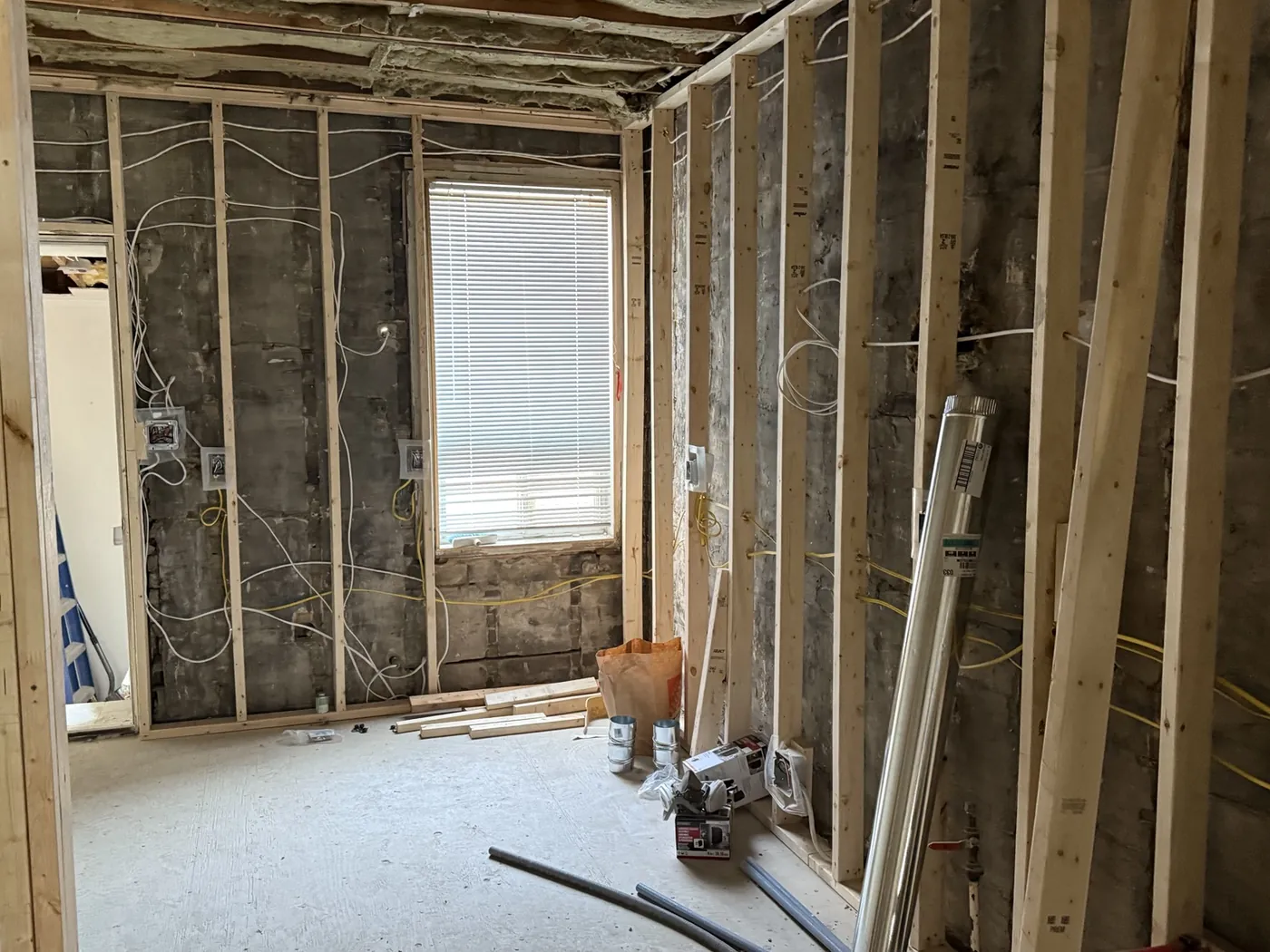
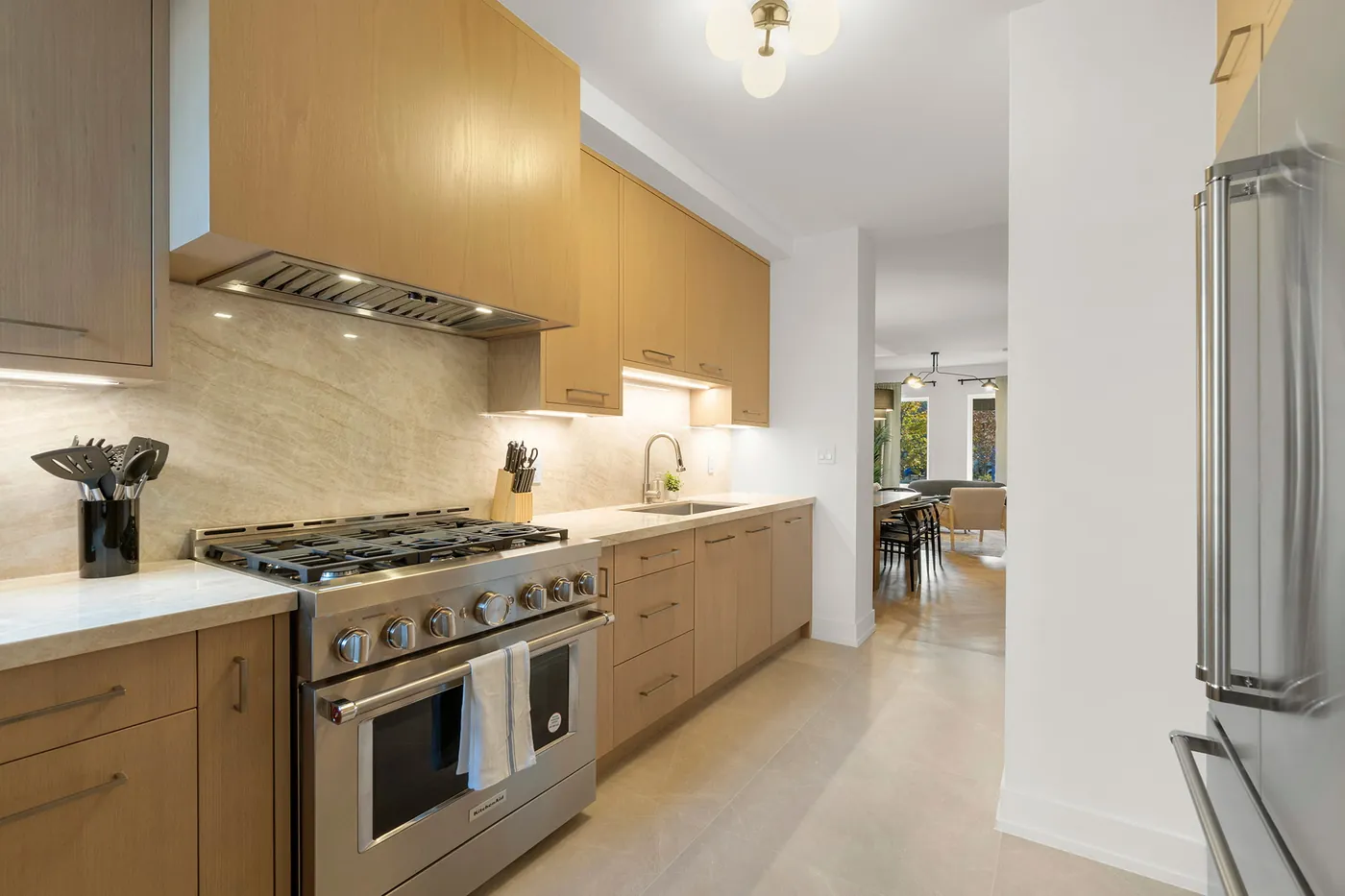
A full gut renovation of an older Toronto home, planned from demolition through final finishes. Aging knob-and-tube electrical infrastructure was replaced and the house was rebuilt around a modern 200 amp panel. This is the closest match on our site to what a substantial older-home modernization actually involves.
- Complete home rewire
- 200 amp panel and service modernization
- EV charging provisions
- Electric heated-floor wiring and controls
- Modern kitchen appliance circuits
- Pot lights and general lighting
- Smoke-alarm wiring
- Rough-in through final electrical
These are real Portman Electric projects shown with the neighbourhoods they were actually completed in. We haven't relabelled any of them as Rosedale or Moore Park work.
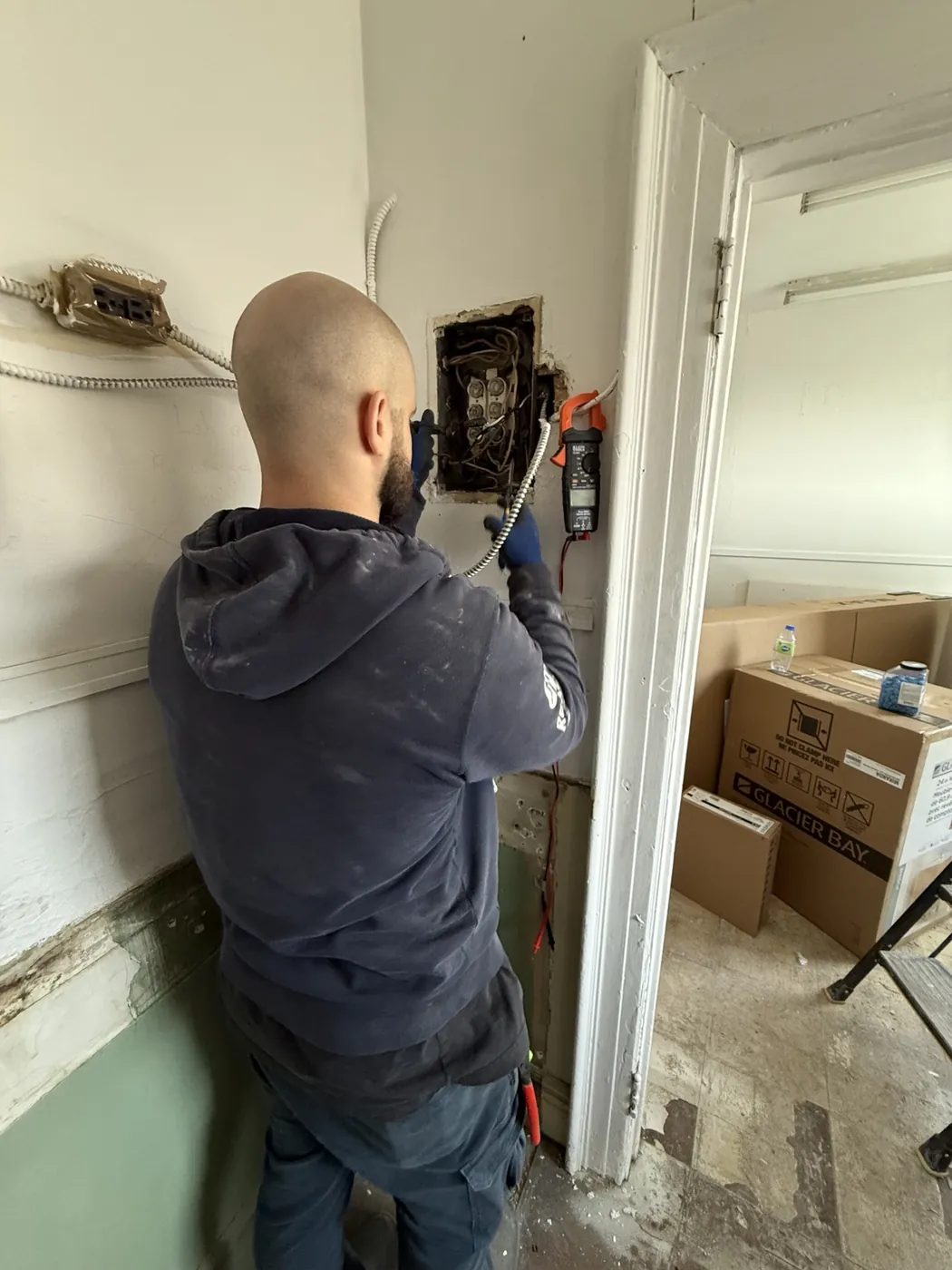
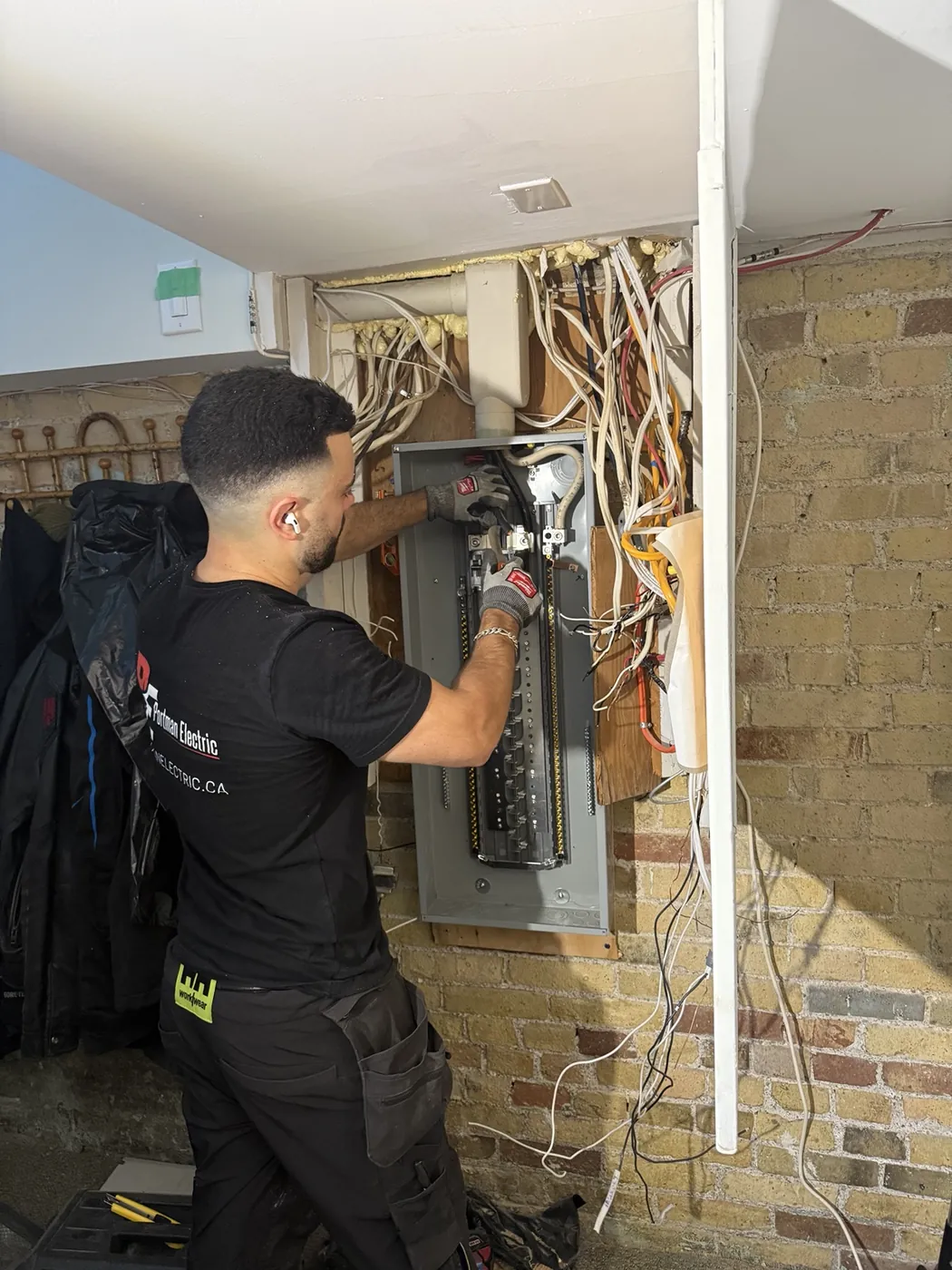
More Documented Service & Panel Work
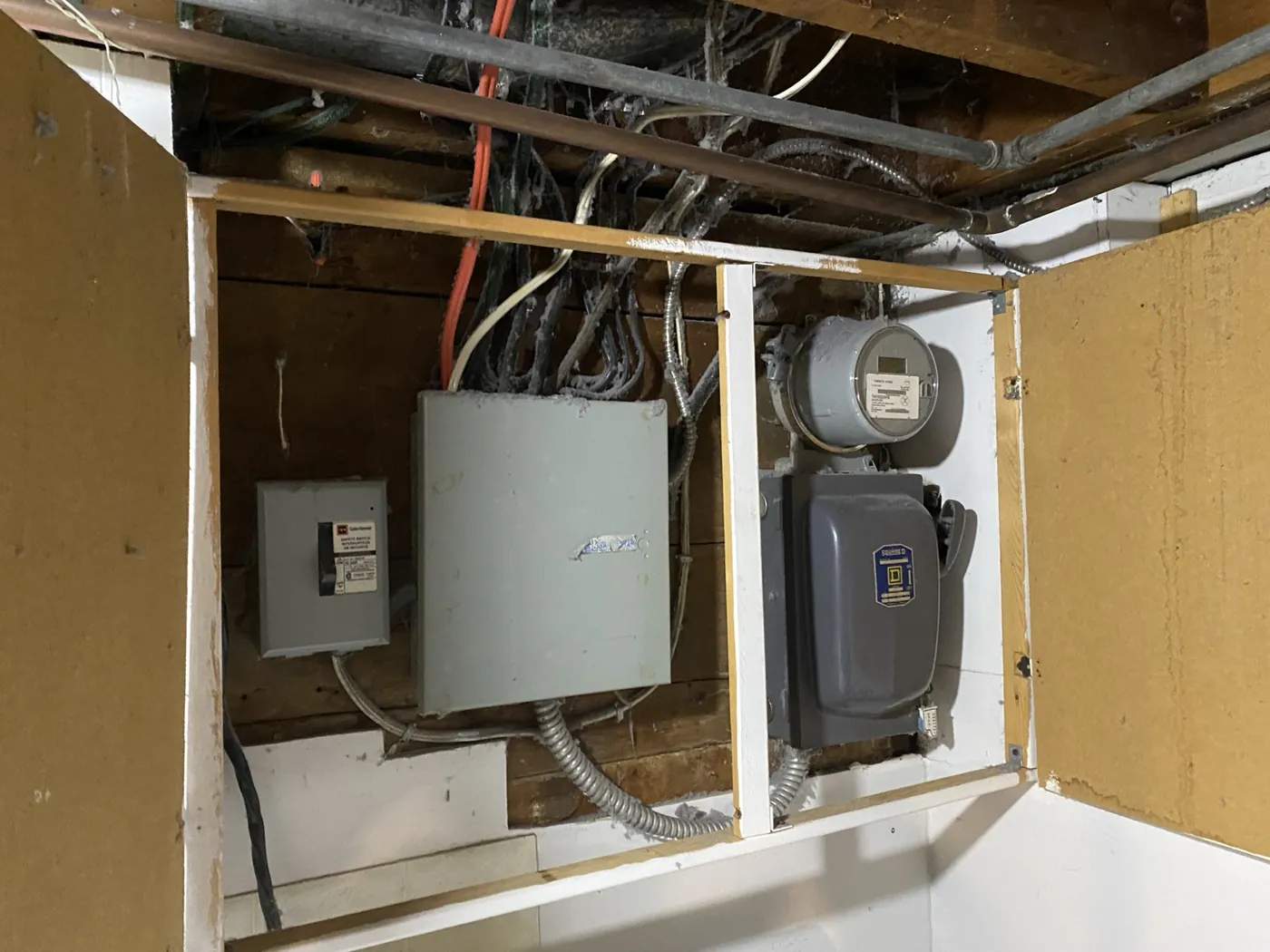
Service modernization and panel replacement projects on older Toronto properties, each shown with the neighbourhood it was actually completed in.
Electrical Planning for Rosedale & Moore Park Renovations
If a renovation is opening most of the walls anyway, that can change the economics of rewiring significantly. The electrical decisions are cheapest while the walls are open, and every one of them gets more expensive the day the drywall goes on.
Whole-house renovations
The point at which service size, circuit layout and wiring replacement should all be decided together.
Kitchens
Usually the highest concentration of dedicated circuits in the house, and the room most likely to outgrow older wiring.
Bathrooms and heated floors
Floor heating, controls, receptacle and lighting placement and exhaust equipment, planned before the finishes go in.
Basement renovations
New rooms, laundry, bathrooms and sometimes a secondary suite added below an older distribution system.
Additions and second-floor work
New square footage is an opportunity to re-evaluate how the whole house is fed, not just the new part.
Lighting redesign
Pot lights, switching layout, controls and dimming decided alongside the architectural plan.
Appliance and specialty circuits
Ranges, wall ovens, induction cooking, laundry and other dedicated loads.
EV charging
Far cheaper to plan capacity and routing during a renovation than to retrofit afterwards.
Heat pumps and electric heating
Significant loads that should be part of the capacity conversation from the beginning.
Exterior, garage and future loads
Outdoor equipment, garage power and conduit left in place for what comes later.
The right moment to assess service size, panel capacity, wiring replacement, circuit layout and specialty loads is before walls are closed. After that point, each of those decisions turns into a separate project with its own access problem.
Portman handles renovation electrical and residential rough-in as part of the same planning process, so circuit layout and finished-stage work stay coordinated with the rest of the trades.
Quick Answer
When is the best time to rewire an older home?
If a major renovation is already opening walls and ceilings, that is often an efficient time to replace older wiring and plan new circuits, because the electrician has better access to the building structure. A major renovation is often the best time to modernize an older electrical system because circuits, service capacity and future loads can all be planned together.
Electrical Capacity for a Modernized Older Home
A house originally designed around lighting, receptacles and a few basic appliances may later be asked to support a great deal more. That doesn't automatically mean 200 amps — it means the demand has to be calculated rather than guessed at.
Loads a modernized older home may be asked to carry
- Modern kitchen equipment and induction cooking
- EV charging
- Electric heated floors
- Heat pumps and electric heating
- Air conditioning
- Hot tubs and outdoor equipment
- Additional laundry
- Renovated basements and secondary suites
- Home office and network equipment
- Exterior and landscape lighting
Load calculation comes first
An older service shouldn't be upgraded just because it's old. We look at the condition of the equipment and what the house is being asked to power. A calculated load tells you whether the existing service can carry the finished plan, whether load management is a reasonable option, or whether additional capacity is genuinely needed.
Not every item on that list requires a service upgrade, and adding several of them doesn't automatically require one either. The calculation is what decides it.
Quick Answer
Does a large Rosedale home automatically need 200 amp electrical service?
No. House size alone does not determine electrical service requirements. Service capacity should be based on the calculated electrical demand and the equipment installed or planned. A 200 amp upgrade can make sense for some modernized older homes, while other properties may have sufficient existing capacity or different options.
EV Charger Installation for Older Toronto Homes
An EV charger does not automatically require a 200 amp service. What it requires is a load calculation, somewhere to land the circuit, and a practical route to where the car actually parks.
Existing service capacity
The starting point. What the service can carry once the charger is included, calculated rather than estimated.
Panel space
Whether there is room for the circuit, and what to do if there isn't.
Charger amperage
Chargers can often be configured to a lower current, which sometimes avoids a larger project entirely.
Garage, driveway or carport
Where the vehicle parks determines the routing, the mounting and the equipment rating.
Detached structures
A detached garage usually needs a buried feed, conduit and distribution at the far end.
Trenching where required
Underground conduit between the house and an outbuilding, where that's the route.
Load management
Where capacity is tight, equipment that manages demand can sometimes make charging workable on the existing service.
ESA notification
EV charger installations generally require notification and inspection, which Portman coordinates.
Quick Answer
Does an older home need 200 amps for an EV charger?
No. EV charging capacity should be determined through an assessment of the home's existing service and electrical demand. Some homes can accommodate charging on the existing service, while others may require load management or a service upgrade.
More detail on EV charger installation, trenching and underground conduit for detached garages, and ESA permits for EV chargers in Ontario.
Electrical Planning for Modern Kitchens
A kitchen is usually where an older electrical system runs out of room first. The appliances have changed considerably; the circuits behind the cabinets frequently haven't.
Electric ranges and induction cooking
A dedicated circuit sized for the specific appliance. Induction and electric ranges are not interchangeable with what an older kitchen was wired for.
Wall ovens and cooktops
Separate appliances often mean separate circuits, which changes the panel space required.
Dishwasher and disposal
Typically dedicated, and frequently sharing a circuit in older kitchens where they were added later.
Refrigeration
Including beverage or wine refrigeration where it's part of the design.
Microwave and built-in appliances
Built-in equipment usually needs the circuit and the box located before cabinetry is installed.
Countertop receptacle circuits
Modern kitchens need considerably more countertop circuit capacity than older kitchens were built with.
Lighting and under-cabinet lighting
Layout, switching and dimming decided with the cabinet drawings rather than after installation.
Panel capacity
The sum of the above is what determines whether the existing panel and service can carry the finished kitchen.
Heated Floors & Bathroom Electrical
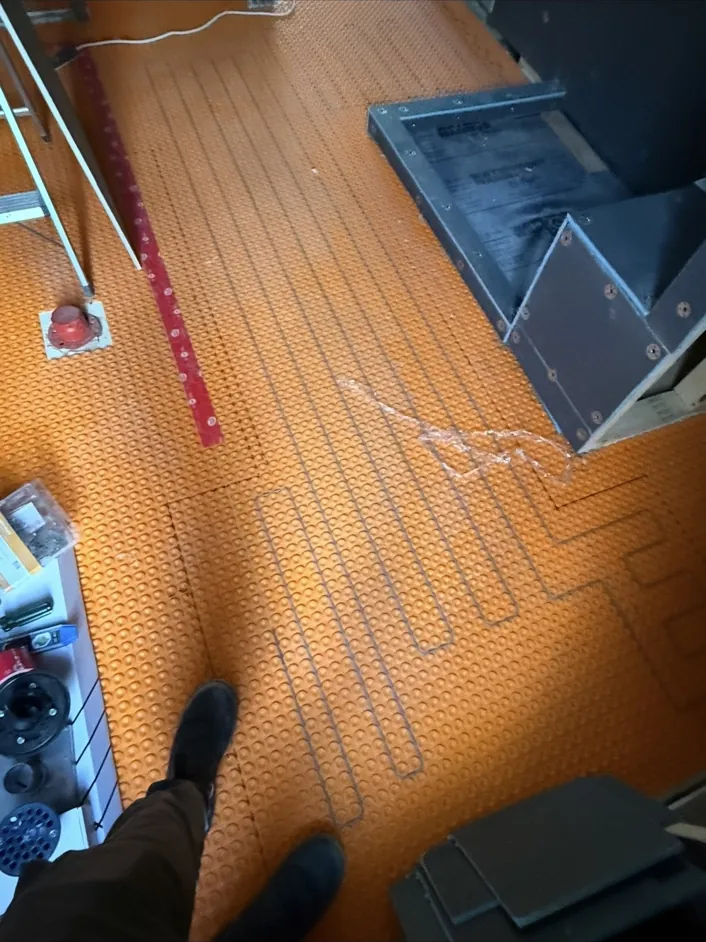
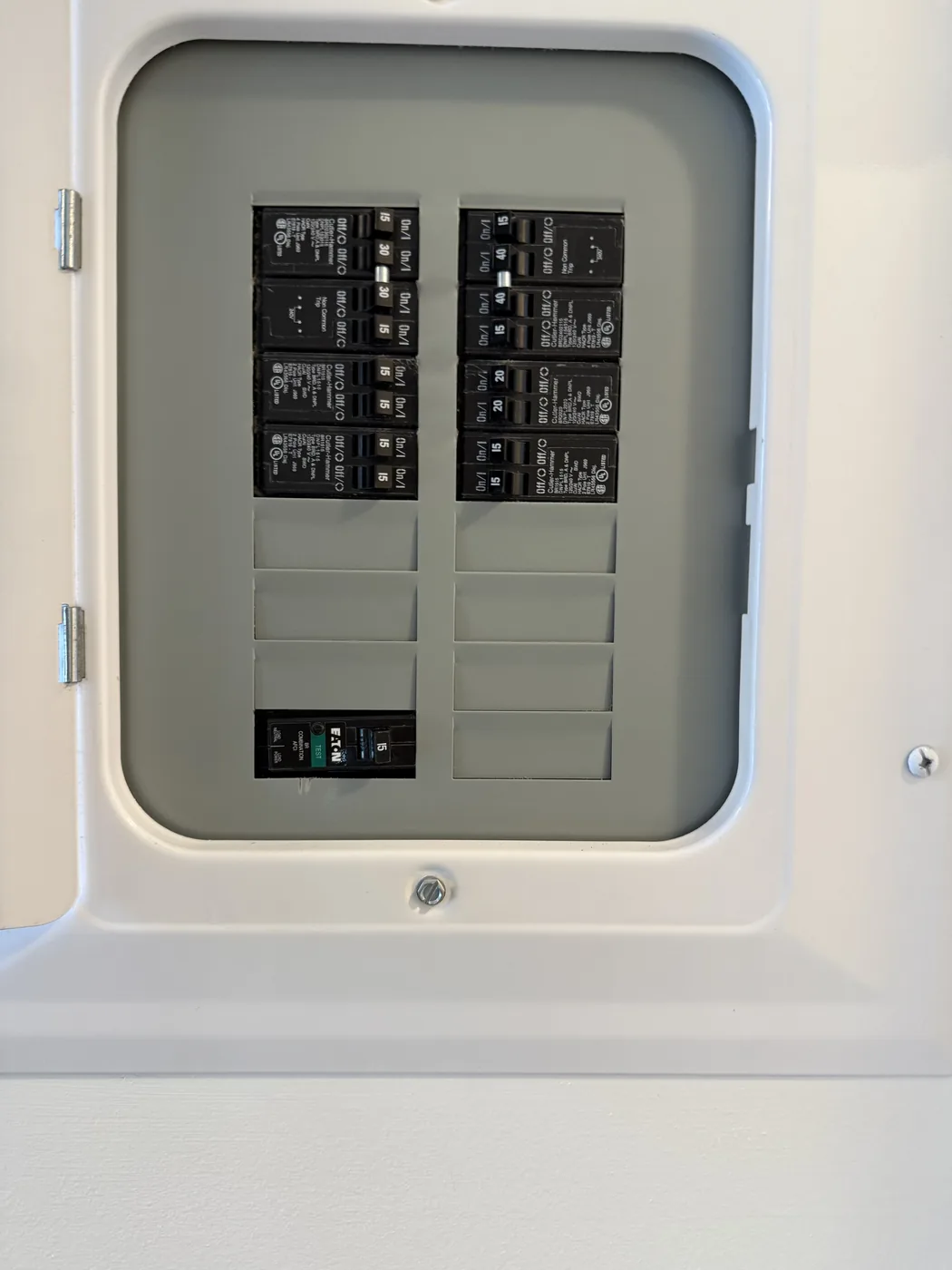
Electric floor heating has to be planned with the flooring trade rather than squeezed in afterwards — the heating element, sensor placement and controls all sit underneath the finished surface. Bathroom work generally involves receptacle and lighting placement, exhaust equipment, dedicated circuits where required, and a check that the panel has room for what's being added.
Portman installed electric heated floors as part of the Kensington Market rewire, coordinated before the finished floor assembly went in. See heated floor installation.
Electrical Inspections for Older Homes
Common reasons people ask for one
- You're buying an older property and want to know what you're taking on
- An insurer has asked questions about the electrical system
- There's a fuse panel or older equipment you want assessed
- Knob-and-tube or other legacy wiring may be present
- Aluminum branch wiring is suspected
- You're planning a renovation and need to know the starting point
- There are modifications nobody can explain
A Portman electrical inspection
A contractor assessment of the visible, accessible electrical installation, documented so you have something concrete to work from. It covers what can actually be seen and tested — much of an electrical system is concealed inside the building.
An ESA inspection
A separate process carried out by the Electrical Safety Authority in connection with notified electrical work. Where a project requires notification, Portman files it and coordinates the ESA inspection. It is not the same thing as a contractor's assessment of an existing home.
More detail on electrical safety inspections, how ESA inspections work in Ontario, an electrician's letter versus an ESA certificate, and the century home electrical inspection checklist.
Buying an Older Home in Rosedale or Moore Park?
If you're planning renovations, it helps to know what the electrical system is before you finalize the budget rather than after demolition starts.
What's worth reviewing
- Service rating and the condition of the service equipment
- The panel: type, age, available space and general condition
- Whether fuse equipment is still in use
- Visible wiring types in accessible areas
- Whether circuits are grounded
- Evidence of previous alterations and undocumented work
- Capacity for major loads you're planning to add
- Garage, outbuilding and exterior electrical
- What the renovation you have in mind would actually require
What this isn't
An electrical assessment is not a substitute for a home inspection, and it doesn't certify the condition of the whole property. Most of an electrical system sits inside walls, floors and ceilings where it can't be seen without opening them. What an assessment gives you is an informed read on the accessible parts and a realistic view of what your renovation is likely to involve electrically.
Book an Electrical AssessmentKnob & Tube, Fuse Panels and Home Insurance
Insurance companies can have different requirements, and they don't all ask for the same thing. Anyone who tells you every insurer refuses a particular wiring type is overstating it.
Questions insurers commonly raise
- Active knob-and-tube wiring
- Fuse panels
- 60 amp services
- Aluminum branch wiring
- Older equipment generally
Because requirements vary between insurers, confirm what yours actually needs directly with them before commissioning work on that basis.
What Portman can do
- Inspect the electrical installation
- Document visible electrical conditions
- Recommend corrective work based on what's installed
- Carry out the electrical upgrades
- Coordinate ESA inspection for permitted electrical alterations
What we can't do is guarantee any particular insurer will accept the result. That decision belongs to the insurer.
Further reading: knob-and-tube wiring and home insurance in Toronto, electrical inspection for insurance in Ontario, and aluminum wiring inspection and repair.
Electrical Troubleshooting in Older Rosedale & Moore Park Homes
Symptoms rarely point to one cause on their own. The job of troubleshooting is to establish what is actually happening before anything gets replaced.
“Part of the house suddenly lost power.”
Possible causes include a fault on a branch circuit, a problem inside the panel, a failed connection, an issue with the incoming service, or a utility-side fault affecting one leg of the supply. Testing is required to tell them apart.
“My breaker keeps tripping.”
A breaker that trips repeatedly is doing its job. The question is why. Possible causes include an overloaded circuit, a fault in the wiring or a connected device, or a breaker that has itself failed. The circuit should be tested rather than the breaker simply replaced.
“My lights flicker or dim.”
Possible causes include a loose or deteriorated connection, a shared circuit reacting to a large load starting up, a problem at the panel or service, or a utility supply issue. Flickering that is getting worse, or is accompanied by heat or smell, should be looked at promptly.
“Some receptacles are grounded and others aren't.”
That's common in houses wired across several eras. The existing configuration should be verified by testing rather than assumed from what the receptacle looks like — a three-prong outlet is not proof of a grounded circuit.
“I found old wiring during a renovation.”
Old wiring found in an opened wall is not automatically live, and not automatically a problem. It should be traced and tested to establish what it feeds and whether it's energized before decisions are made about it.
“My electrical panel is buzzing.”
A panel making noise should be assessed. Possible causes range from a loose connection or a failing breaker to a problem with the service equipment. Do not remove the cover — call an electrician.
“We opened a wall and found knob-and-tube.”
The first question is whether it's still active. Portman traces the circuits, establishes what's energized and what has already been abandoned, and then scopes replacement based on what is actually in use and what the renovation is exposing.
“An insurer flagged my electrical panel.”
Insurer requirements vary. The existing equipment and the wiring connected to it should be assessed, and the appropriate correction determined from what's actually installed. Portman documents visible conditions and coordinates ESA inspection for permitted work.
“The house has wiring from several different renovations.”
This is one of the more common situations in older Toronto homes. The existing electrical configuration should be verified before scoping work, because what was done previously determines how much of the system genuinely needs attention.
See electrical troubleshooting, electrical problems commonly found in older Toronto homes, and three-prong outlets that aren't grounded.
Emergency Electrician Serving Rosedale & Moore Park
Call rather than wait if you have
- A burning smell coming from electrical equipment
- Sparking or visible arcing
- Panel equipment that is hot to the touch
- Sudden loss of power affecting only your property
- Damaged service equipment or a damaged service mast
- Storm damage to electrical equipment
- Water near energized electrical equipment
- A main breaker that won't reset or is behaving abnormally
Same-day and after-hours service may be available depending on location, access, the nature of the problem and current scheduling.
Do not open a panel or remove a cover to investigate. If equipment is hot, sparking or smells like it's burning, call.
Emergency electrician in TorontoRepair, Rewire or Upgrade the Service?
Three different answers to three different problems. Knowing which one you're actually looking at is most of the value of an assessment.
Targeted Electrical Repair
May make sense when:
- The problem is isolated to one area
- The rest of the electrical infrastructure is otherwise suitable
- A single circuit or device needs correction
- Nothing about the wider system is being changed
Partial or Full Rewiring
May make sense when:
- Active legacy wiring remains in use
- A renovation is exposing substantial older wiring
- Grounding or circuit layout needs modernizing
- Insurer requirements apply to the existing wiring
Panel or Service Modernization
May make sense when:
- Service capacity is genuinely inadequate for the loads
- The distribution or service equipment needs replacement
- Major new loads are planned
- A significant renovation is already underway
These categories can overlap. The correct scope should be based on the actual electrical system rather than the age or value of the property.
Planning Electrical Work on an Older Home? Start Here.
Tell us what you're planning
A renovation, a specific problem, an insurer's question, a purchase you're considering, or a load you want to add.
Send photos of accessible equipment
Photograph what is safely visible — the outside of the panel, the meter, the service entrance, and any wiring already exposed in an open basement, attic or renovation area. Never open a panel or remove a cover.
We review the existing system
Portman reviews what you've sent and tells you whether the scope can be established remotely or whether an on-site assessment is genuinely needed.
The scope covers now and later
The recommendation accounts for current conditions and the loads you expect to add, so the work isn't undone by the next project.
Permits and ESA inspection are coordinated
Where the work requires notification, Portman files the ESA notification and coordinates the inspection.
Safety note: never remove an electrical panel cover or dead front to take a photograph. Everything we need can be photographed with the panel closed.
Getting an Electrical Estimate in Rosedale or Moore Park
Send photos and a description and we'll give you a free remote estimate. If the scope genuinely can't be established from photos, we'll say so rather than quote a number we'd have to revise.
Panel or service work
- A photo of the electrical panel from the outside — cover closed
- The panel label or service rating, where it is safely visible
- The meter and service entrance equipment
- Any equipment you're planning to add
- Roughly where the panel sits in the house
- A short description of what you want to do
Renovation work
- Drawings or plans, if you have them
- Photos of the rooms involved
- Appliance and equipment information
- The scope of the renovation
- Loads you expect to add later, even if not now
Knob-and-tube enquiries
- Photos of visible wiring in an accessible attic or basement, where it's safe to photograph
- Your insurer's letter, if one prompted the enquiry
- Renovation plans, if the work is part of a project
Electrical Services for Rosedale & Moore Park Homes
Serving Rosedale, Moore Park & Nearby Central Toronto
Portman Electric serves Rosedale and Moore Park along with the surrounding central Toronto neighbourhoods. We're a Toronto electrical contractor serving the area — not a business with a Rosedale storefront.
- Rosedale
- North Rosedale
- South Rosedale
- Moore Park
- Summerhill
- Deer Park
- Yonge–St. Clair
- Davisville
- Leaside
- Cabbagetown
We also have dedicated pages for The Beaches, Cabbagetown and East York. For anywhere else in the city, start with residential electrical services or just call.
Why Choose Portman Electric for an Older Toronto Home?
Licensed Electrical Contractor
Portman Electric is an ECRA/ESA Licensed Electrical Contractor, Licence #7018049.
Real Older-Home Projects
A complete rewire of an older Toronto house, a 60 amp fuse service rebuilt to 200 amps, and fuse-panel modernization work — all documented with our own photographs.
Complete Electrical Modernization
Rewiring, panels, services, renovation circuits, heated floors, EV charging and modern kitchen loads — demonstrated in completed work rather than claimed.
Clear Recommendations
We assess the existing conditions before recommending a complete rewire or a 200 amp upgrade. Neither one is automatic.
ESA Coordination
Where the work requires it, Portman files the ESA notification and coordinates the inspection.
Owner-Operated & Insured
Owner-operated and fully insured, with the person quoting the work involved in doing it.
Rosedale & Moore Park Electrical FAQ
Does Portman Electric serve Rosedale and Moore Park?
Yes. Portman Electric provides licensed residential electrical services in Rosedale, Moore Park and throughout Toronto. That includes older-home rewiring and knob-and-tube replacement, electrical panel and service upgrades, renovation electrical from planning through final connection, EV charger installation, heated floors, electrical troubleshooting, safety inspections and urgent electrical repairs. Portman Electric is an ECRA/ESA Licensed Electrical Contractor, Licence #7018049.
How do I find a licensed electrician in Rosedale?
Check that the contractor holds an ECRA/ESA electrical contractor licence, and ask for the licence number so you can verify it with the Electrical Safety Authority. In Ontario, electrical contracting work must be carried out by a licensed electrical contractor, and the contractor is responsible for filing the ESA notification where the work requires one. Portman Electric's licence number is #7018049. It is also reasonable to ask whether the contractor has completed comparable work on older houses, and to ask to see photographs of it.
Do older Rosedale homes commonly have knob-and-tube wiring?
Some older properties may still contain knob-and-tube wiring, either active or abandoned in place, but the age of a house does not confirm what wiring is present. Many older Toronto homes have been partially or fully rewired at some point across their history, and what remains varies from property to property. Inspection and testing are required to establish what wiring exists, what is still energized and what condition it is in.
Does knob-and-tube wiring have to be completely replaced?
Not necessarily in every situation. What matters is how much of it is still active, what has already been replaced during previous renovations, the condition of what remains, the scope of any work you are planning, and your insurer's requirements. Some properties are best served by replacing the circuits that are still in use; others, particularly during a substantial renovation, are better served by broader rewiring. The existing system should determine the scope rather than a general rule about the wiring type.
Can you rewire an older home without destroying the plaster?
Rewiring can often be planned to significantly reduce openings, but zero openings cannot be guaranteed. Where basements and attics are accessible, wiring can frequently be fished into wall cavities from above or below, and existing routes can sometimes be reused. The amount of access genuinely required depends on the home's construction, the existing wiring routes and the scope of the project. Portman plans the work to avoid unnecessary disruption, but we won't promise zero openings where access is genuinely required.
Does a Rosedale home automatically need 200 amp service?
No. House size alone does not determine electrical service requirements. Service capacity should be based on the calculated electrical demand and the equipment installed or planned. A 200 amp upgrade can make sense for some modernized older homes, while other properties may have sufficient existing capacity or different options available, such as load management. The correct answer comes from a load calculation and an assessment of the existing service, not from the size or age of the house.
What's the difference between replacing an electrical panel and upgrading the service?
A panel replacement changes the distribution equipment inside the home, while a service upgrade rebuilds the supply into the property. Replacing a panel can resolve obsolete or damaged equipment and a shortage of breaker space, but it does not necessarily increase the capacity available to the property. A full service upgrade may involve the panel plus service conductors, meter equipment, service-entrance equipment, grounding and bonding, coordination with Toronto Hydro and ESA inspection. Which one a property needs depends on whether the limitation is the panel or the supply.
Can Portman rewire a home during a major renovation?
Yes, and a major renovation is usually the most practical time to do it. When walls and ceilings are already open, wiring routes, box locations, circuit layout, lighting and specialty loads can all be established properly instead of worked around. Portman Electric completed the electrical portion of a full gut renovation of an older Kensington Market home in Toronto, staying involved from planning and rough-in through finishing and final electrical work.
Can an older home support an EV charger?
Often yes, but the home's existing service capacity has to be evaluated first. The assessment covers the calculated electrical demand, the available panel space, the charger's amperage and the route from the panel to where the vehicle parks. Where capacity is tight, load management equipment can sometimes allow charging on the existing service. Where it genuinely isn't sufficient, a service upgrade may be the answer. An EV charger does not automatically require a 200 amp service.
Can an insurer require electrical upgrades in an older home?
Insurance companies can have their own requirements, and they differ between insurers. Questions commonly arise around active knob-and-tube wiring, fuse panels, 60 amp services, aluminum branch wiring and older equipment generally. Because requirements vary, homeowners should confirm what their own insurer needs directly with the insurer. Portman can inspect the installation, document visible electrical conditions, recommend corrective work, carry out the electrical upgrades and coordinate ESA inspection for permitted alterations. We can't guarantee any particular insurer's acceptance.
Should I have the electrical system inspected before buying an older Rosedale home?
It can be worthwhile if you're planning renovations or if the listing suggests older electrical equipment. An electrical assessment can identify the service rating, panel type and condition, visible wiring types, whether circuits are grounded, available panel space and evidence of previous alterations — which is useful information when you're building a renovation budget. It is not a substitute for a home inspection, and it does not certify the condition of the entire property, since much of an electrical system is concealed.
Can Portman upgrade a 60 amp service to 200 amps?
Yes. Portman Electric has completed a documented 60 amp to 200 amp service upgrade on an older Toronto home. The homeowner originally called about adding a washing machine and the house turned out to still be on a 60 amp fuse service with the meter located inside the basement. The project rebuilt the electrical service, relocated the meter to the exterior, installed a new service mast and exterior metering, and installed a new 200 amp Siemens panel with additional circuit capacity.
Can you handle the electrical portion of a complete home renovation?
Yes. Portman Electric completed the electrical portion of a full gut renovation of an older Kensington Market home in Toronto, from planning and rough-in through finishing and final electrical work. That project replaced aging knob-and-tube electrical infrastructure and added a modern 200 amp panel, new branch-circuit wiring throughout the renovated home, EV charging capability, electric heated floors, smoke alarms, pot lights and circuits for modern kitchen appliances.
Does adding an EV charger or heat pump automatically require a service upgrade?
No. Whether a service upgrade is needed depends on the calculated electrical demand of the property once the new equipment is included, not on the type of equipment itself. A load calculation establishes what the existing service can carry. Some homes can accommodate an EV charger or a heat pump on the existing service, some can do it with load management equipment, and some genuinely need additional capacity. The calculation comes before the recommendation.
How much does electrical work cost in Rosedale or Moore Park?
Cost is determined by the scope of the work, not by the neighbourhood. The factors that actually move the price are the size and scope of the job, how accessible the work areas are, what existing wiring is present, the wall and ceiling construction, the condition of the panel and service, the distance wiring has to travel, the equipment being installed, whether ESA notification and inspection are required, whether Toronto Hydro has to be involved, and what stage a renovation is at. Portman provides a free remote estimate from photos and a description, and will say when an on-site assessment is genuinely needed before a number can be given.
Planning Electrical Work in Rosedale or Moore Park?
Whether you're renovating an older home, replacing legacy wiring, upgrading an electrical service or troubleshooting an existing system, Portman Electric can assess the current installation and plan the electrical work around both today's requirements and your future loads.
ECRA/ESA Licensed Electrical Contractor, Licence #7018049